


Großer Wedjat-Augen-Anhänger aus Karneol, Spätzeit, ca. 664 – 332 v. Chr.
Dieses Objekt ist für den kostenlosen und schnellen weltweiten Versand qualifiziert.
Zweifellos ist das bekannteste aller ägyptischen Schutzamulette das Wedjat, wörtlich „das heile Auge“, das sich auf das wiederhergestellte Auge des falkenköpfigen Gottes Horus bezieht. Der Mythologie zufolge verlor Horus sein Auge während einer seiner Schlachten mit Seth, aber es wurde von Thoth geheilt. Diese Tat verlieh dem Amulett seine dauerhafte Symbolik von Wiederherstellung, Schutz und Erneuerung. Das Wedjat war eng mit den himmlischen Zyklen verbunden, oft als Zu- und Abnahme des Mondes interpretiert, konnte aber ebenso die Sonne, das „heile“ oder unverletzte Auge, verkörpern.
Als Osiris als Gott des Jenseits aufstieg, gewann das Wedjat neue Bedeutung: Horus soll seinem Vater das geheilte Auge angeboten und ihn mit seiner Kraft wiederbelebt haben. So wurde das Wedjat zu einem zentralen Symbol für Schutz, Regeneration und ewiges Leben. Diese Amulette gehören zu den am häufigsten gefundenen in Gräbern, wo sie dem Verstorbenen zur Sicherung seiner Reise beigelegt wurden, aber sie wurden auch im täglichen Leben für Stärke und Wohlbefinden getragen.
Dieses beeindruckende Exemplar ist aus durchscheinendem orangerotem Karneol geschnitzt, einem Edelstein, den die Ägypter wegen seiner Fähigkeit, den Körper zu beleben und Schaden abzuwenden, sehr schätzten. Größer als der übliche Typ, macht es einen kühnen Eindruck, verstärkt durch sein leuchtendes Glühen und die fein geschnitzten Details.
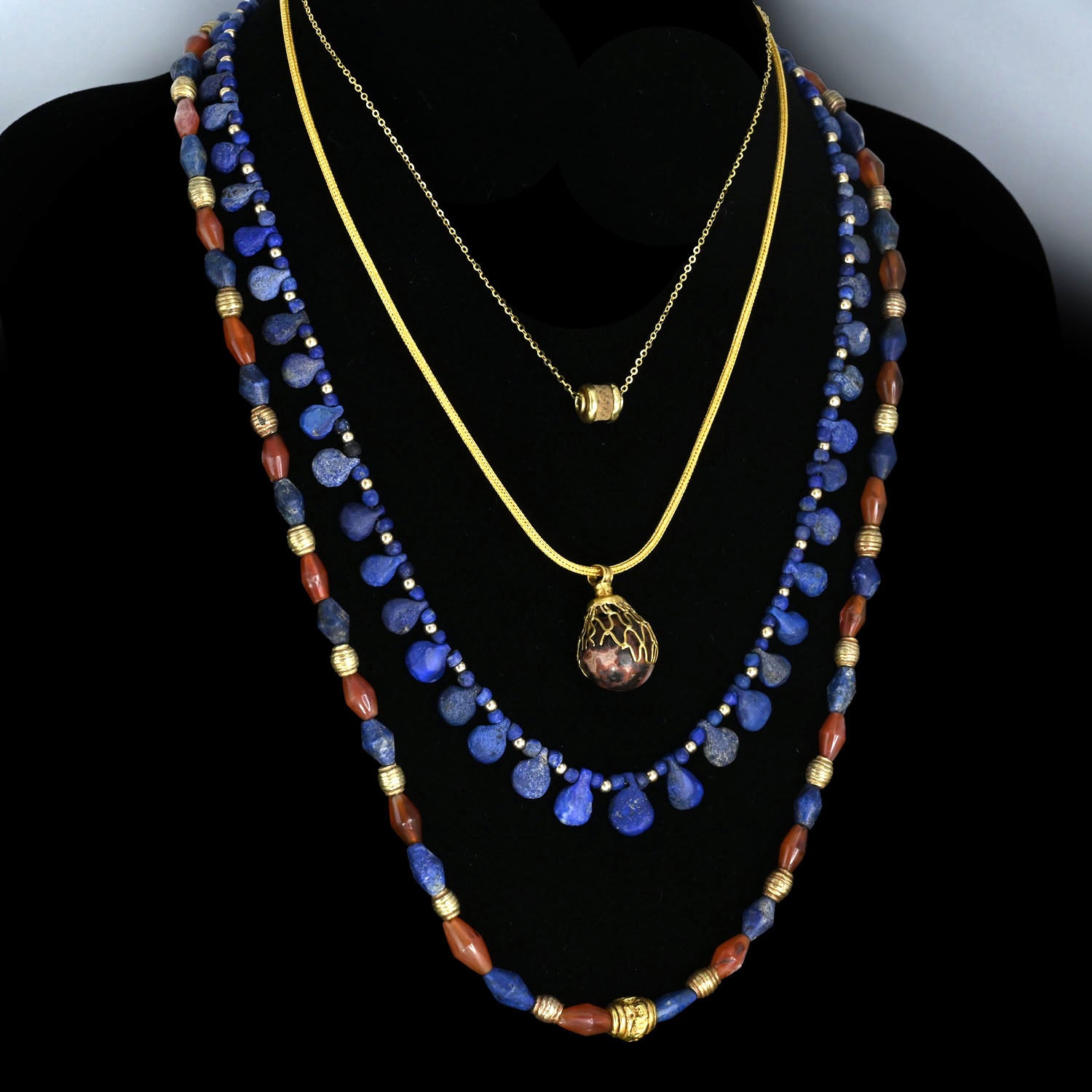
Dieses Amulett ist modern auf einer verstellbaren 18K Gelbgoldkette aufgefädelt, sodass es als zeitgenössisches Schmuckstück getragen werden kann, während seine antike Kunstfertigkeit erhalten bleibt. Es kann heute genauso genossen werden, wie es in der Antike geschätzt wurde.
Bibliographie: Andrews, Carol, 1994. Amulets of Ancient Egypt. Austin: University of Texas. S. 43-4.
Medium: Karneol
Abmessungen: Amulett Höhe: 2 cm (3/4 Zoll), Länge: 2,5 cm (1 Zoll). Als Anhänger auf einer verstellbaren 18K Gelbgoldkette bis zu 45 cm (18 Zoll) aufgefädelt.
Zustand: Minimale Absplitterungen an der Oberfläche, insgesamt intakt und in gutem Zustand.
Provenienz: Privatsammlung eines polnischen Archäologen, der in den 1950er - 60er Jahren in England lebte.
Wir versenden Dienstag bis Freitag mit FedEx und normalerweise noch am selben Tag, wenn Ihre Bestellung vor 14:00 Uhr eingeht. Innerhalb der kontinentalen USA sind Verpackung, Versand und Versicherung kostenlos. Je nach Größe und Bestimmungsort liegen die Lieferzeiten zwischen einem und fünf Werktagen.
Für Überseeversand berechnen wir einen kleinen Pauschalbetrag, der Verpackung, die Erstellung aller Zollpapiere, Versicherung und Frachtkosten gemäß allen US-amerikanischen und internationalen Zollbestimmungen umfasst. Überseeversand erfolgt entweder mit USPS Priority Mail oder FedEx, aber kontaktieren Sie uns, wenn Sie eine Versandpräferenz haben. Internationale Kunden sind für alle Zölle und Steuern verantwortlich.
Sands of Time gewährt eine lebenslange, bedingungslose Garantie auf die Echtheit und Herkunft. Jedem Objekt, das Sie von uns erwerben, liegt ein Echtheitszertifikat bei, das Kultur, Herkunft und Alter angibt.
Darüber hinaus führen wir eine Due Diligence durch, um sicherzustellen, dass der Gegenstand nach unserem besten Wissen nicht illegal aus einer Ausgrabungsstätte, einem Baudenkmal, einer öffentlichen Einrichtung oder einem Privatbesitz erworben wurde. Wo immer möglich, wird auf bestehende Sammlungen oder Veröffentlichungen verwiesen. Wo immer möglich, wird auf bestehende Sammlungen oder Veröffentlichungen verwiesen.
Optionen auswählen
Zuletzt angesehen

Come Visit Us!
1010 Wisconsin Ave NW, Suite 340
Washington DC. 20007
Tues - Fri, 10:00am - 6:00pm
Sat/Sun/Mon By appointment


