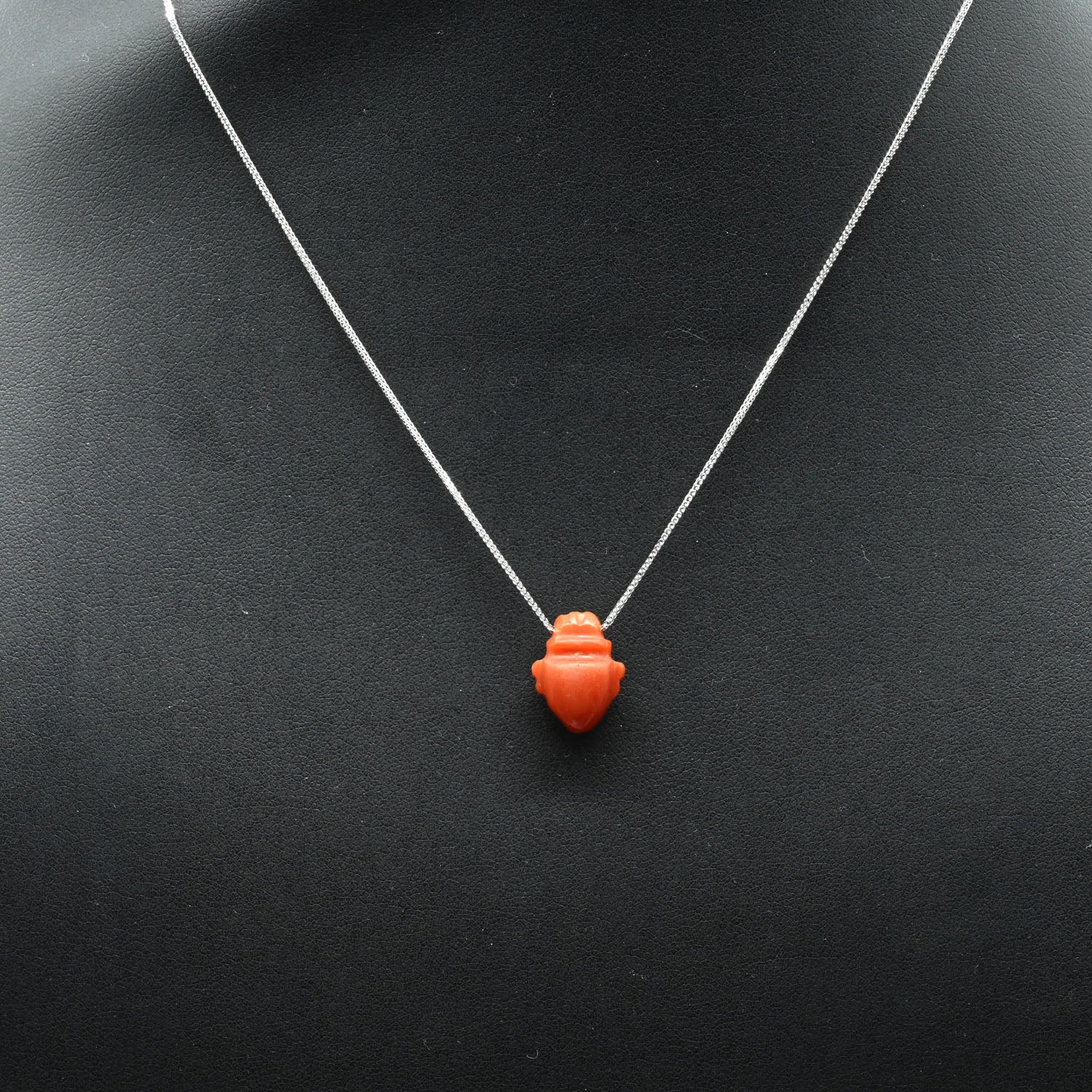
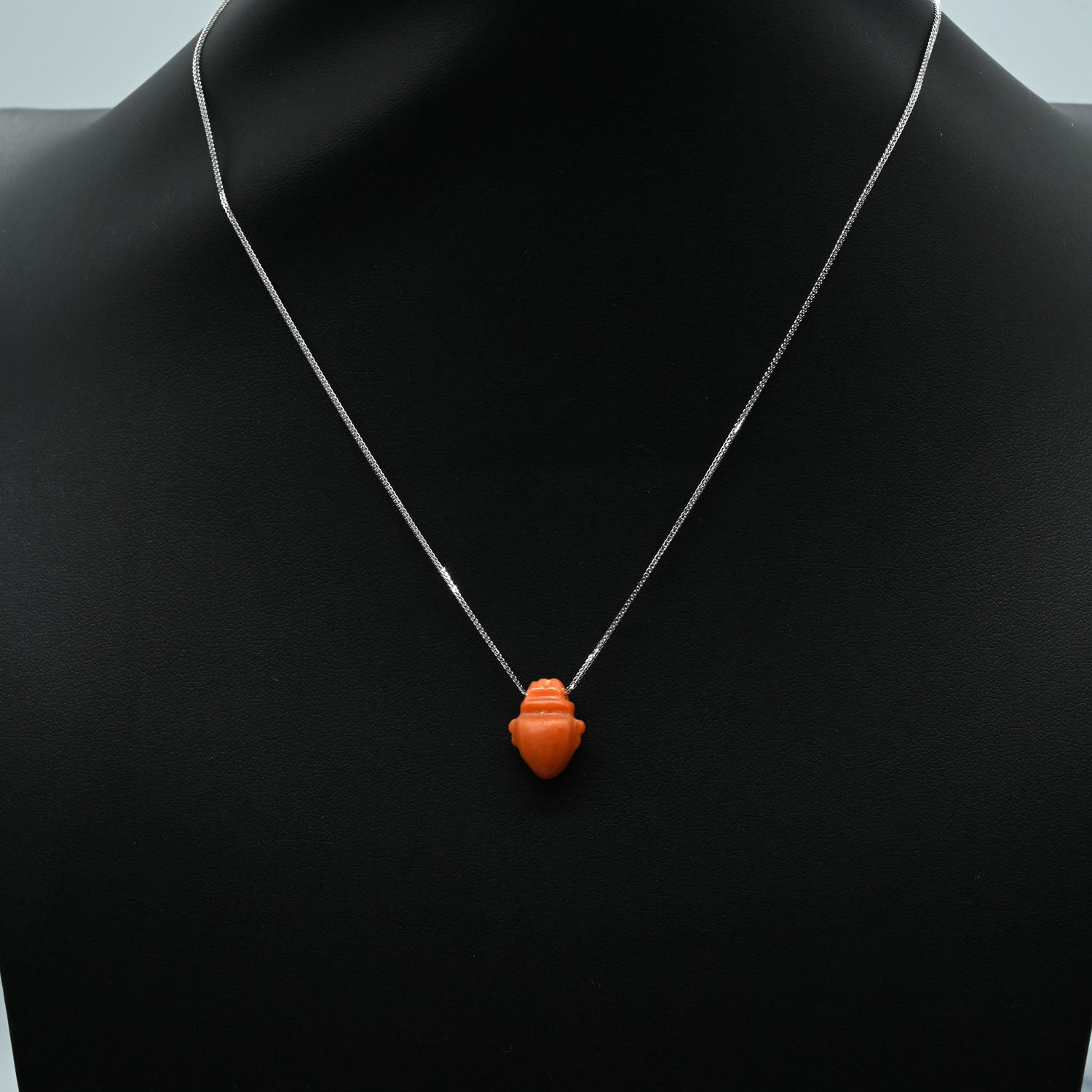
An Egyptian Carnelian Heart Amulet, New Kingdom, ca. 1550 - 1295 BCE
Dieser Artikel qualifiziert sich für kostenlosen Versand innerhalb der USA und eine pauschale Gebühr von 75 US-Dollar für den internationalen Versand.
Among the most important protective amulets of ancient Egypt, heart amulets were closely associated with life, memory, and the eternal survival of the individual. The Egyptians regarded the heart, rather than the brain, as the seat of intelligence, emotion, character, and conscience. It was believed to preserve the essence of a person's identity and would ultimately bear witness to their deeds in the afterlife.
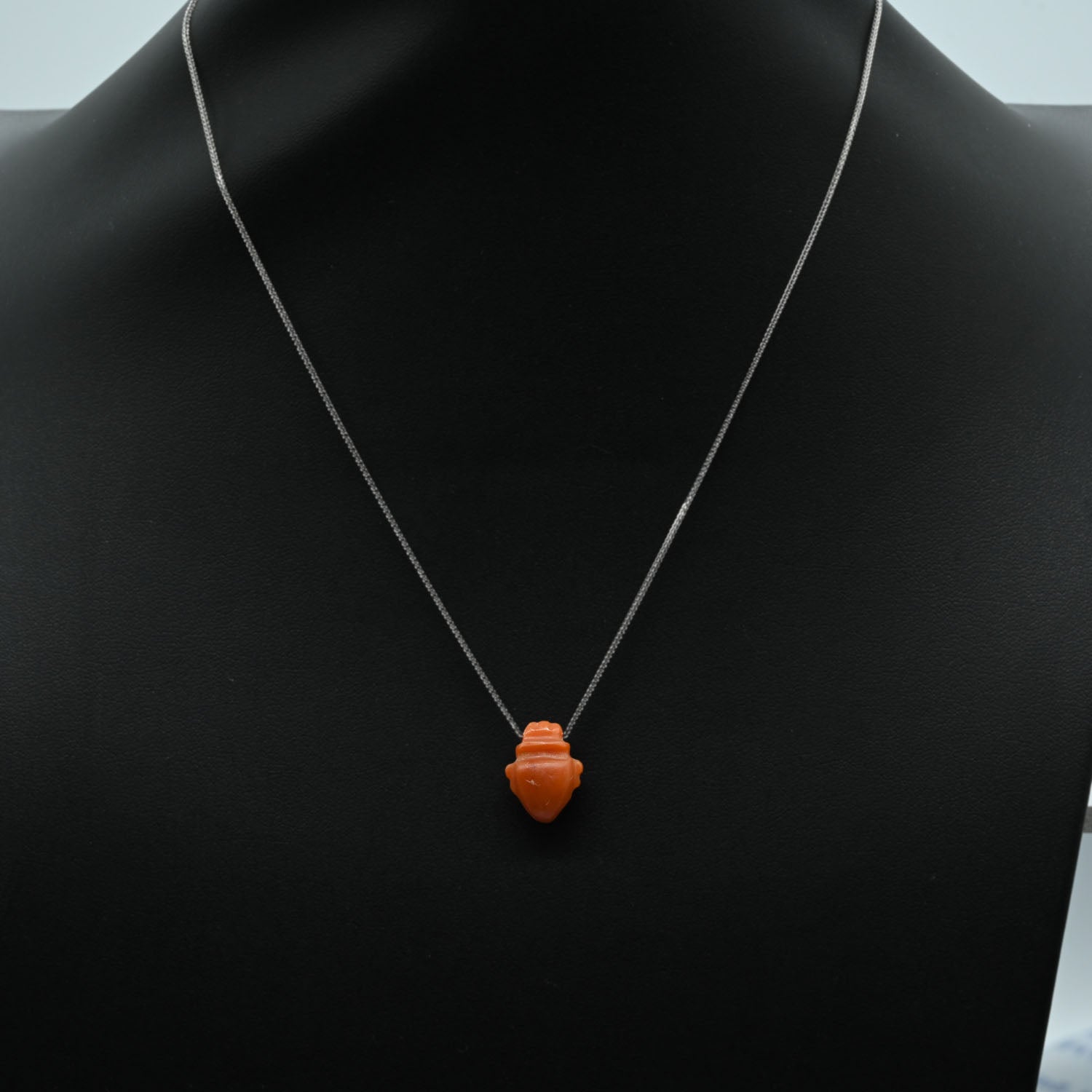
This finely carved amulet is fashioned from vibrant carnelian, a material prized throughout Egyptian history for its rich red-orange color and its symbolic association with vitality, solar power, and regeneration. The amulet is modeled in the form of a heart, with a carefully defined pointed lower section and a lobed upper portion reflecting the stylized shape employed by Egyptian craftsmen for more than a millennium.
Heart amulets became especially popular during the New Kingdom and were frequently placed among the wrappings of mummies or suspended around the neck as personal protective ornaments. Their purpose was both practical and spiritual: to preserve the heart for eternity and to ensure that it would not testify against its owner during the Judgment of the Dead before Osiris. Chapter 30B of the Book of the Dead contains a famous spell specifically intended to prevent the heart from speaking unfavorably during this final judgment.
The choice of carnelian further enhanced the amulet's protective qualities. Egyptian texts associated the stone with the life-giving energy of the sun and with the regenerative powers necessary for rebirth in the next world. As a result, heart amulets carved from carnelian were regarded as particularly potent symbols of eternal life.
cf: Andrews, Carol "Amulets of Ancient Egypt," 1994. p. 72-73
Medium: Carnelian
Dimensions: Height: 7/8 inch (2.1 cm) Set as a pendant with adjustable 18-inch chain of 18K white gold.
Condition: The amulet is finely preserved, retaining its well-defined contours and attractive reddish-orange coloration. Minor surface wear and light abrasions consistent with age and ancient use are present. No visible cracks, repairs, or restorations. Drilled longitudinally for suspension and currently mounted as a pendant. The surface exhibits a smooth, well-polished finish with only minimal signs of handling. Overall, an exceptionally well-preserved example.
Provenance: Nora Scott (1905 – 1994), Curator of Egyptian Art at the Metropolitan Museum of Art, (retired 1972), and acquired from the Metropolitan Museum of Art by deaccession. Gifted to L. Virginia Burton (1918–2009) Associate Curator of Egyptian Art at the Metropolitan Museum of Art (retired 1977), and then by descent.
FRAGEN? Klicken Sie einfach auf den Tab „Kontakt“ auf der rechten Seite.
Wir versenden von Dienstag bis Freitag per Bodenkurier und in der Regel noch am selben Tag, wenn Ihre Bestellung vor 14 Uhr eingeht. Innerhalb der kontinentalen USA sind Verpackung, Versand und Versicherung kostenlos. Je nach Größe und Bestimmungsort liegen die Lieferzeiten zwischen einem und fünf Werktagen.
Für Überseeversand berechnen wir eine niedrige Pauschale, die Verpackung, die Erstellung aller Zollpapiere, Versicherung und Speditionsgebühren gemäß allen US-amerikanischen und internationalen Zollbestimmungen beinhaltet.
Internationale Sendungen werden per FedEx, DHL oder UPS International Priority verschickt. Bitte kontaktieren Sie uns, wenn Sie eine Versandpräferenz haben. Internationale Kunden sind für alle Zölle und Steuern verantwortlich.
Sands of Time gewährt eine lebenslange, bedingungslose Garantie auf die Echtheit und Herkunft. Jedem Objekt, das Sie von uns erwerben, liegt ein Echtheitszertifikat bei, das Kultur, Herkunft und Alter angibt.
Darüber hinaus führen wir eine Due Diligence durch, um sicherzustellen, dass der Gegenstand nach unserem besten Wissen nicht illegal aus einer Ausgrabungsstätte, einem Baudenkmal, einer öffentlichen Einrichtung oder einem Privatbesitz erworben wurde. Wo immer möglich, wird auf bestehende Sammlungen oder Veröffentlichungen verwiesen. Wo immer möglich, wird auf bestehende Sammlungen oder Veröffentlichungen verwiesen.
Optionen auswählen
Zuletzt angesehen
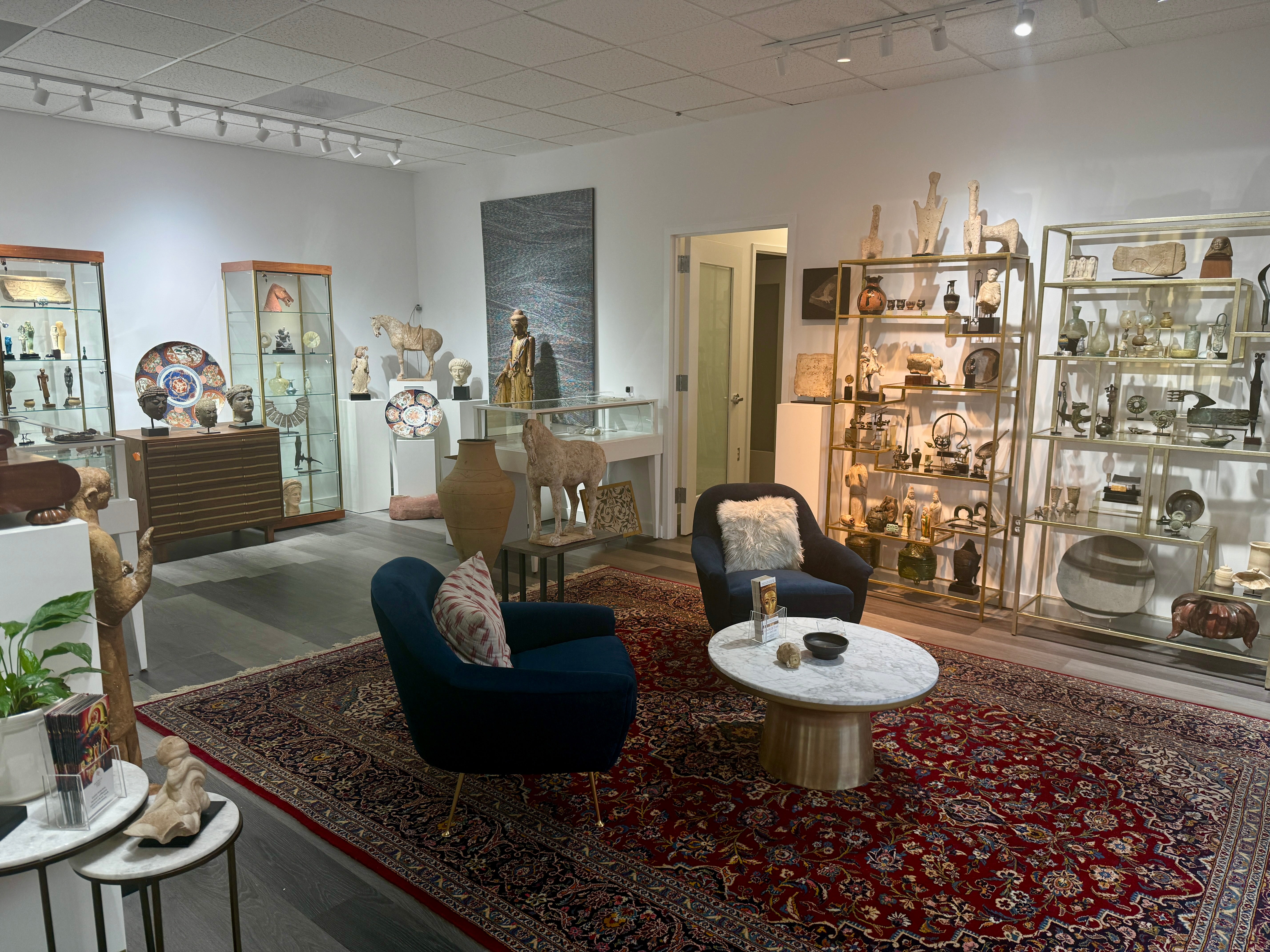
Come Visit Us!
1010 Wisconsin Ave NW, Suite 340
Washington DC. 20007
Tues - Fri, 10:00am - 6:00pm
Sat/Sun/Mon By appointment


