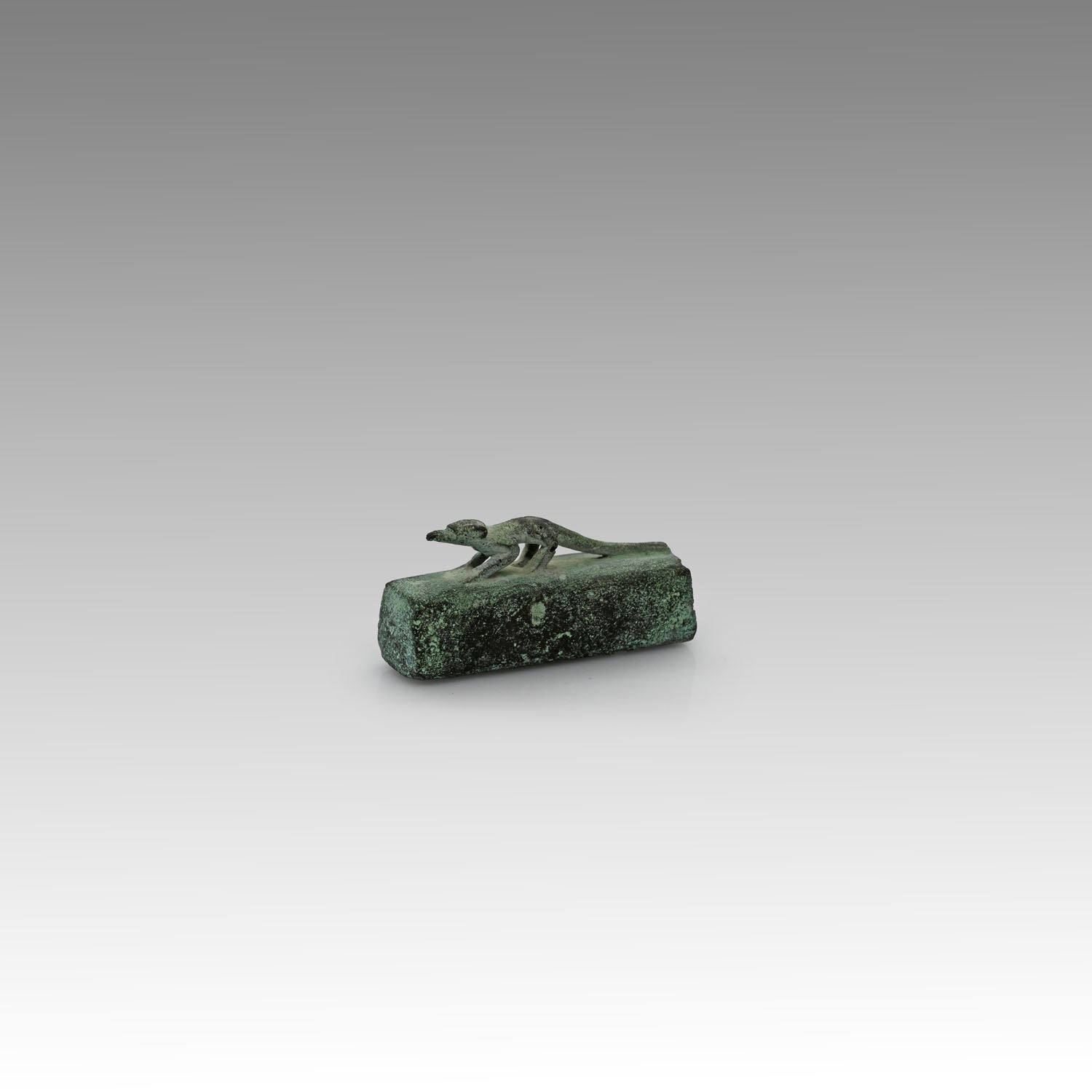
An Egyptian Bronze Ichneumon Sarcophagus, Late Period, ca 664 - 332 BCE
Dieser Artikel qualifiziert sich für kostenlosen Versand innerhalb der USA und eine pauschale Gebühr von 75 US-Dollar für den internationalen Versand.
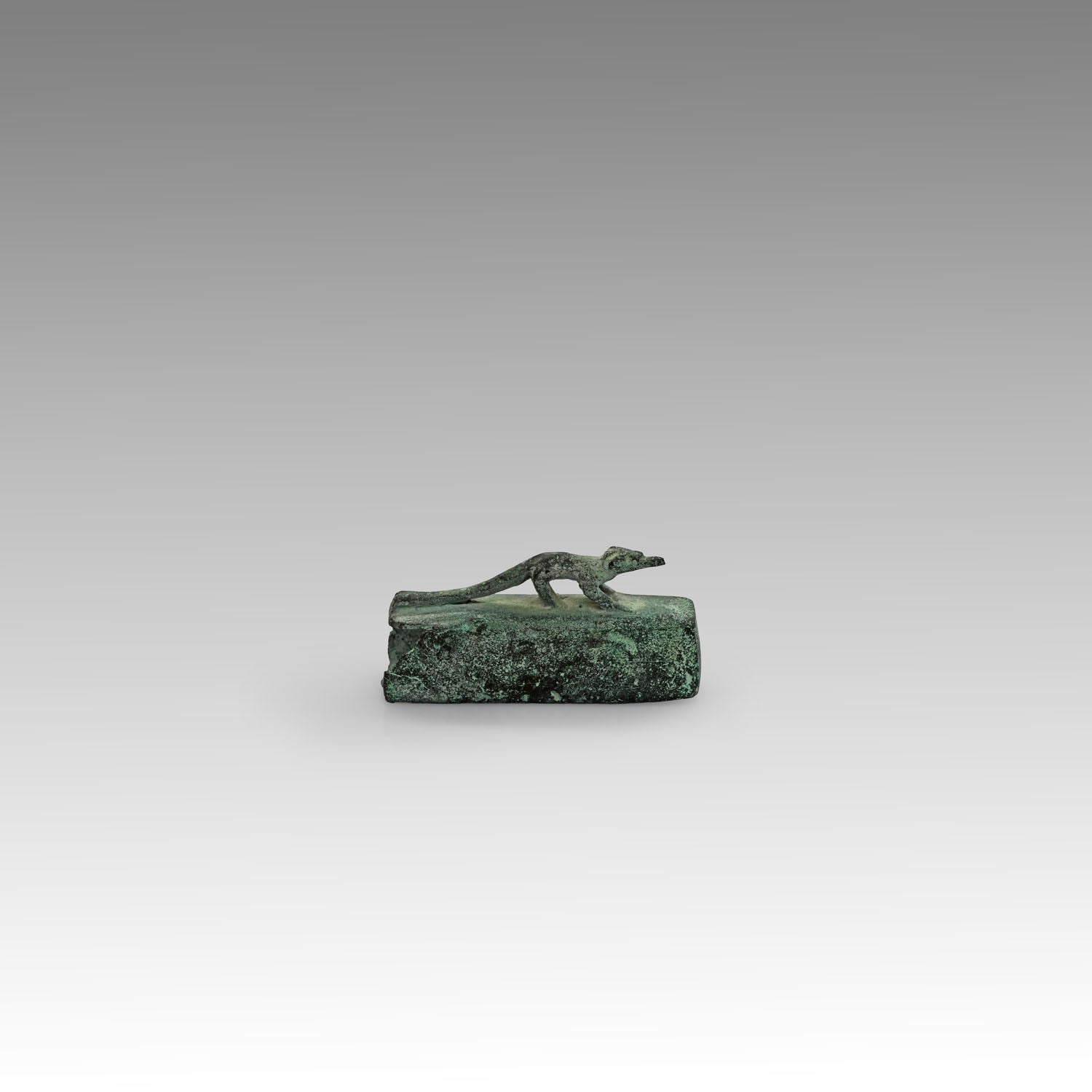
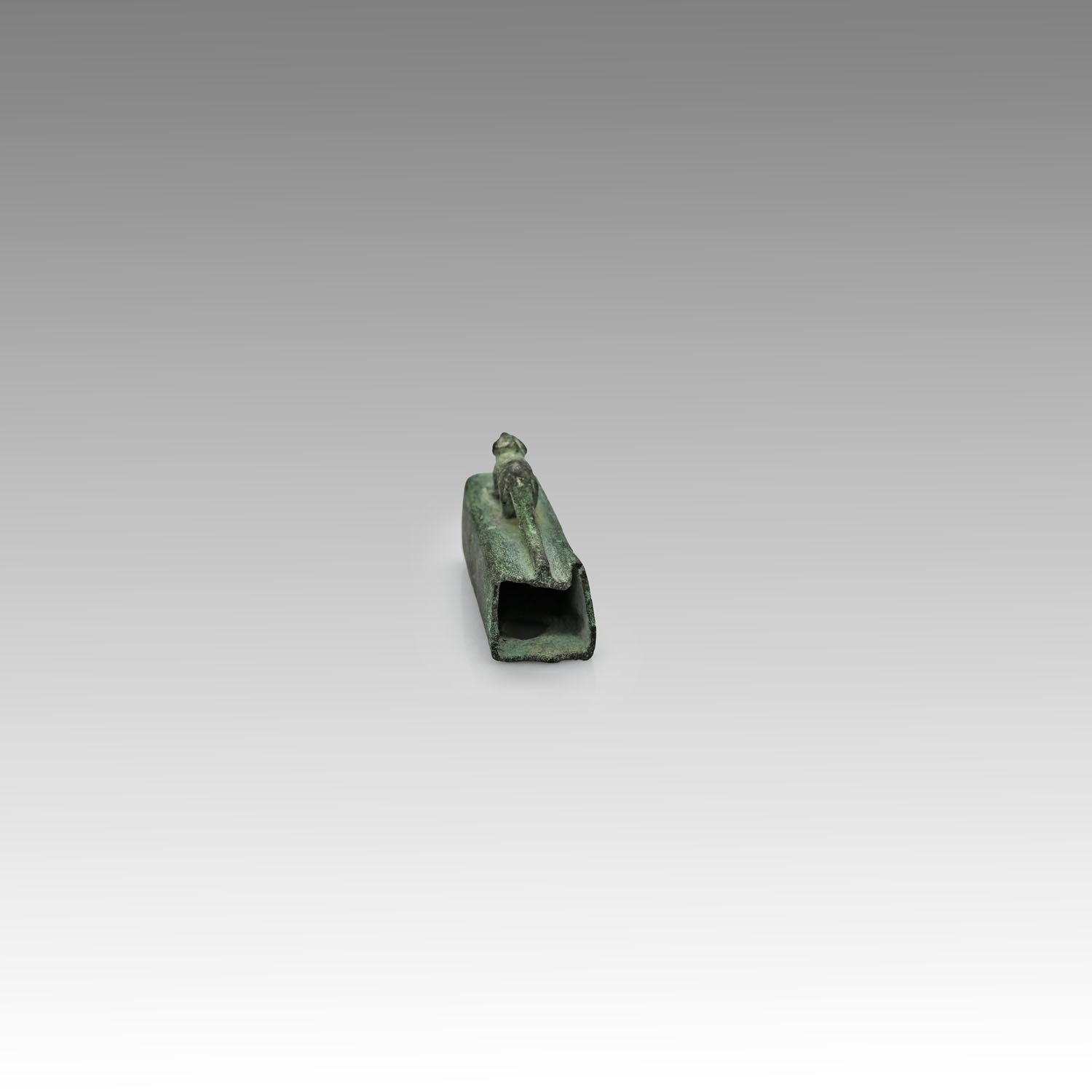
A finely cast bronze votive sarcophagus surmounted by a striding ichneumon, shown with elongated body, slender legs, extended tail, and projecting muzzle. The animal stands atop a hollow rectangular coffin-form base with an open underside, characteristic of small Late Period bronze votive coffins produced for sacred animal cults. The figure is rendered in a highly stylized yet lively manner, with particular attention paid to the elegant linearity of the body and tail. The surface bears an attractive mottled green patina with areas of darker oxidation throughout.
The ichneumon, a species of Egyptian mongoose, held important symbolic associations in ancient Egypt due to its famed ability to kill snakes and destroy crocodile eggs. As a protective animal linked with solar triumph over chaos, the ichneumon became associated with the god Atum and aspects of solar renewal. Bronze sarcophagi of this type were produced to contain the mummified remains of sacred animals dedicated as votive offerings within temple precincts during the Late Period.
Animal cults flourished extensively during the first millennium BCE, particularly from the Saite through Ptolemaic periods, when pilgrims commissioned bronze votive objects and animal coffins in honor of specific deities. Ichneumon sarcophagi are considerably rarer than those created for cats, falcons, or ibises, making surviving examples especially desirable.
Medium: Bronze
Dimensions:
Condition: Hollow cast with open underside as made. Minor surface wear and encrustation consistent with age; attractive green patina and areas of oxidation throughout. Intact overall and well preserved.
Provenance: Nora Scott (1905 – 1994), Curator of Egyptian Art at the Metropolitan Museum of Art, (retired 1972), and acquired from the Metropolitan Museum of Art by deaccession. Gifted to L. Virginia Burton (1918–2009) Associate Curator of Egyptian Art at the Metropolitan Museum of Art (retired 1977), and then by descent.
FRAGEN? Klicken Sie einfach auf den Tab „Kontakt“ auf der rechten Seite.
Wir versenden von Dienstag bis Freitag per Bodenkurier und in der Regel noch am selben Tag, wenn Ihre Bestellung vor 14 Uhr eingeht. Innerhalb der kontinentalen USA sind Verpackung, Versand und Versicherung kostenlos. Je nach Größe und Bestimmungsort liegen die Lieferzeiten zwischen einem und fünf Werktagen.
Für Überseeversand berechnen wir eine niedrige Pauschale, die Verpackung, die Erstellung aller Zollpapiere, Versicherung und Speditionsgebühren gemäß allen US-amerikanischen und internationalen Zollbestimmungen beinhaltet.
Internationale Sendungen werden per FedEx, DHL oder UPS International Priority verschickt. Bitte kontaktieren Sie uns, wenn Sie eine Versandpräferenz haben. Internationale Kunden sind für alle Zölle und Steuern verantwortlich.
Sands of Time gewährt eine lebenslange, bedingungslose Garantie auf die Echtheit und Herkunft. Jedem Objekt, das Sie von uns erwerben, liegt ein Echtheitszertifikat bei, das Kultur, Herkunft und Alter angibt.
Darüber hinaus führen wir eine Due Diligence durch, um sicherzustellen, dass der Gegenstand nach unserem besten Wissen nicht illegal aus einer Ausgrabungsstätte, einem Baudenkmal, einer öffentlichen Einrichtung oder einem Privatbesitz erworben wurde. Wo immer möglich, wird auf bestehende Sammlungen oder Veröffentlichungen verwiesen. Wo immer möglich, wird auf bestehende Sammlungen oder Veröffentlichungen verwiesen.
Optionen auswählen


