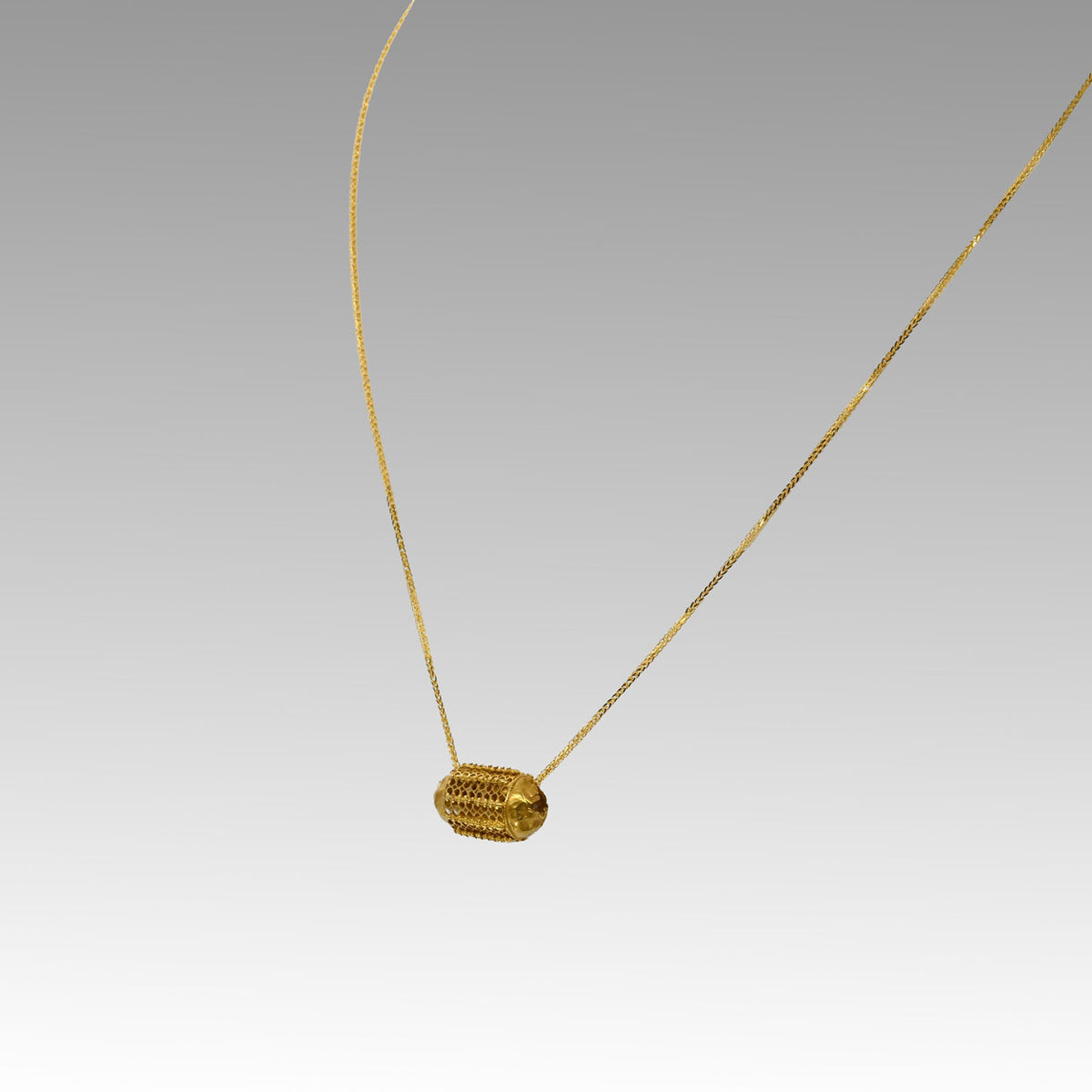
An Islamic Gold Pendant, Fatimid Period, ca. 10th–12th century CE
Dieser Artikel qualifiziert sich für kostenlosen Versand innerhalb der USA und eine pauschale Gebühr von 75 US-Dollar für den internationalen Versand.
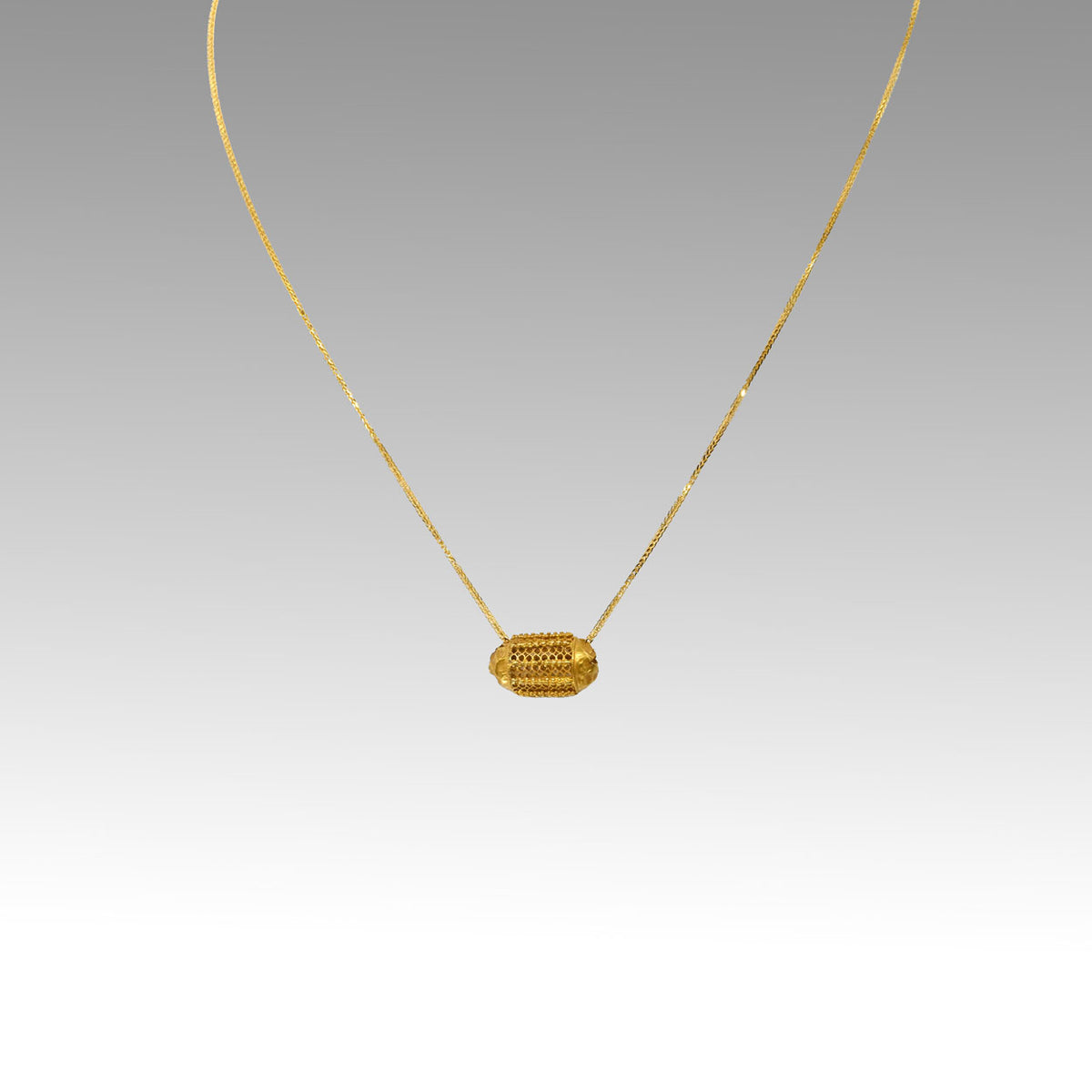
A finely worked gold bead of cylindrical barrel form, decorated with intricate openwork comprising horizontal bands of delicate latticework framed by rows of applied gold granules. The pierced decoration creates a rich interplay of light and shadow, while the rounded terminals provide a pleasing contrast to the geometric precision of the central section. Despite its diminutive size, the bead displays the sophisticated craftsmanship and attention to detail characteristic of medieval Islamic goldsmithing.
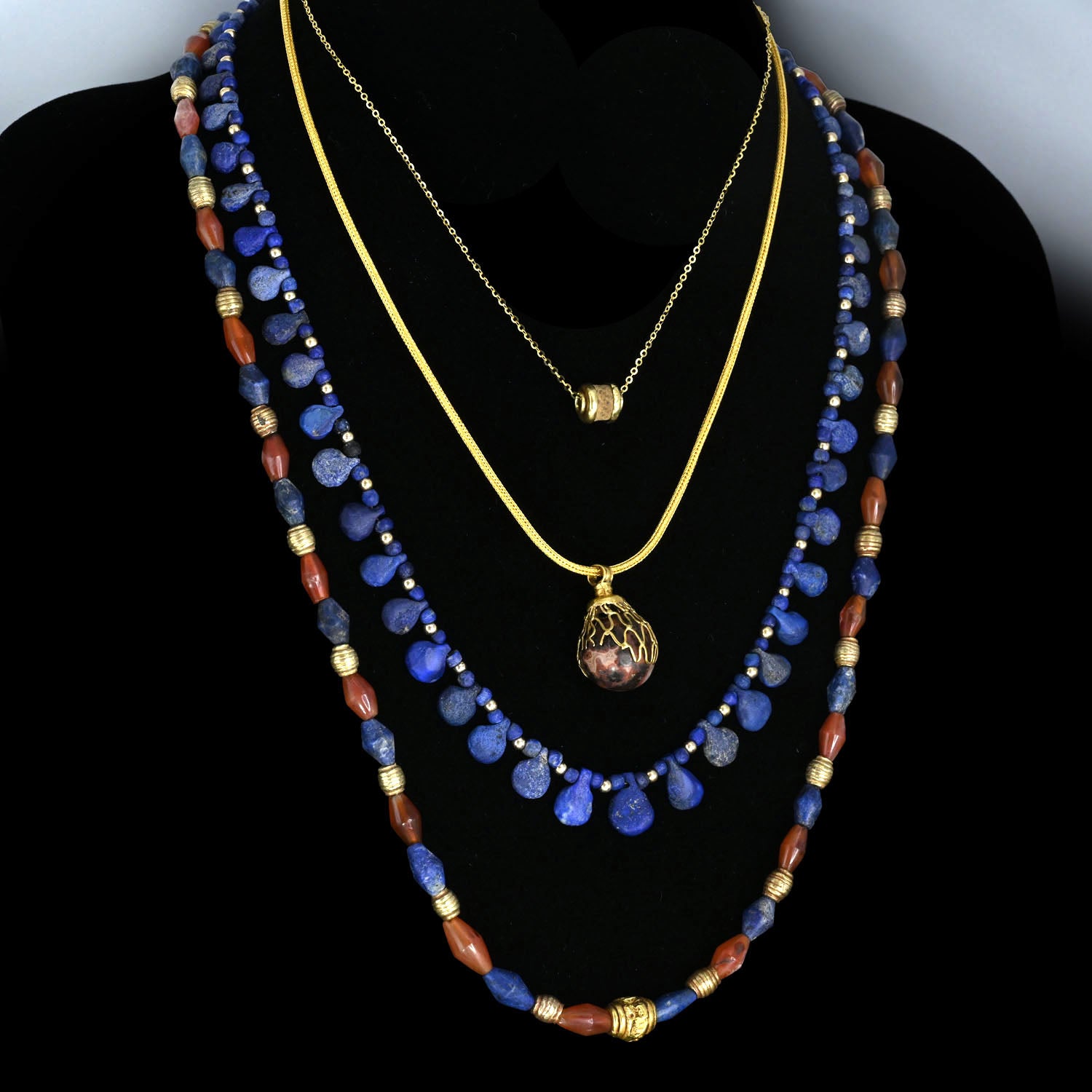
Openwork, filigree, and granulation were particularly refined during the Fatimid period (909–1171 CE), when goldsmiths in Egypt and Syria produced elaborate jewelry distinguished by its delicacy and technical complexity. Gold beads of this type were incorporated into necklaces, often combined with other precious materials. The present example has been mounted as a pendant on a modern 18K yellow gold chain, allowing this elegant example of Islamic goldwork to be worn and appreciated today.
Medium: Gold
Dimensions: Pendant length: 5/8 inch (1.8 cm) Strung as a pendant on an 18K yellow gold chain adjustable up to 18 inches
Condition: Wear and small losses to the terminal edges that do not detract from the fine openwork, otherwise intact and in very good condition overall.
Provenance: Collection of Henry Anavian, Sumer Gallery, NYC., 1980’s. To family by inheritance.
FRAGEN? Klicken Sie einfach auf den Tab „Kontakt“ auf der rechten Seite.
Wir versenden von Dienstag bis Freitag per Bodenkurier und in der Regel noch am selben Tag, wenn Ihre Bestellung vor 14 Uhr eingeht. Innerhalb der kontinentalen USA sind Verpackung, Versand und Versicherung kostenlos. Je nach Größe und Bestimmungsort liegen die Lieferzeiten zwischen einem und fünf Werktagen.
Für Überseeversand berechnen wir eine niedrige Pauschale, die Verpackung, die Erstellung aller Zollpapiere, Versicherung und Speditionsgebühren gemäß allen US-amerikanischen und internationalen Zollbestimmungen beinhaltet.
Internationale Sendungen werden per FedEx, DHL oder UPS International Priority verschickt. Bitte kontaktieren Sie uns, wenn Sie eine Versandpräferenz haben. Internationale Kunden sind für alle Zölle und Steuern verantwortlich.
Sands of Time gewährt eine lebenslange, bedingungslose Garantie auf die Echtheit und Herkunft. Jedem Objekt, das Sie von uns erwerben, liegt ein Echtheitszertifikat bei, das Kultur, Herkunft und Alter angibt.
Darüber hinaus führen wir eine Due Diligence durch, um sicherzustellen, dass der Gegenstand nach unserem besten Wissen nicht illegal aus einer Ausgrabungsstätte, einem Baudenkmal, einer öffentlichen Einrichtung oder einem Privatbesitz erworben wurde. Wo immer möglich, wird auf bestehende Sammlungen oder Veröffentlichungen verwiesen. Wo immer möglich, wird auf bestehende Sammlungen oder Veröffentlichungen verwiesen.
Optionen auswählen
Zuletzt angesehen
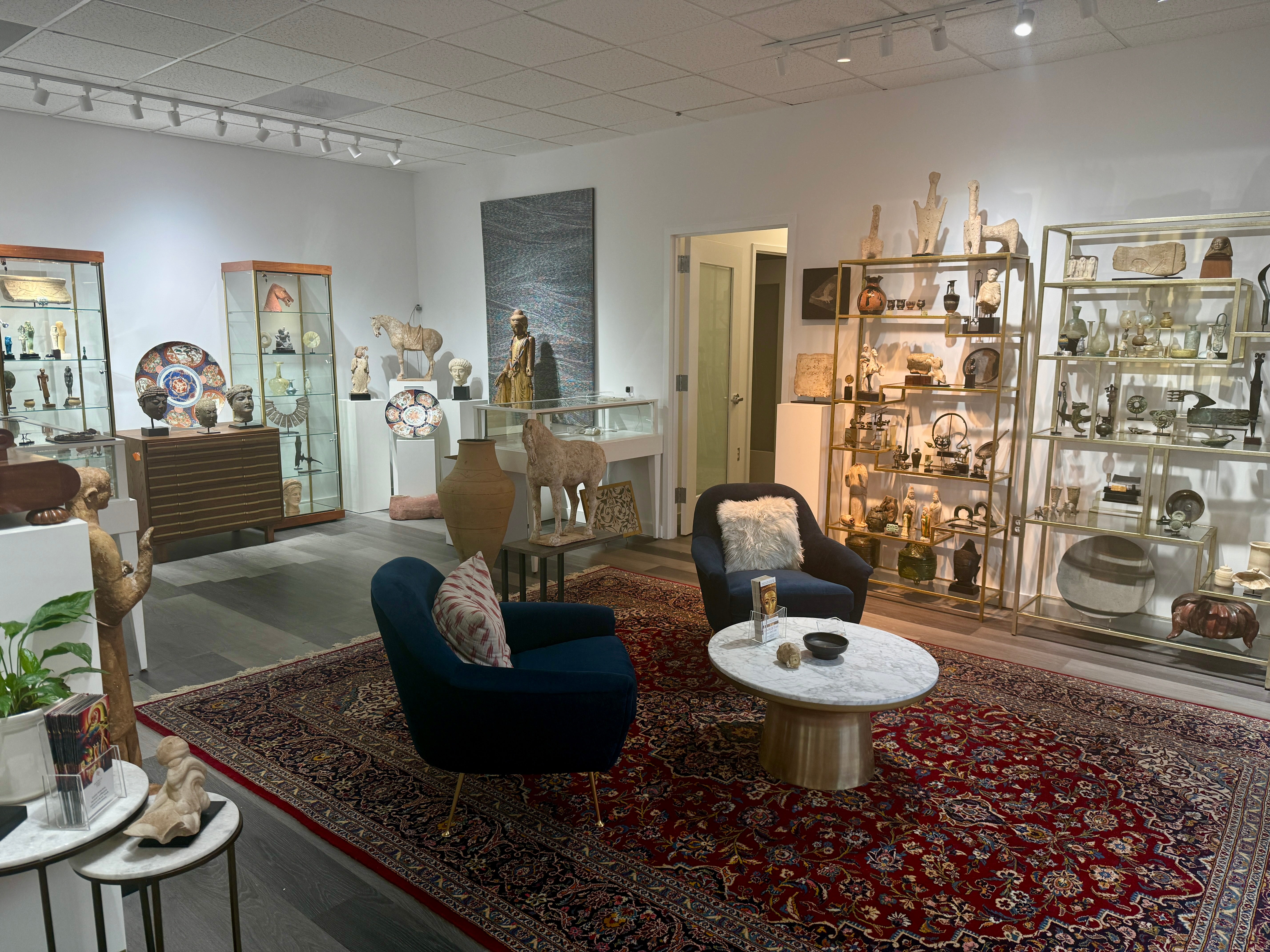
Come Visit Us!
1010 Wisconsin Ave NW, Suite 340
Washington DC. 20007
Tues - Fri, 10:00am - 6:00pm
Sat/Sun/Mon By appointment


