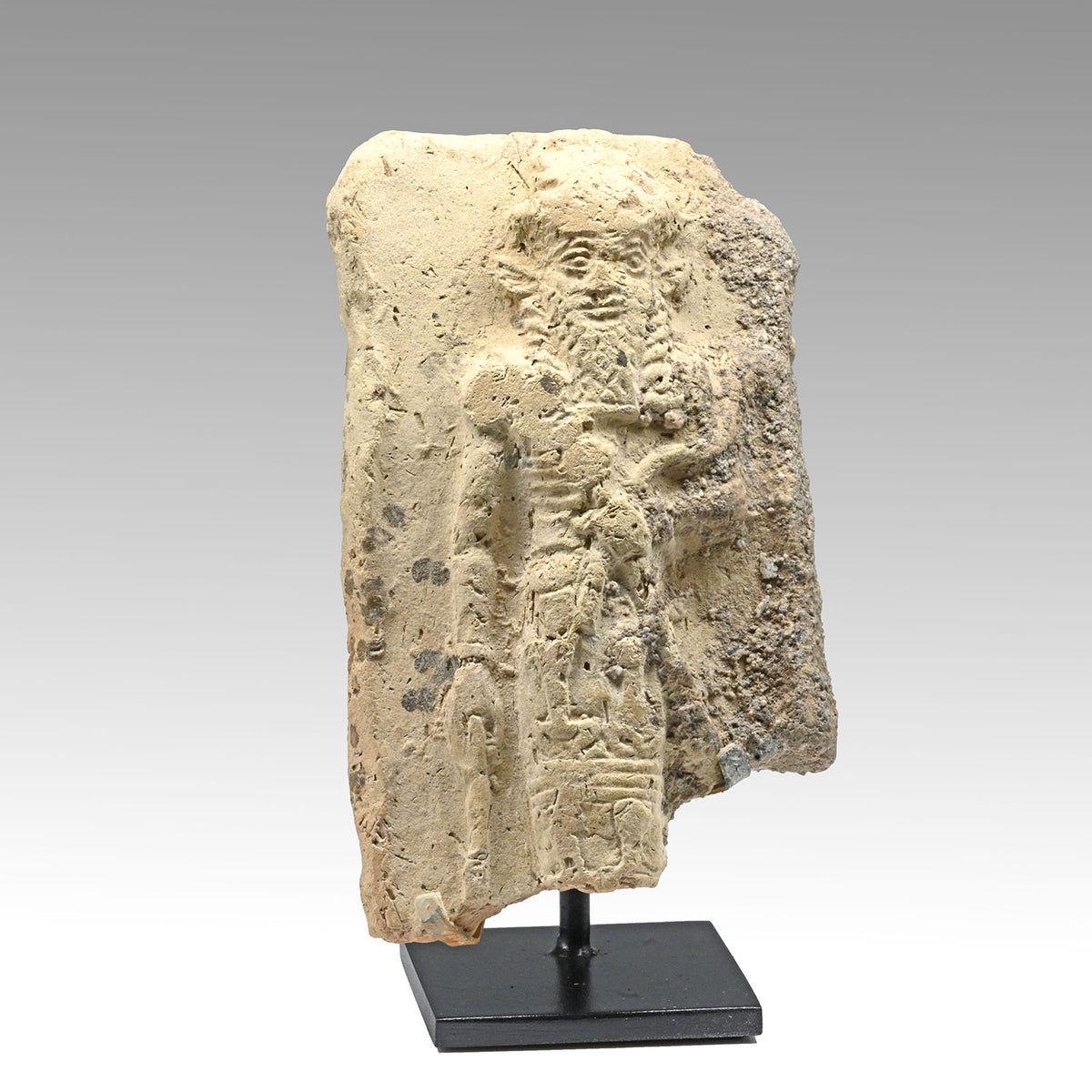

An Old Babylonian Terracotta Plaque Depicting Nergal, Old Babylonian Period, ca. 2004 - 1595 BCE
Dieser Artikel qualifiziert sich für kostenlosen Versand innerhalb der USA und eine pauschale Gebühr von 75 US-Dollar für den internationalen Versand.
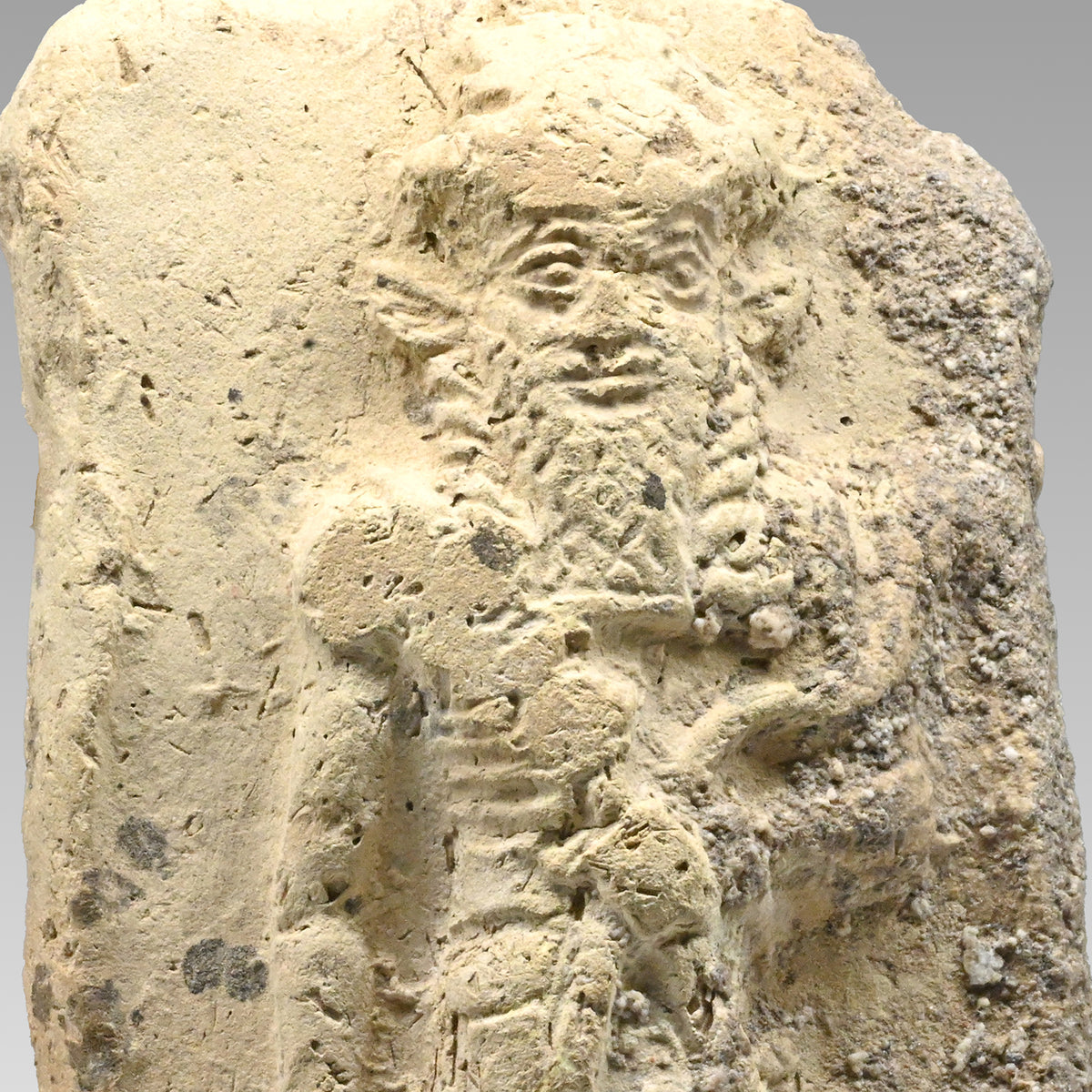
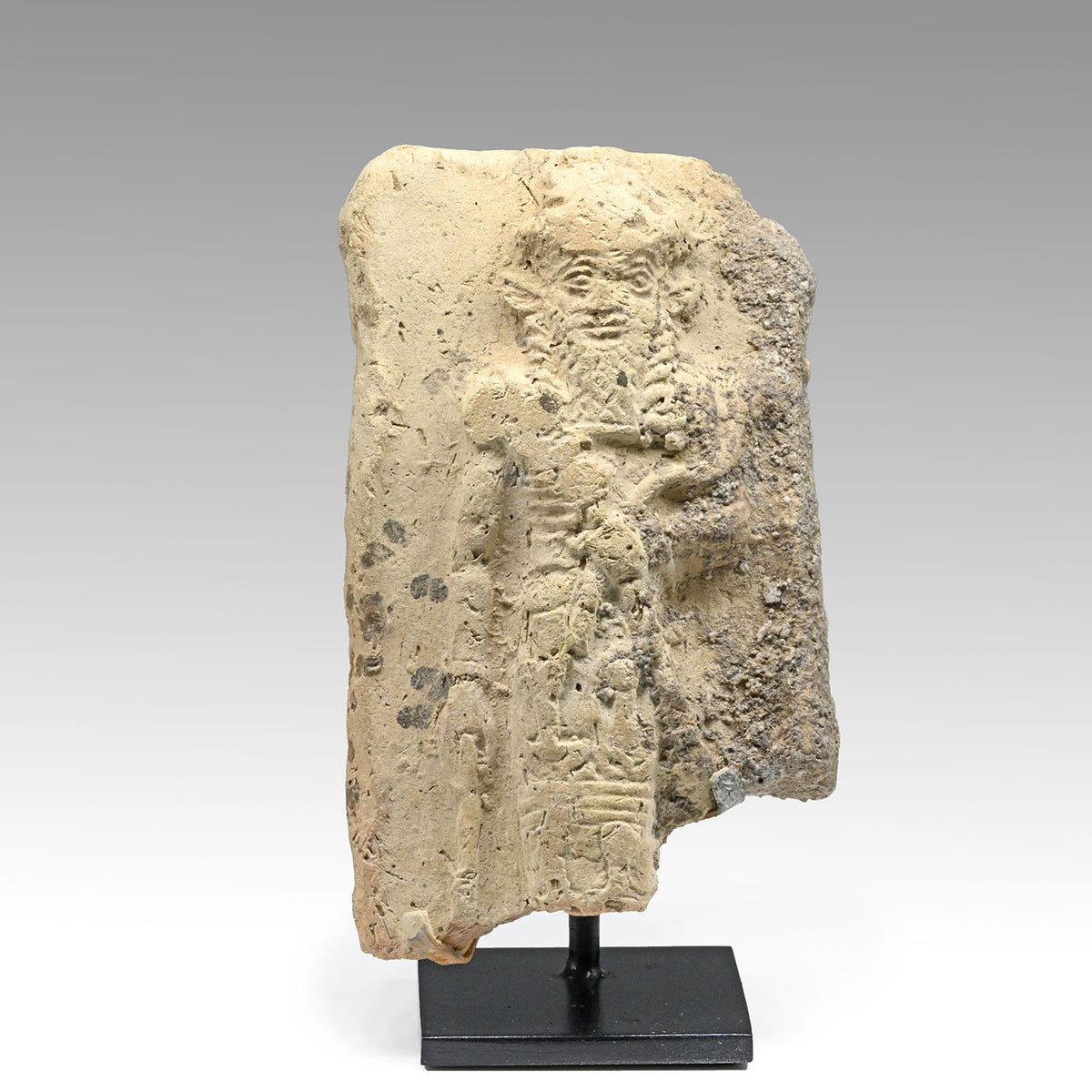
A molded terracotta plaque depicting Nergal, the Mesopotamian god of war, disease, death, and the netherworld. The deity stands facing forward, with large, deeply modeled eyes, a prominent nose, an elaborate curled beard, and textured hair. He wears a long, patterned garment decorated with horizontal bands and incised details, and holds an attribute across his upper body.
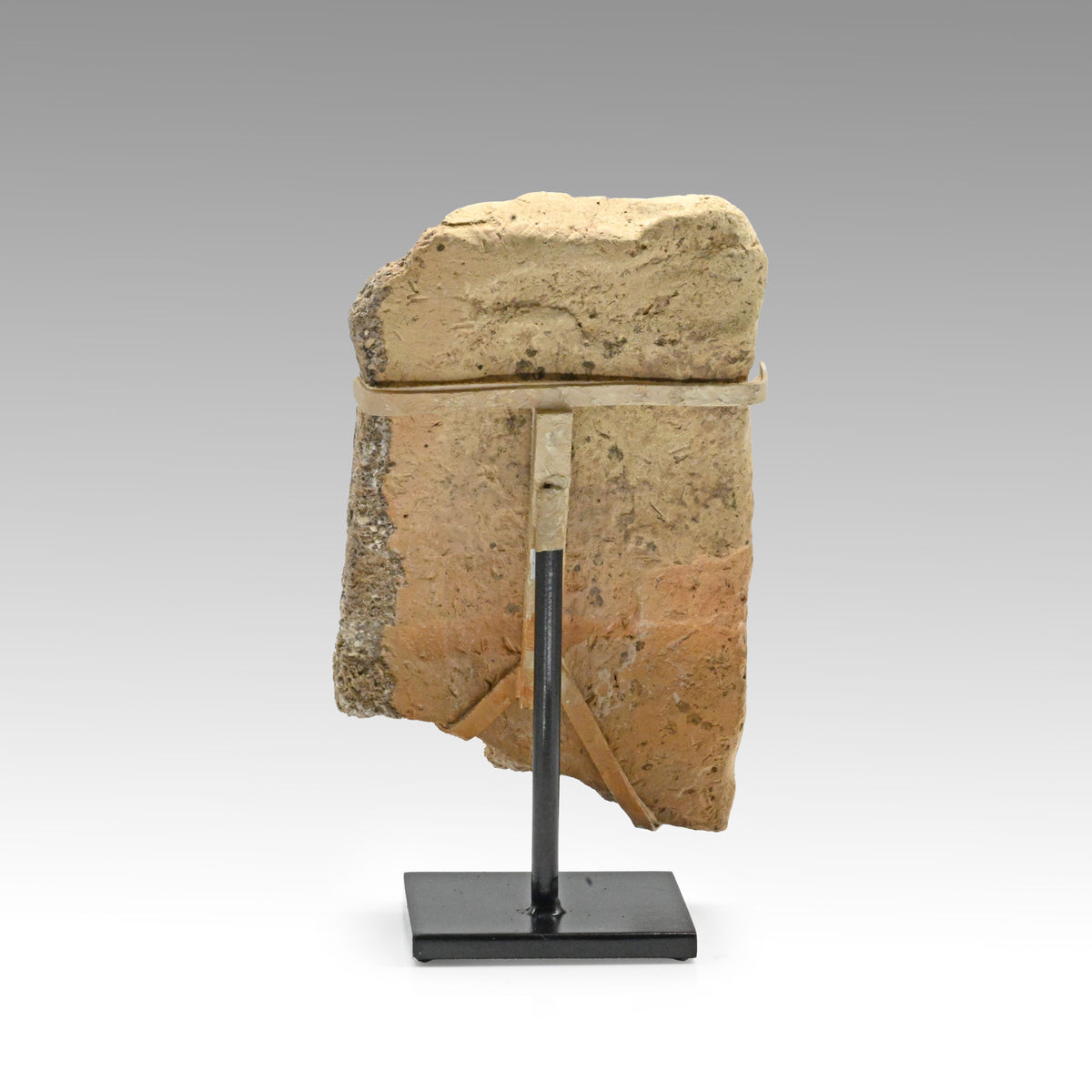
Molded terracotta plaques were produced in large numbers throughout Mesopotamia beginning in the late third millennium BCE, becoming particularly widespread during the Old Babylonian period. Made by pressing damp clay into molds, these small reliefs depicted deities, rulers, mythological subjects, and scenes of everyday life. The reverse of this example preserves impressions of the maker's fingers where the clay was pressed into the mold.
Often interpreted as charms or objects of personal devotion, these plaques have been excavated primarily in domestic settings, streets, and refuse deposits, although their precise function remains uncertain. Clay itself held particular significance in Mesopotamian belief, where the gods were understood to have fashioned humankind from clay. As discussed in The Metropolitan Museum of Art Bulletin (Spring 2024), creating an image in clay may have been understood as a way of bringing that image to life. These small representations of deities may therefore have offered ordinary people a tangible connection to the divine, particularly during a period of considerable political uncertainty.
For a related example, see: Princeton University Art Museum, Relief Plaque Depicting Nergal, Old Babylonian period, accession no. 2002-74.
Literature: Sarah B. Graff, “No King Is Truly Powerful on His Own,” The Metropolitan Museum of Art Bulletin, vol. 81, no. 4, Leadership and Society (Spring 2024), pp. 7–9.
Medium: Terracotta
Dimensions: Height: 4 3/4 inches (12.06 cm)
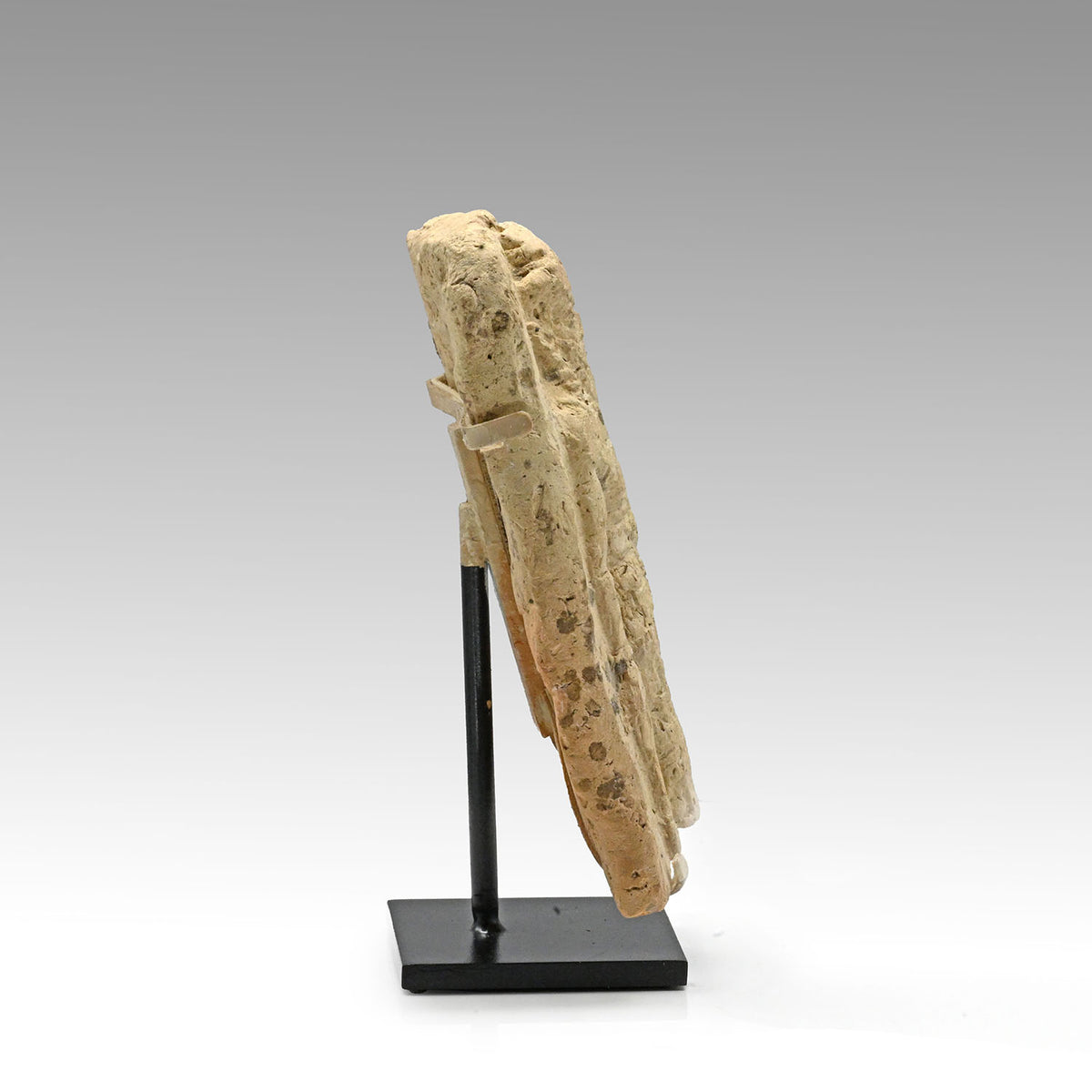
Condition: Fragmentary, with losses to the lower portion and upper left corner. Surface wear, scattered abrasions, and mineral accretions, with some softening of the molded details, particularly along the right side. The principal facial features and much of the garment remain well defined. Presented on a museum quality custom mount.
Provenance: Jack Guevrekian, Manhasset, New York, private collection, acquired in the 1980s, thereafter private New York City collection.
FRAGEN? Klicken Sie einfach auf den Tab „Kontakt“ auf der rechten Seite.
Wir versenden von Dienstag bis Freitag per Bodenkurier und in der Regel noch am selben Tag, wenn Ihre Bestellung vor 14 Uhr eingeht. Innerhalb der kontinentalen USA sind Verpackung, Versand und Versicherung kostenlos. Je nach Größe und Bestimmungsort liegen die Lieferzeiten zwischen einem und fünf Werktagen.
Für Überseeversand berechnen wir eine niedrige Pauschale, die Verpackung, die Erstellung aller Zollpapiere, Versicherung und Speditionsgebühren gemäß allen US-amerikanischen und internationalen Zollbestimmungen beinhaltet.
Internationale Sendungen werden per FedEx, DHL oder UPS International Priority verschickt. Bitte kontaktieren Sie uns, wenn Sie eine Versandpräferenz haben. Internationale Kunden sind für alle Zölle und Steuern verantwortlich.
Sands of Time gewährt eine lebenslange, bedingungslose Garantie auf die Echtheit und Herkunft. Jedem Objekt, das Sie von uns erwerben, liegt ein Echtheitszertifikat bei, das Kultur, Herkunft und Alter angibt.
Darüber hinaus führen wir eine Due Diligence durch, um sicherzustellen, dass der Gegenstand nach unserem besten Wissen nicht illegal aus einer Ausgrabungsstätte, einem Baudenkmal, einer öffentlichen Einrichtung oder einem Privatbesitz erworben wurde. Wo immer möglich, wird auf bestehende Sammlungen oder Veröffentlichungen verwiesen. Wo immer möglich, wird auf bestehende Sammlungen oder Veröffentlichungen verwiesen.
Optionen auswählen
Zuletzt angesehen
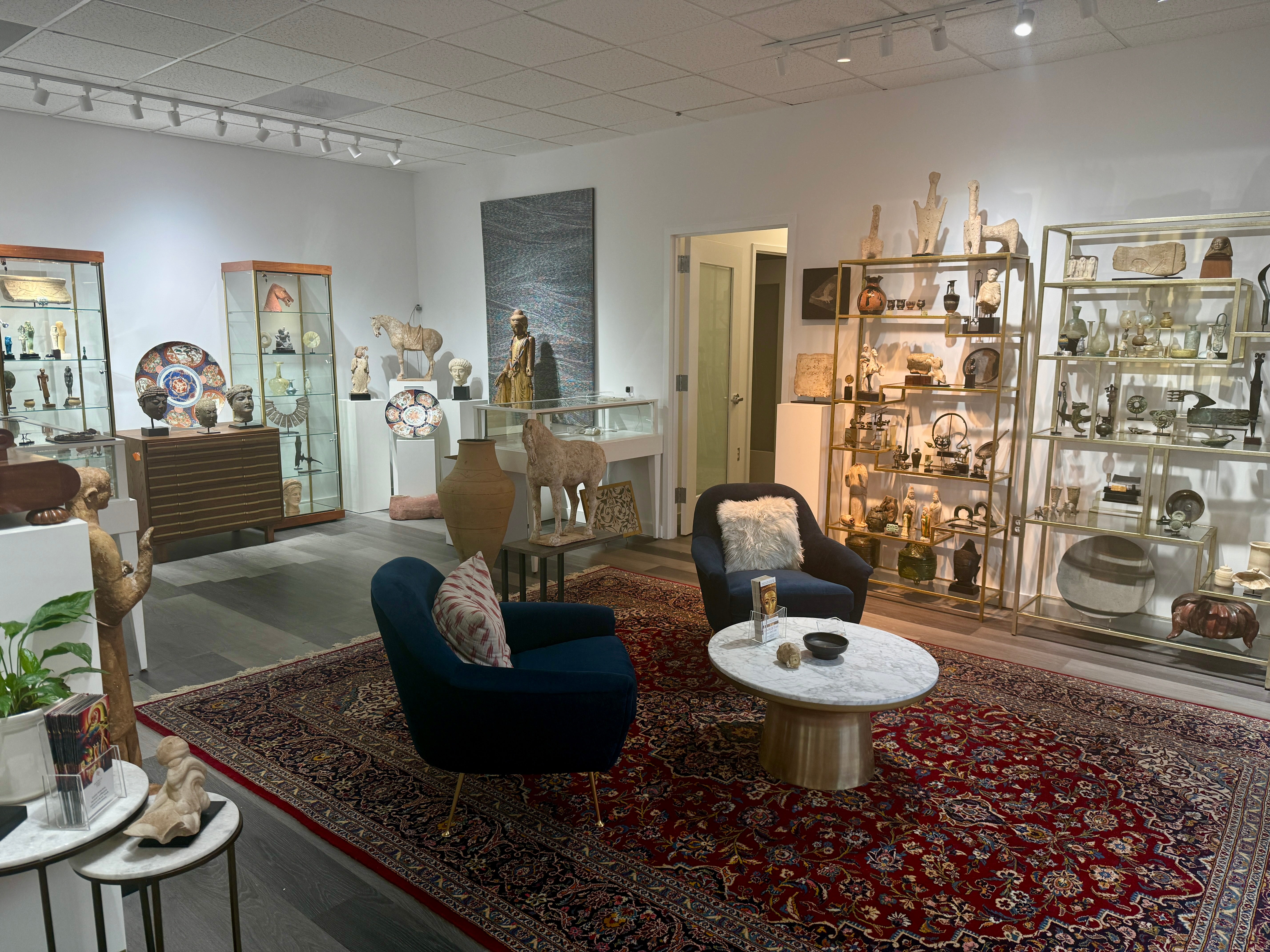
Come Visit Us!
1010 Wisconsin Ave NW, Suite 340
Washington DC. 20007
Tues - Fri, 10:00am - 6:00pm
Sat/Sun/Mon By appointment


