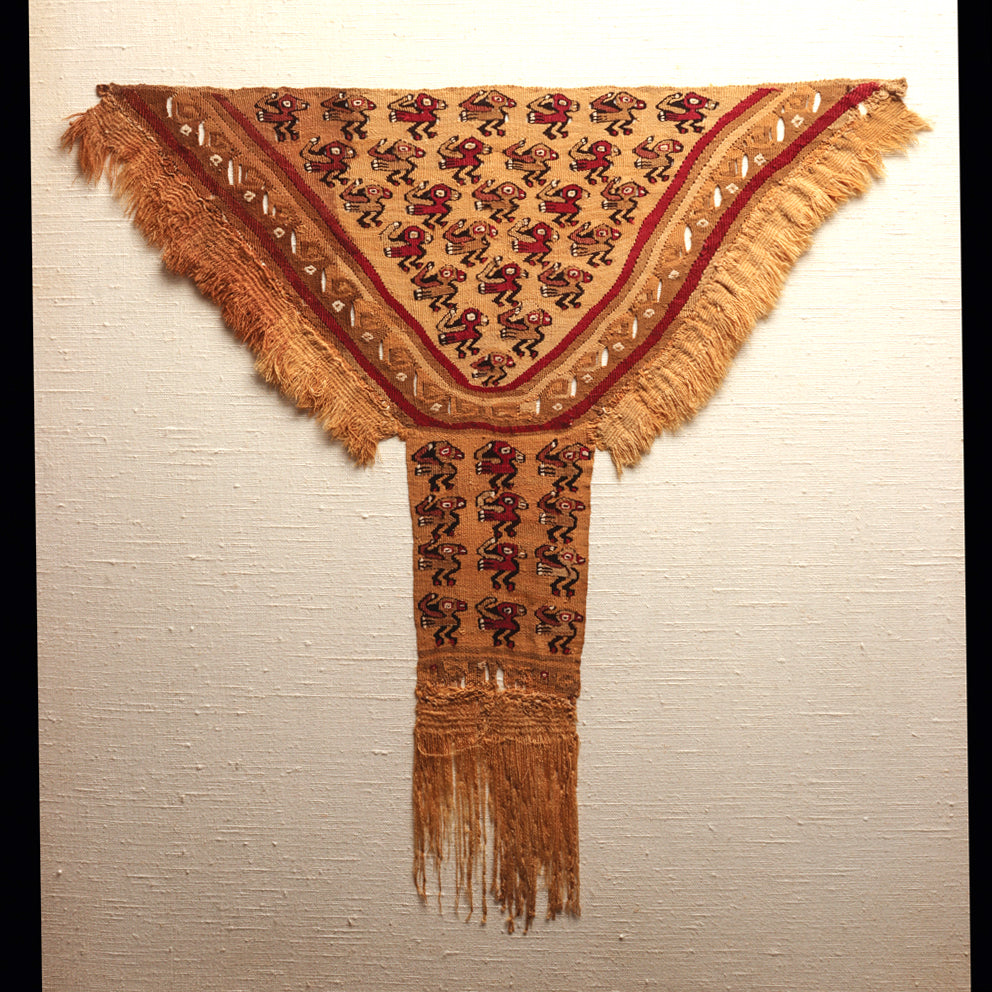
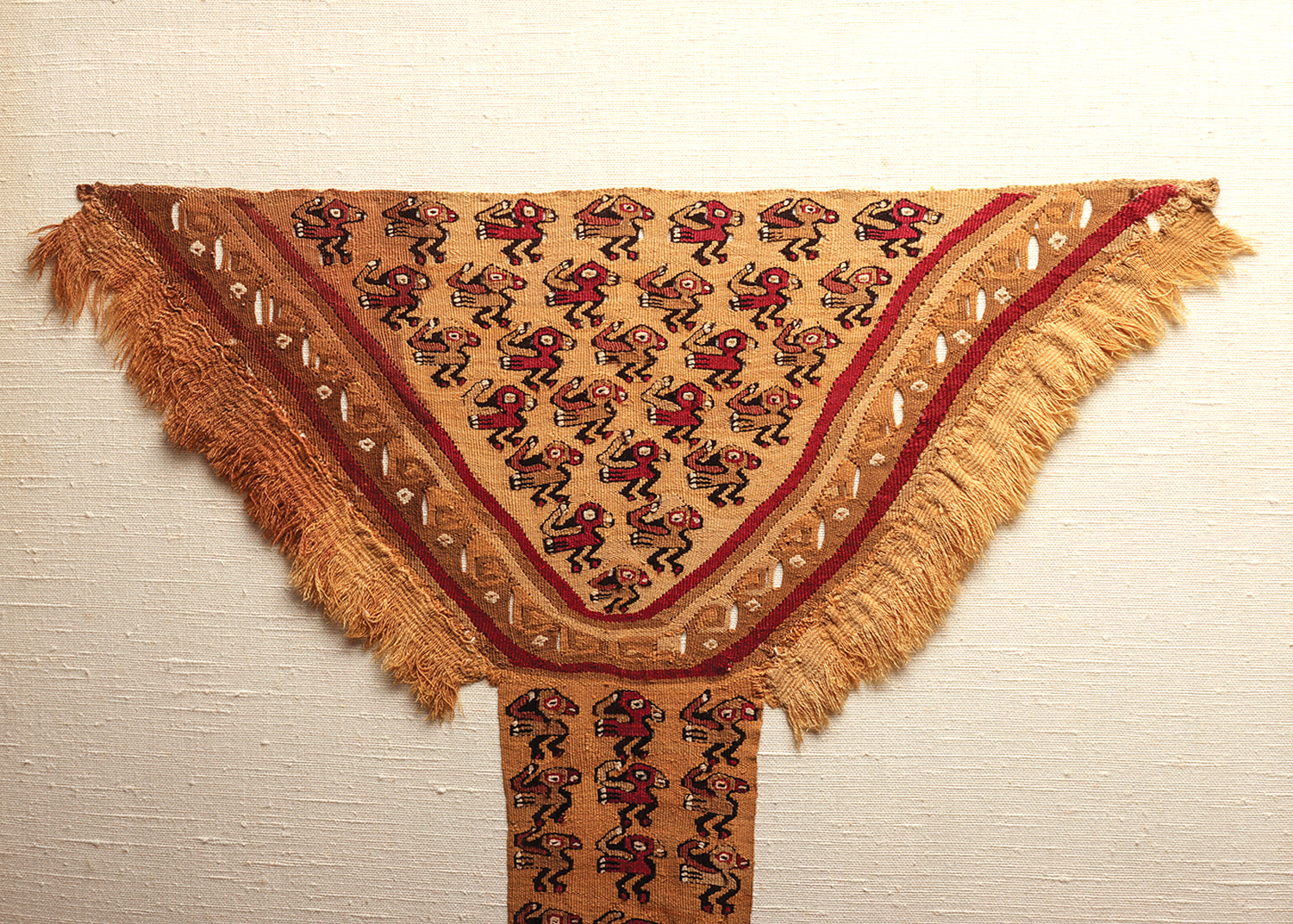
Chancay Loincloth Textile Panel, ca. 1000 - 1425 CE
Dieser Artikel qualifiziert sich für kostenlosen Versand innerhalb der USA und eine pauschale Gebühr von 75 US-Dollar für den internationalen Versand.
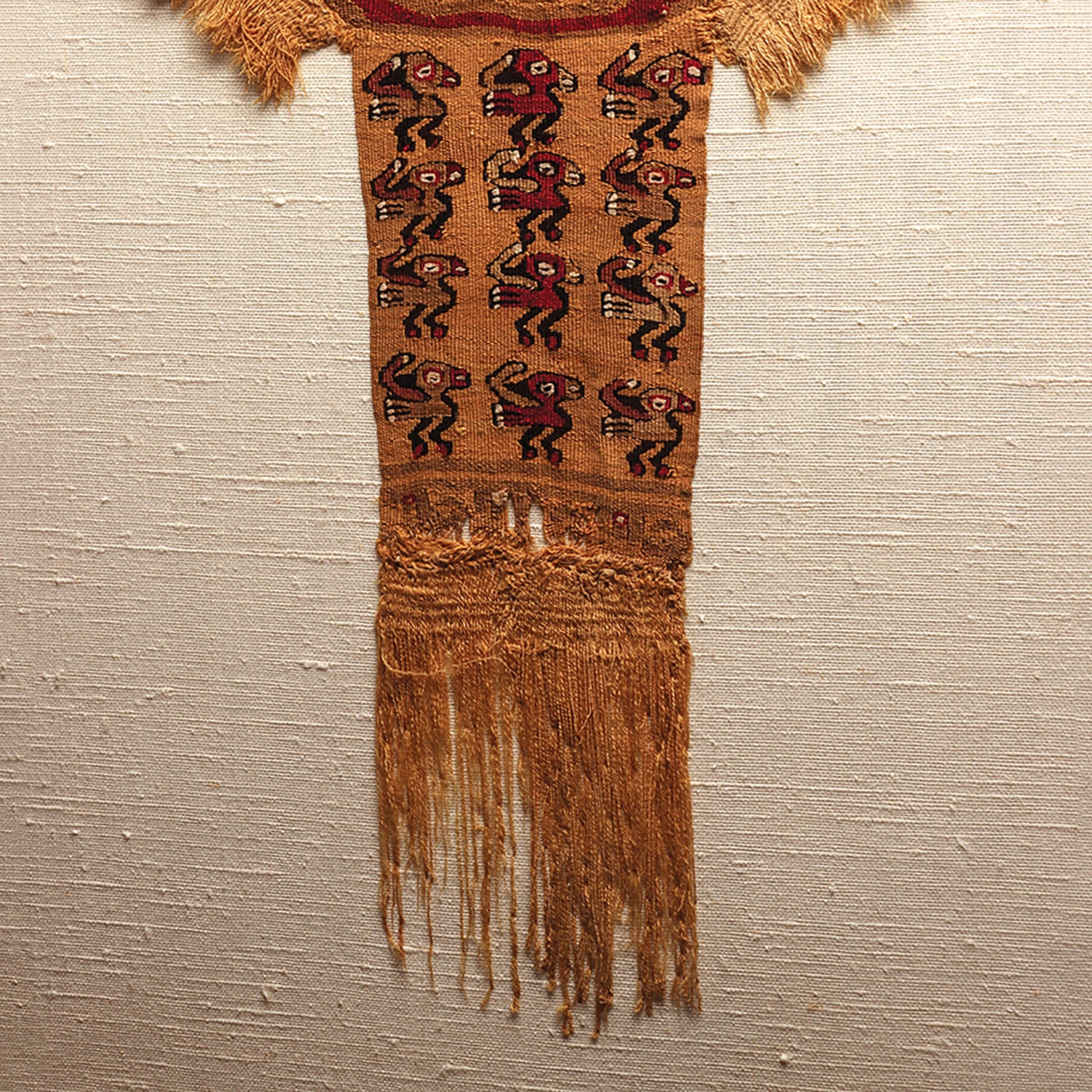
A finely woven, multicolor ceremonial loincloth panel composed of a triangular upper flap and a rectangular lower tab, each densely patterned with registers of stylized birds. The triangular section is framed by a lively slit‑weave wave border and finished with a soft, gold‑toned string fringe, and the rectangular tab below repeats the avian motif in three vertical rows and carries an extended fringe that emphasizes movement. The palette balances warm creams and browns with brighter color accents, and the surface retains crisp definition to the feathers, crests, and beaks.
Background: The Chancay culture flourished on Peru’s central coast between the 11th and mid‑15th centuries and is celebrated for its inventive textile arts. Workshops there favored cotton for strength and camelid fibers for color saturation and softness, employing tapestry, slit weave, gauze, and painted techniques to create garments for life and for funerary display. Loincloths with triangular and rectangular panels were part of elite male dress; their long fringes animated the body in procession and dance, while repeating rows of birds, likely coastal waterfowl and raptors, linked wearers to the sea, the sky, and ideas of vitality and renewal. The undulating wave border seen here is a classic coastal flourish and a visual foil to the orderly bird registers.
Medium: Textile
Dimensions: Textile: Height: 20 1/2 inches (52.07 cm), Width: 20 inches (50.8 cm) Frame: Height: 27.33 inches (69.43 cm), Width: 24.5 ins (62.23 cm)
Condition: Overall excellent condition, with intact fringes and very well-preserved design clarity. Likely cotton warps with camelid-fiber wefts, a hallmark of Chancay coastal production. The panel is sewn to a cloth backing on a wooden stretcher and presented under a plexiglass frame. A lovely example.
Provenance: From the distinguished collection of Justin Kerr and Dicey Taylor, New York City. Kerr, celebrated for pioneering rollout photography and for creating the comprehensive Maya Vase Database, assembled many of the finest examples of Classic Maya painted ceramics during the 1970s and early 1980s. Taylor, an art historian and curator, worked closely with Kerr in cataloguing and researching the collection, and the couple became well known for their scholarship and connoisseurship in Maya art.
FRAGEN? Klicken Sie einfach auf den Tab „Kontakt“ auf der rechten Seite.
Wir versenden von Dienstag bis Freitag per Bodenkurier und in der Regel noch am selben Tag, wenn Ihre Bestellung vor 14 Uhr eingeht. Innerhalb der kontinentalen USA sind Verpackung, Versand und Versicherung kostenlos. Je nach Größe und Bestimmungsort liegen die Lieferzeiten zwischen einem und fünf Werktagen.
Für Überseeversand berechnen wir eine niedrige Pauschale, die Verpackung, die Erstellung aller Zollpapiere, Versicherung und Speditionsgebühren gemäß allen US-amerikanischen und internationalen Zollbestimmungen beinhaltet.
Internationale Sendungen werden per FedEx, DHL oder UPS International Priority verschickt. Bitte kontaktieren Sie uns, wenn Sie eine Versandpräferenz haben. Internationale Kunden sind für alle Zölle und Steuern verantwortlich.
Sands of Time gewährt eine lebenslange, bedingungslose Garantie auf die Echtheit und Herkunft. Jedem Objekt, das Sie von uns erwerben, liegt ein Echtheitszertifikat bei, das Kultur, Herkunft und Alter angibt.
Darüber hinaus führen wir eine Due Diligence durch, um sicherzustellen, dass der Gegenstand nach unserem besten Wissen nicht illegal aus einer Ausgrabungsstätte, einem Baudenkmal, einer öffentlichen Einrichtung oder einem Privatbesitz erworben wurde. Wo immer möglich, wird auf bestehende Sammlungen oder Veröffentlichungen verwiesen. Wo immer möglich, wird auf bestehende Sammlungen oder Veröffentlichungen verwiesen.
Optionen auswählen
Zuletzt angesehen
Come Visit Us!
1010 Wisconsin Ave NW, Suite 340
Washington DC. 20007
Tues - Fri, 10:00am - 6:00pm
Sat/Sun/Mon By appointment


