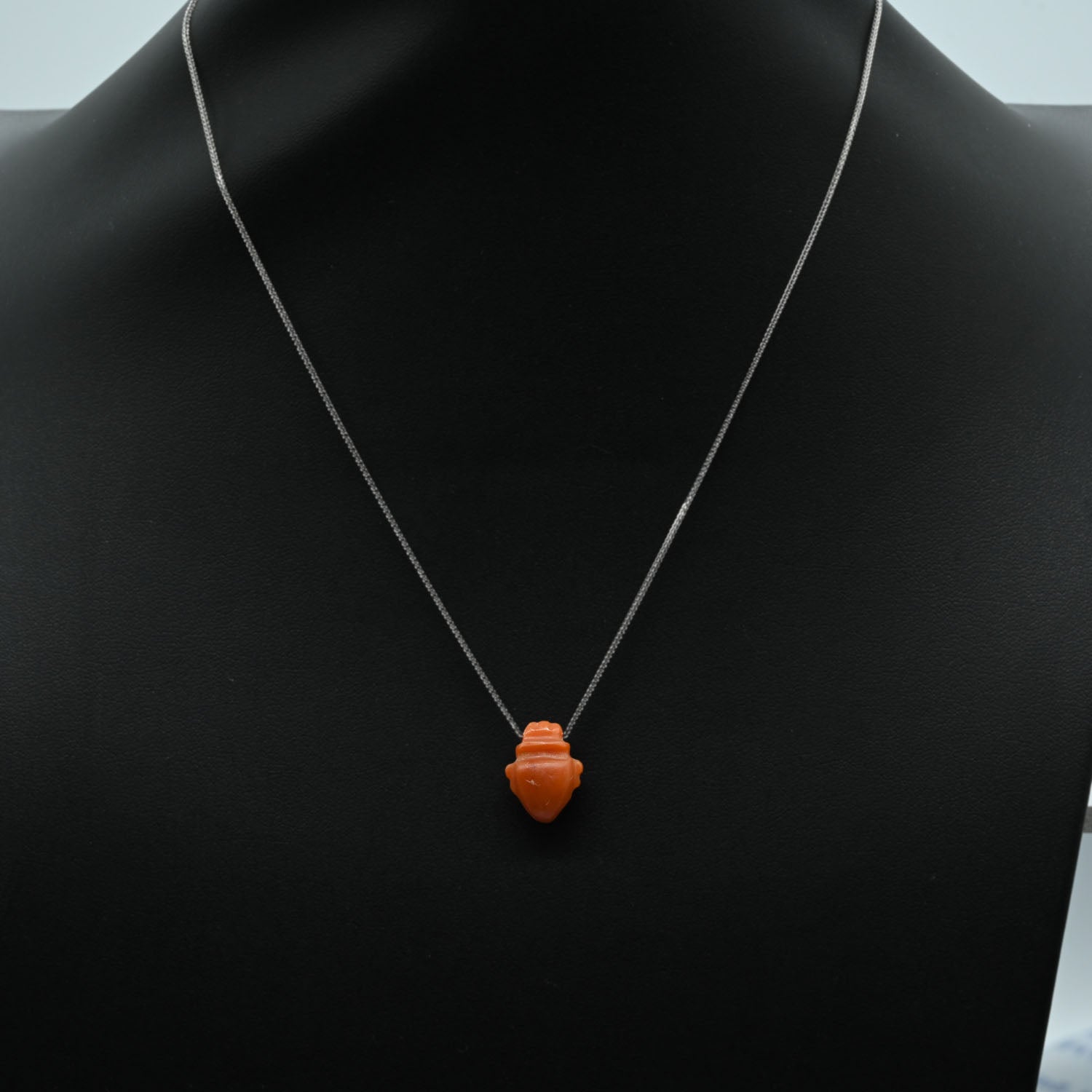
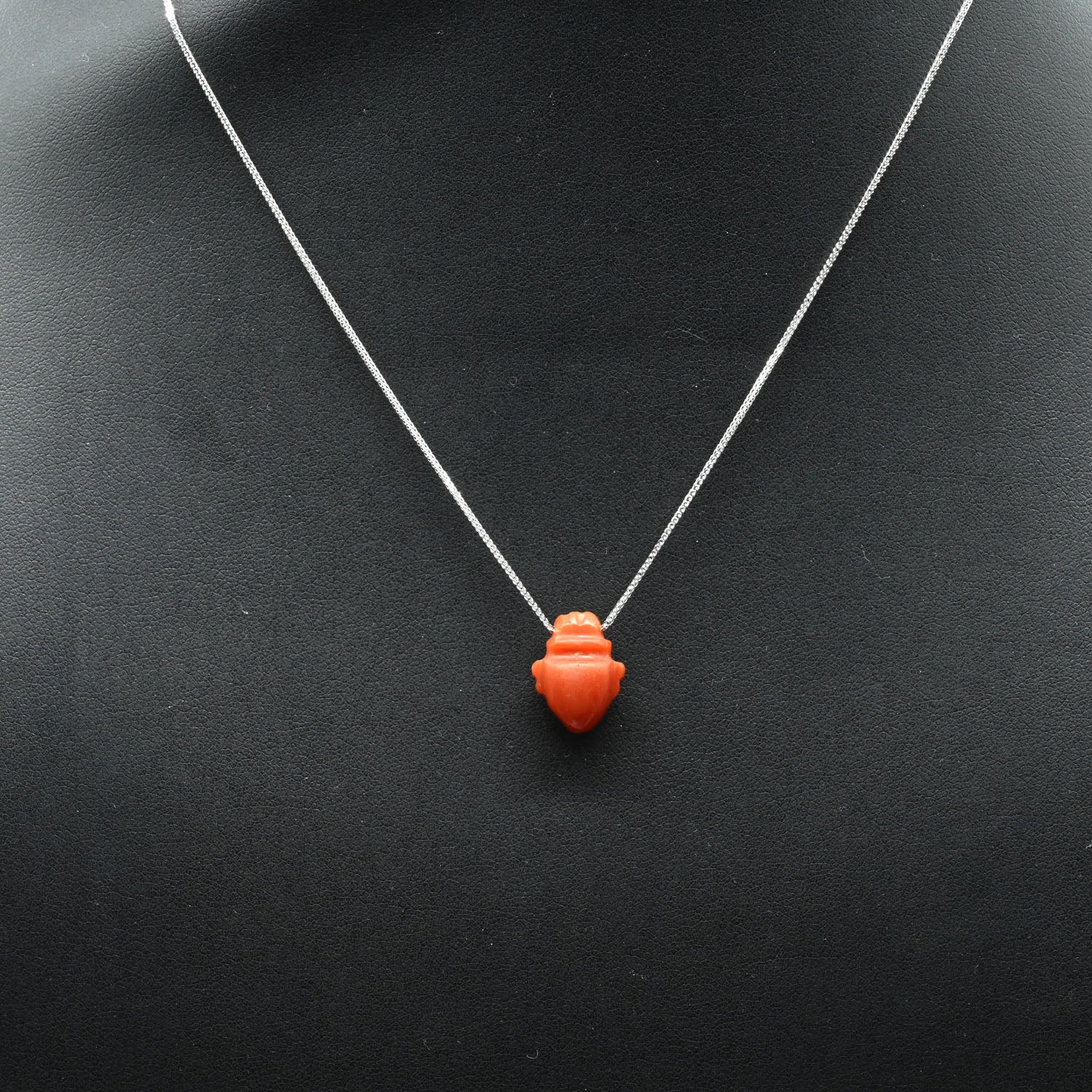
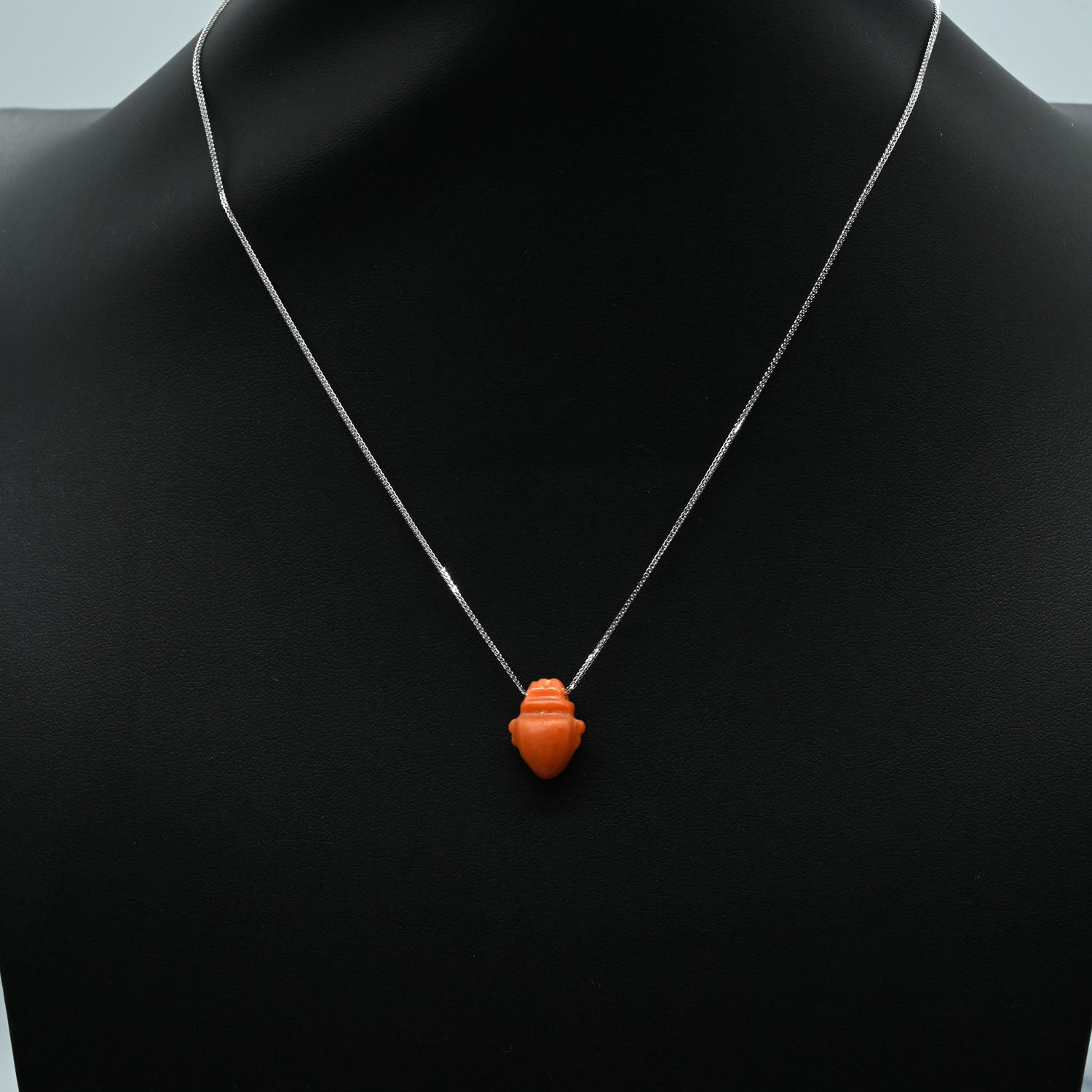
An Egyptian Carnelian Heart Amulet, New Kingdom, ca. 1550 - 1295 BCE
This object qualifies for free USA shipping and a flat rate fee of $75 if shipping internationally.
Among the most important protective amulets of ancient Egypt, heart amulets were closely associated with life, memory, and the eternal survival of the individual. The Egyptians regarded the heart, rather than the brain, as the seat of intelligence, emotion, character, and conscience. It was believed to preserve the essence of a person's identity and would ultimately bear witness to their deeds in the afterlife.
This finely carved amulet is fashioned from vibrant carnelian, a material prized throughout Egyptian history for its rich red-orange color and its symbolic association with vitality, solar power, and regeneration. The amulet is modeled in the form of a heart, with a carefully defined pointed lower section and a lobed upper portion reflecting the stylized shape employed by Egyptian craftsmen for more than a millennium.
Heart amulets became especially popular during the New Kingdom and were frequently placed among the wrappings of mummies or suspended around the neck as personal protective ornaments. Their purpose was both practical and spiritual: to preserve the heart for eternity and to ensure that it would not testify against its owner during the Judgment of the Dead before Osiris. Chapter 30B of the Book of the Dead contains a famous spell specifically intended to prevent the heart from speaking unfavorably during this final judgment.
The choice of carnelian further enhanced the amulet's protective qualities. Egyptian texts associated the stone with the life-giving energy of the sun and with the regenerative powers necessary for rebirth in the next world. As a result, heart amulets carved from carnelian were regarded as particularly potent symbols of eternal life.
cf: Andrews, Carol "Amulets of Ancient Egypt," 1994. p. 72-73
Medium: Carnelian
Dimensions: Height: 7/8 inch (2.1 cm) Set as a pendant with adjustable 18-inch chain of 18K white gold.
Condition: The amulet is finely preserved, retaining its well-defined contours and attractive reddish-orange coloration. Minor surface wear and light abrasions consistent with age and ancient use are present. No visible cracks, repairs, or restorations. Drilled longitudinally for suspension and currently mounted as a pendant. The surface exhibits a smooth, well-polished finish with only minimal signs of handling. Overall, an exceptionally well-preserved example.
Provenance: Nora Scott (1905 – 1994), Curator of Egyptian Art at the Metropolitan Museum of Art, (retired 1972), and acquired from the Metropolitan Museum of Art by deaccession. Gifted to L. Virginia Burton (1918–2009) Associate Curator of Egyptian Art at the Metropolitan Museum of Art (retired 1977), and then by descent.
QUESTIONS? Just click the Contact Us tab on your right.
We ship Tuesday to Friday via ground courier and usually same-day if your order is received before 2pm. Within the continental USA, packing, shipping, and insurance are free. Depending on size and destination, delivery times range from one to five business days.
For overseas shipments, we charge a low flat rate that includes packing, preparation of all customs paperwork, insurance, and carrier fees, in compliance with all U.S. and International customs requirements.
Overseas shipments are sent via FedEx, DHL, or UPS International Priority, so contact us if you have a shipping preference. International customers are responsible for all duties and taxes.
Sands of Time provides a lifetime, unconditional guarantee of authenticity and provenance. Every object you purchase from us is accompanied by a Certificate of Authenticity, stating culture, provenance, and age.
Furthermore, we conduct due diligence to ensure the item, to the best of our knowledge, has not been illegally obtained from an excavation, architectural monument, public institution, or private property. Wherever possible, reference is made to existing collections or publications.Wherever possible, reference is made to existing collections or publications.
Choose options
Recently viewed
Come Visit Us!
1010 Wisconsin Ave NW, Suite 340
Washington DC. 20007
Tues - Fri, 10:00am - 6:00pm
Sat/Sun/Mon By appointment


