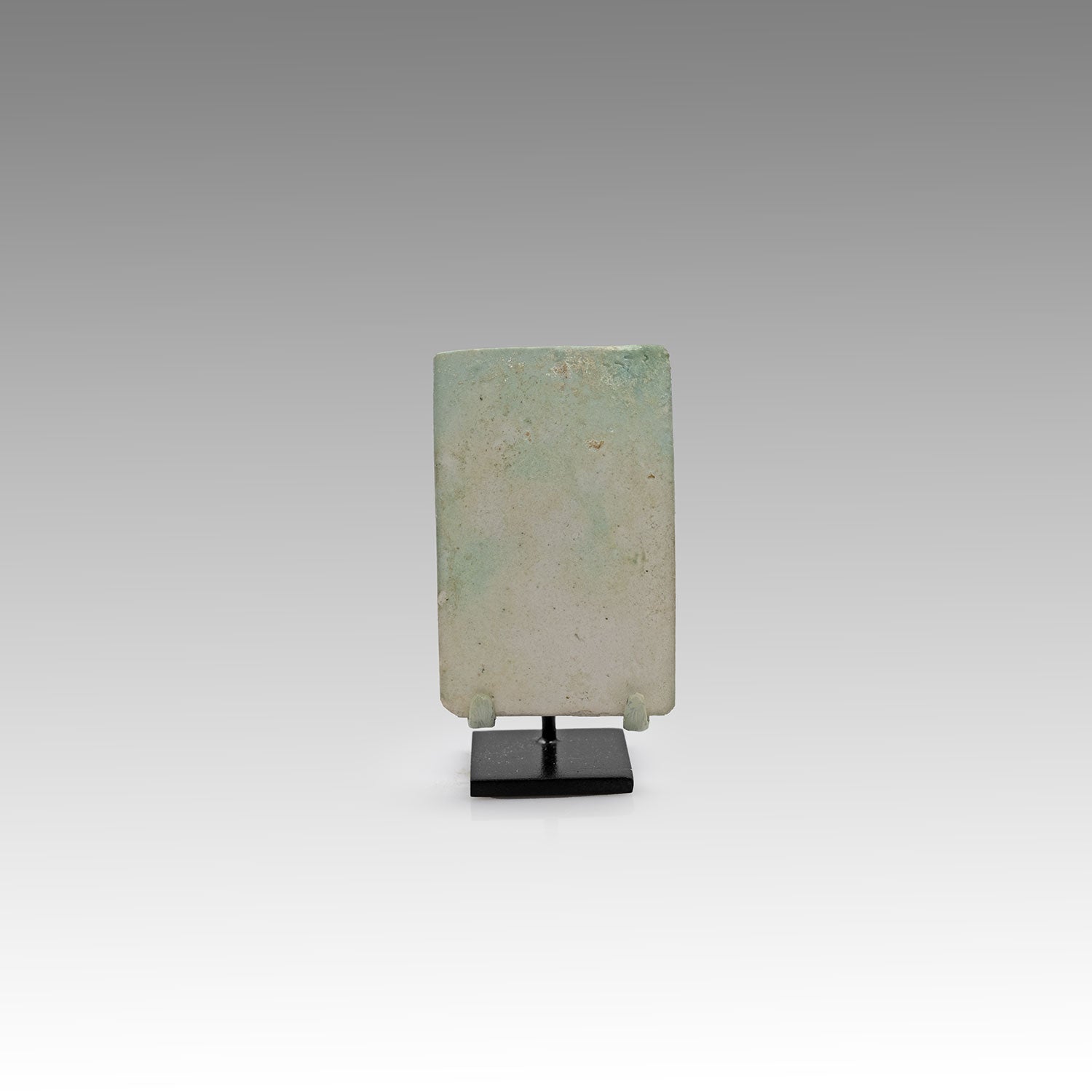
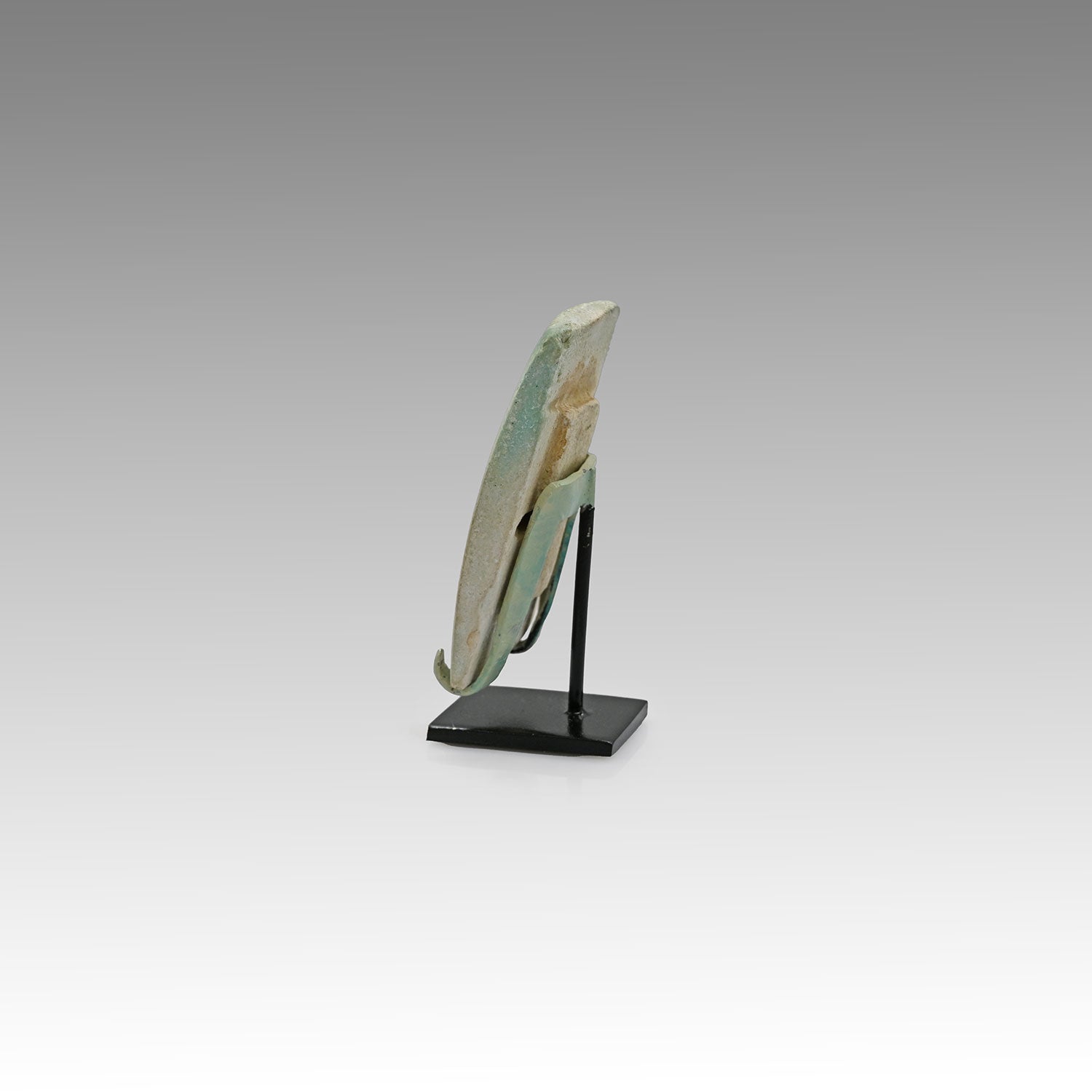
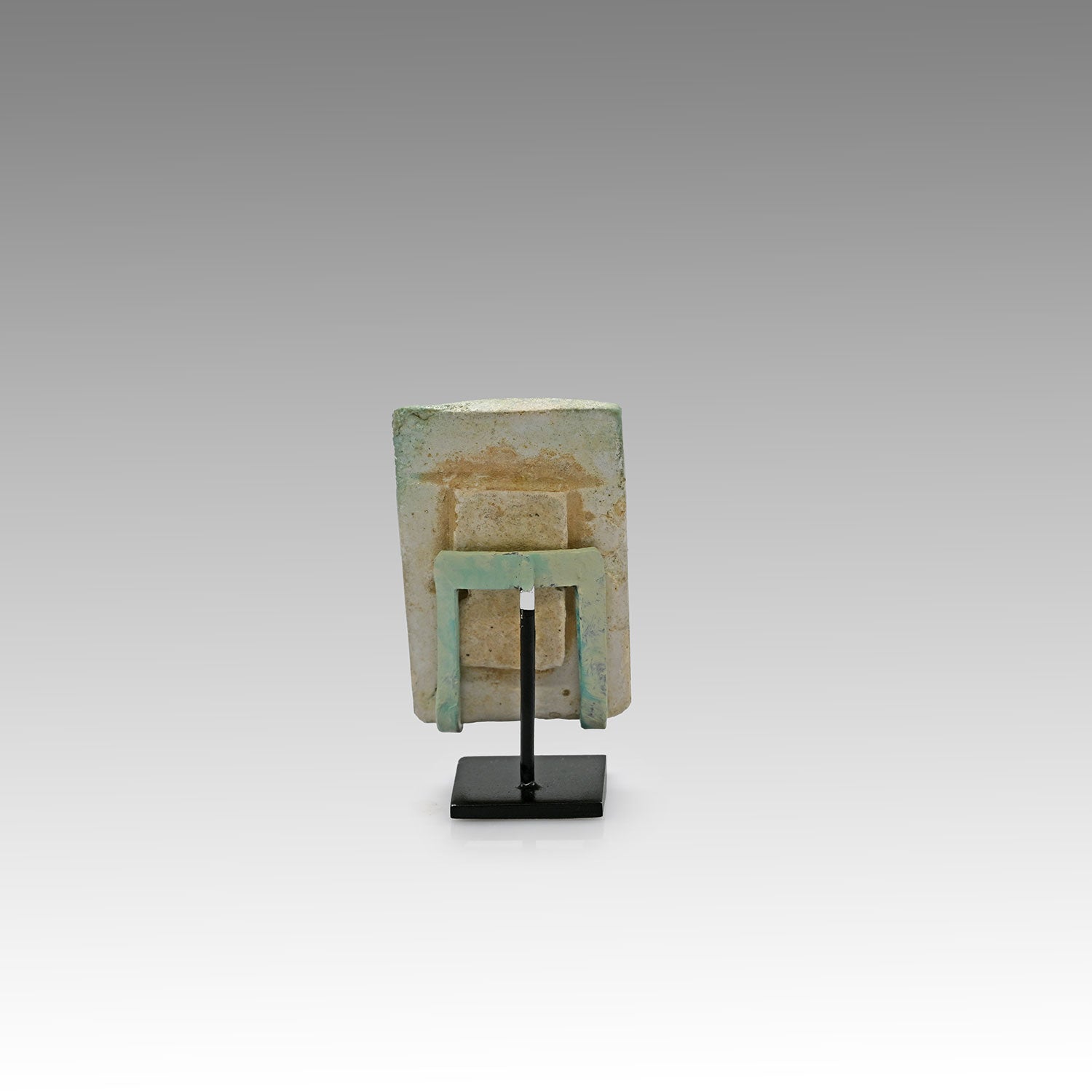
A Egyptian Faience Blue Glazed Pyramid Tile, Old Kingdom, time of Djoser, ca. 2668 - 2649 BCE
Sorry, this object has sold
This tile of pale blue glazed faience in the shape of a slightly convex rectangle, thicker in the center and tapering towards the edges. A smaller rectangle, raised in the back center of the tile, is pierced longitudinally for attachment. The back of the tile also has white deposits indicating the presence of some form of gesso or similar binding agent. Faience tiles were manufactured in bulk and used as surface decoration, a famous example being Djoser’s Third Dynasty Step Pyramid at Saqqara, which is decorated with an enormous number of faience tiles.
For related examples, see: Gifts of the Nile, ed. Florence Dunn Friedman, Museum of Art Rhode Island School of Design 1998, Plates 14 - 19, pg. 32
Medium: Faience
Dimensions: Length: 2 3/8 inches (6 cm), Width: 1 1/2 inches (3.8 cm)
Condition: Small chip to the left side otherwise, intact and in very good condition overall.
Provenance: Private English collection acquired prior to 1998, thereafter private Ohio collection, and then by descent.
We ship Tuesday to Friday with FedEx and usually same day if your order is received before 2pm. Within the continental USA, packing, shipping and insurance is free. Depending on size and destination, delivery times range from one to five business days.
For overseas shipments we charge a small flat rate which includes packing, preparation of all customs paperwork, insurance and carrier fees in compliance with all USA and International customs requirements. Overseas shipments are sent using either USPS Priority Mail or FedEx but contact us if you have a shipping preference. International customers are responsible for all duties and taxes.
Sands of Time provides a lifetime, unconditional guarantee of authenticity and provenance. Every object you purchase from us is accompanied by a Certificate of Authenticity, stating culture, provenance, and age.
Furthermore, we conduct due diligence to ensure the item, to the best of our knowledge, has not been illegally obtained from an excavation, architectural monument, public institution, or private property. Wherever possible, reference is made to existing collections or publications.Wherever possible, reference is made to existing collections or publications.
Choose options


