


An Olmec Buffware Bowl (Tecomate), ca. 1000 - 600 BCE
This object qualifies for free USA shipping and a flat rate fee of $75 if shipping internationally.
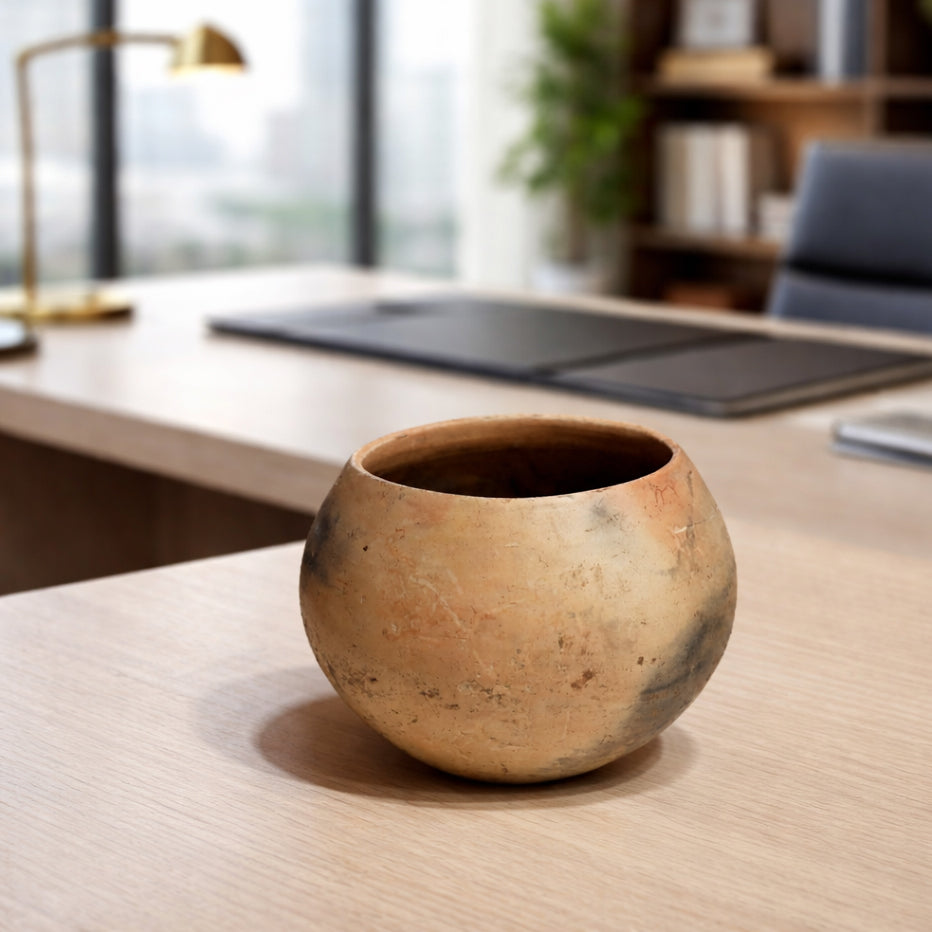
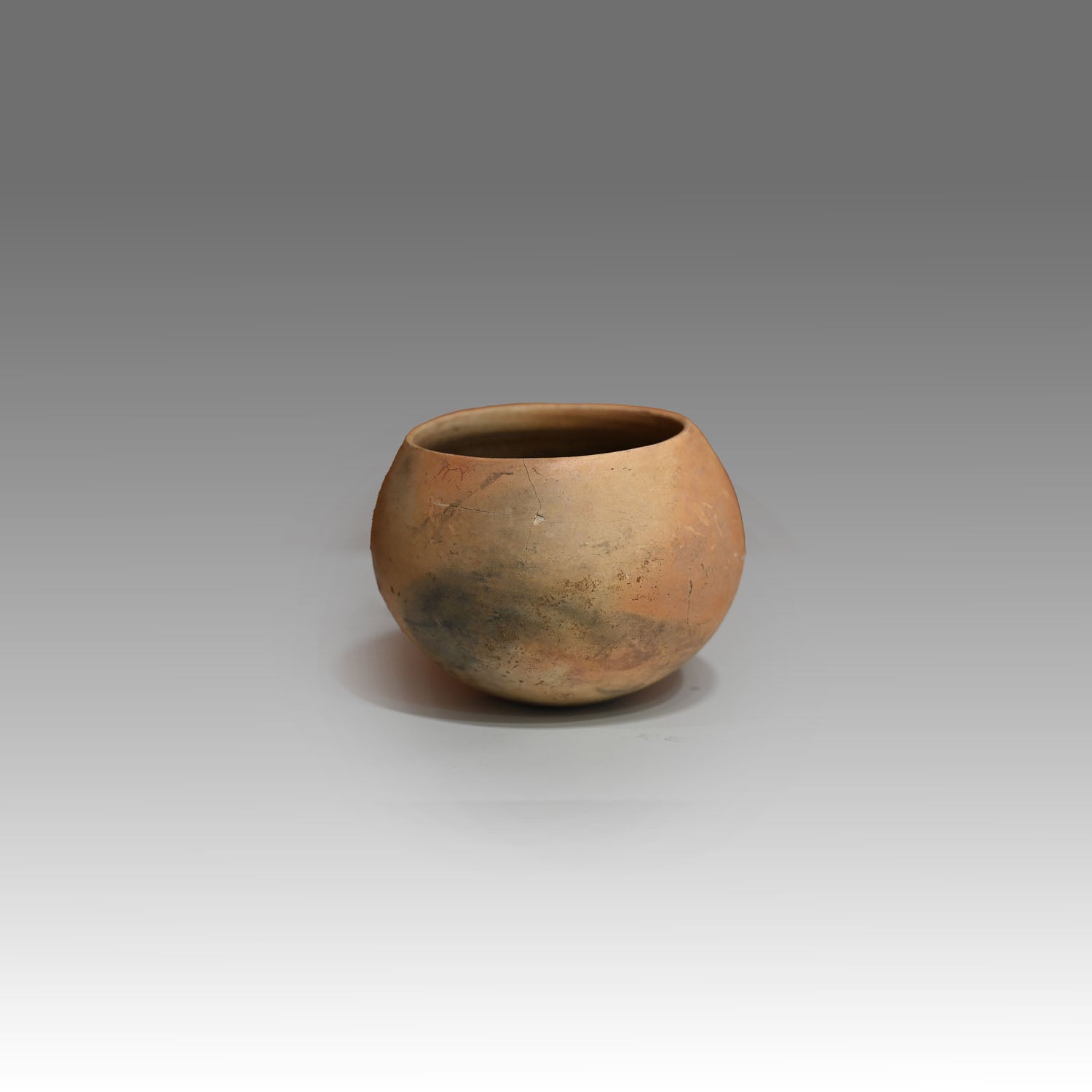
This finely made bowl features a full, round shape with a wide mouth. Made of a kaolin-like clay, its walls are thin and burnished to a high gloss. Although undecorated, the pleasing color variation on the outer surface ranges from beige to grey to light brown and orange-red.
These early Olmec bowls typically have a globular shape with a small opening at the top. A potter carefully built the thin-walled vessels using a coil technique with a kaolin-like clay, and finishing them with a light-colored slip and burnishing the surface, which displays small pitted losses. The vessel type is known as a tecomate (“gourd”), named after the gourds that inspired its original form. Some of the earliest ceramic vessels in Mesoamerica took the form of gourds captured in the more durable material of fired clay. Tecomates were important receptacles for community feasts, and many were subsequently placed in burials as important funerary offerings.
For related example see Metropolitan Museum of Art, accession number: 2014.244.3
Medium: Clay
Dimensions: Height: 3 3/8 inches (8.5 cm), Width: 4 1/4 inches (10.8 cm)
Condition: Two small stable hairline cracks along the upper half of the body, and some expected surface pitting, otherwise intact and in very good condition.
Provenance: Private Florida collection. Ex. Barry Kernerman, Toronto, ex. Samuel Dubiner collection, Tel Aviv, Israel, acquired 1960’s.
QUESTIONS? Just click the Contact Us tab on your right.
We ship Tuesday to Friday via ground courier and usually same-day if your order is received before 2pm. Within the continental USA, packing, shipping, and insurance are free. Depending on size and destination, delivery times range from one to five business days.
For overseas shipments, we charge a low flat rate that includes packing, preparation of all customs paperwork, insurance, and carrier fees, in compliance with all U.S. and International customs requirements.
Overseas shipments are sent via FedEx, DHL, or UPS International Priority, so contact us if you have a shipping preference. International customers are responsible for all duties and taxes.
Sands of Time provides a lifetime, unconditional guarantee of authenticity and provenance. Every object you purchase from us is accompanied by a Certificate of Authenticity, stating culture, provenance, and age.
Furthermore, we conduct due diligence to ensure the item, to the best of our knowledge, has not been illegally obtained from an excavation, architectural monument, public institution, or private property. Wherever possible, reference is made to existing collections or publications.Wherever possible, reference is made to existing collections or publications.
Choose options


