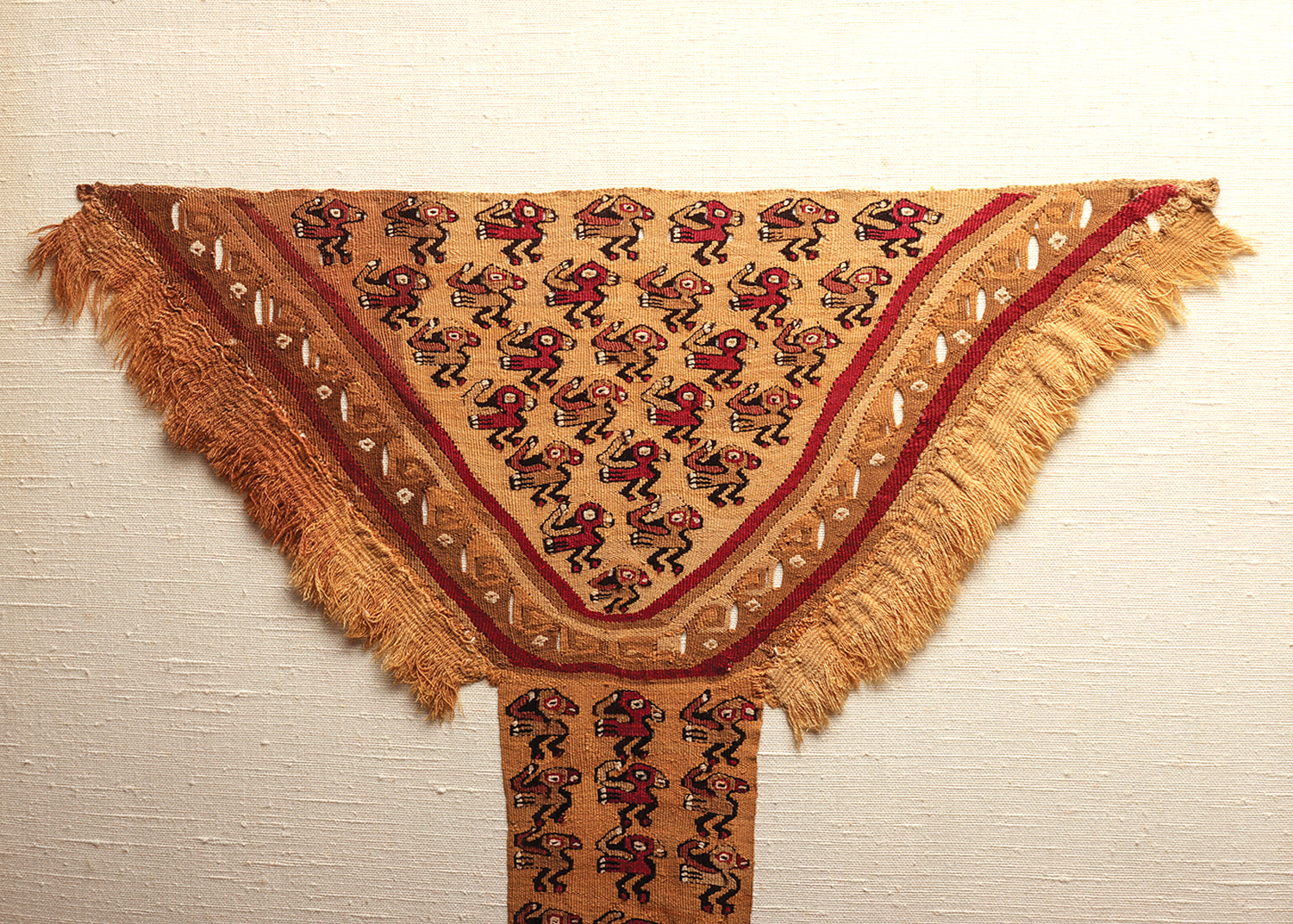
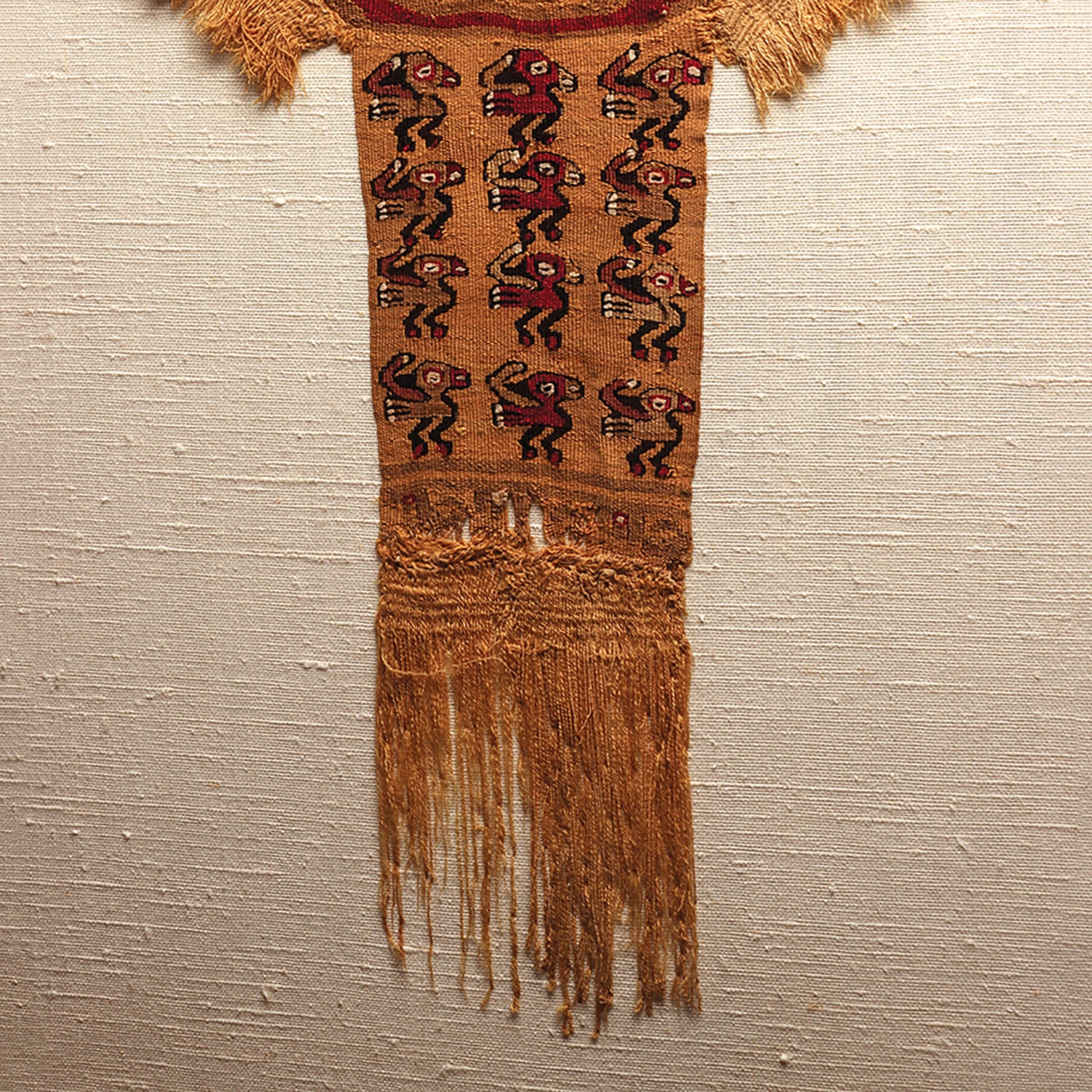
Chancay Loincloth Textile Panel, ca. 1000 - 1425 CE
This object qualifies for free USA shipping and a flat rate fee of $75 if shipping internationally.
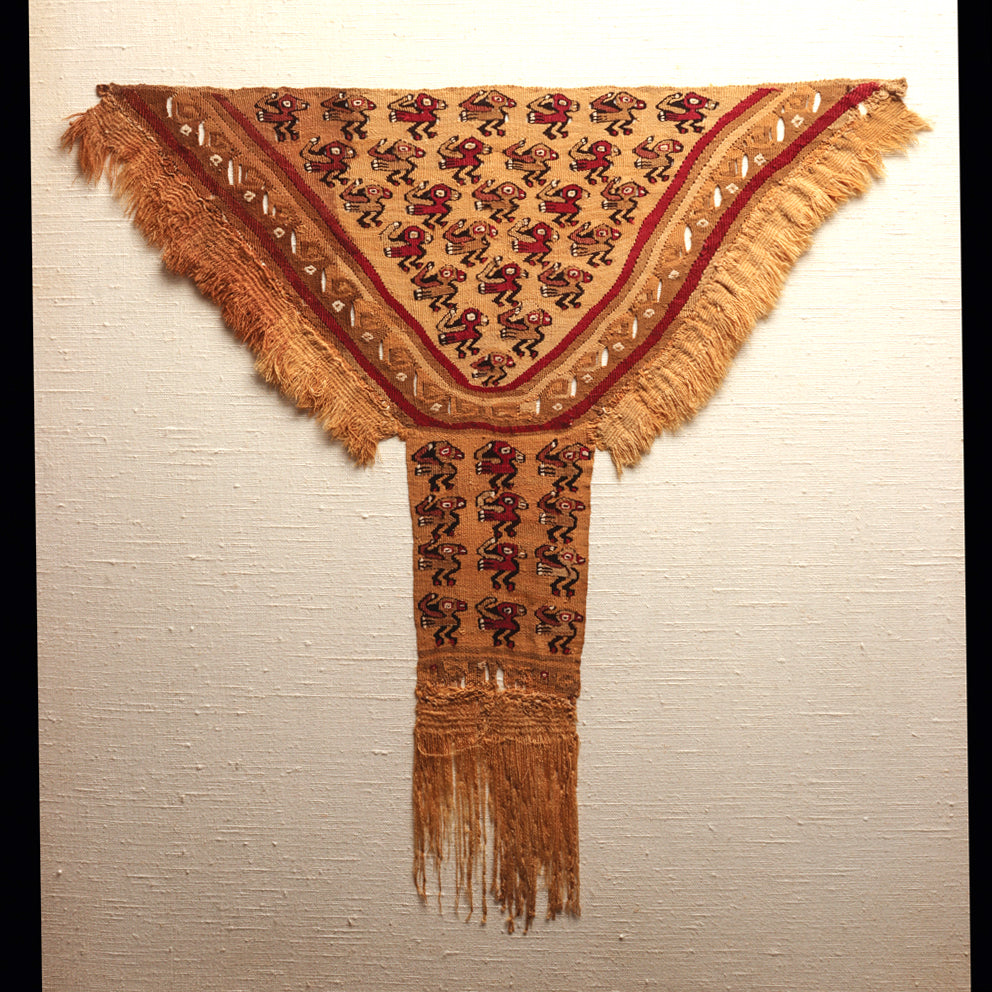
A finely woven, multicolor ceremonial loincloth panel composed of a triangular upper flap and a rectangular lower tab, each densely patterned with registers of stylized birds. The triangular section is framed by a lively slit‑weave wave border and finished with a soft, gold‑toned string fringe, and the rectangular tab below repeats the avian motif in three vertical rows and carries an extended fringe that emphasizes movement. The palette balances warm creams and browns with brighter color accents, and the surface retains crisp definition to the feathers, crests, and beaks.
Background: The Chancay culture flourished on Peru’s central coast between the 11th and mid‑15th centuries and is celebrated for its inventive textile arts. Workshops there favored cotton for strength and camelid fibers for color saturation and softness, employing tapestry, slit weave, gauze, and painted techniques to create garments for life and for funerary display. Loincloths with triangular and rectangular panels were part of elite male dress; their long fringes animated the body in procession and dance, while repeating rows of birds, likely coastal waterfowl and raptors, linked wearers to the sea, the sky, and ideas of vitality and renewal. The undulating wave border seen here is a classic coastal flourish and a visual foil to the orderly bird registers.
Medium: Textile
Dimensions: Textile: Height: 20 1/2 inches (52.07 cm), Width: 20 inches (50.8 cm) Frame: Height: 27.33 inches (69.43 cm), Width: 24.5 ins (62.23 cm)
Condition: Overall excellent condition, with intact fringes and very well-preserved design clarity. Likely cotton warps with camelid-fiber wefts, a hallmark of Chancay coastal production. The panel is sewn to a cloth backing on a wooden stretcher and presented under a plexiglass frame. A lovely example.
Provenance: From the distinguished collection of Justin Kerr and Dicey Taylor, New York City. Kerr, celebrated for pioneering rollout photography and for creating the comprehensive Maya Vase Database, assembled many of the finest examples of Classic Maya painted ceramics during the 1970s and early 1980s. Taylor, an art historian and curator, worked closely with Kerr in cataloguing and researching the collection, and the couple became well known for their scholarship and connoisseurship in Maya art.
QUESTIONS? Just click the Contact Us tab on your right.
We ship Tuesday to Friday via ground courier and usually same-day if your order is received before 2pm. Within the continental USA, packing, shipping, and insurance are free. Depending on size and destination, delivery times range from one to five business days.
For overseas shipments, we charge a low flat rate that includes packing, preparation of all customs paperwork, insurance, and carrier fees, in compliance with all U.S. and International customs requirements.
Overseas shipments are sent via FedEx, DHL, or UPS International Priority, so contact us if you have a shipping preference. International customers are responsible for all duties and taxes.
Sands of Time provides a lifetime, unconditional guarantee of authenticity and provenance. Every object you purchase from us is accompanied by a Certificate of Authenticity, stating culture, provenance, and age.
Furthermore, we conduct due diligence to ensure the item, to the best of our knowledge, has not been illegally obtained from an excavation, architectural monument, public institution, or private property. Wherever possible, reference is made to existing collections or publications.Wherever possible, reference is made to existing collections or publications.
Choose options
Recently viewed
Come Visit Us!
1010 Wisconsin Ave NW, Suite 340
Washington DC. 20007
Tues - Fri, 10:00am - 6:00pm
Sat/Sun/Mon By appointment


