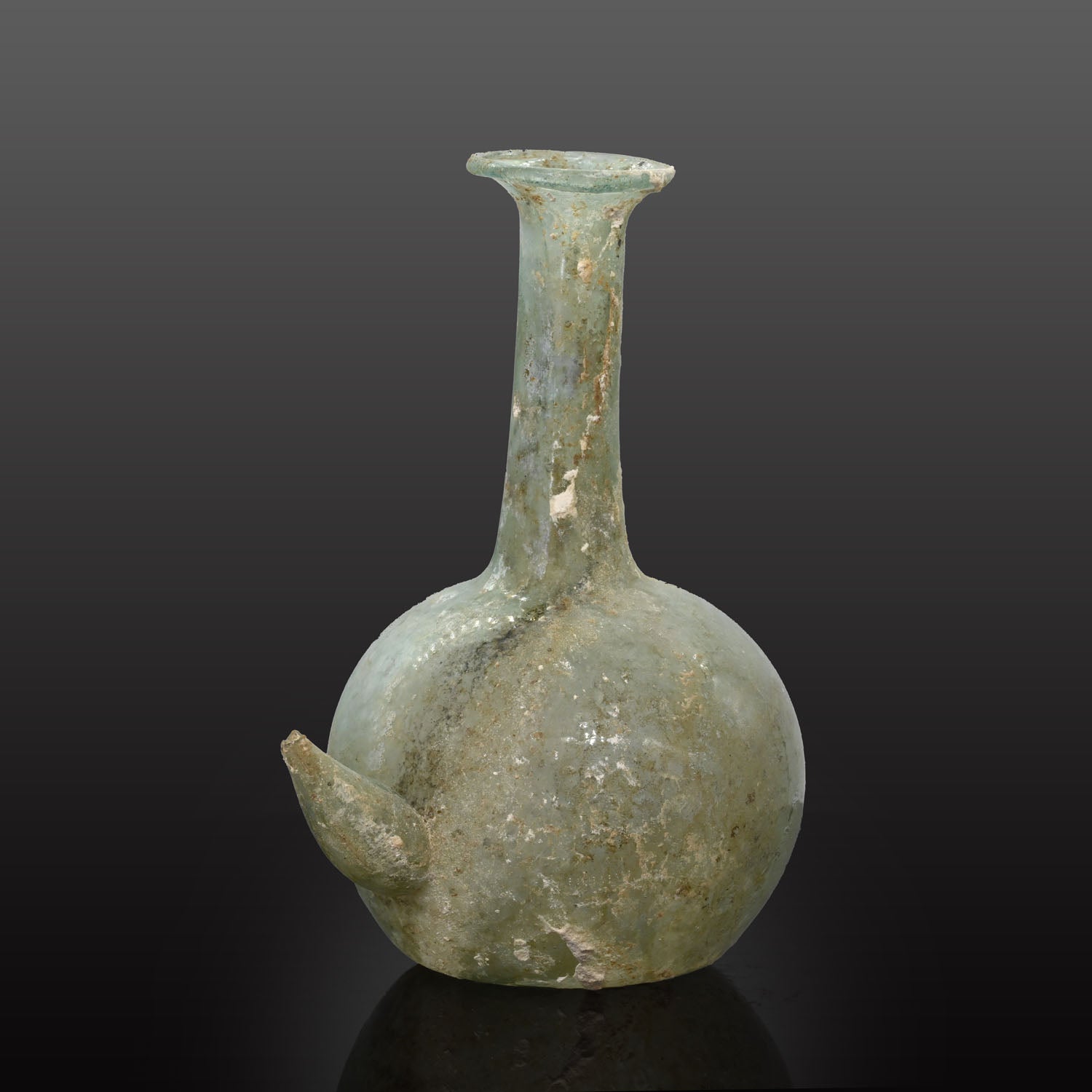
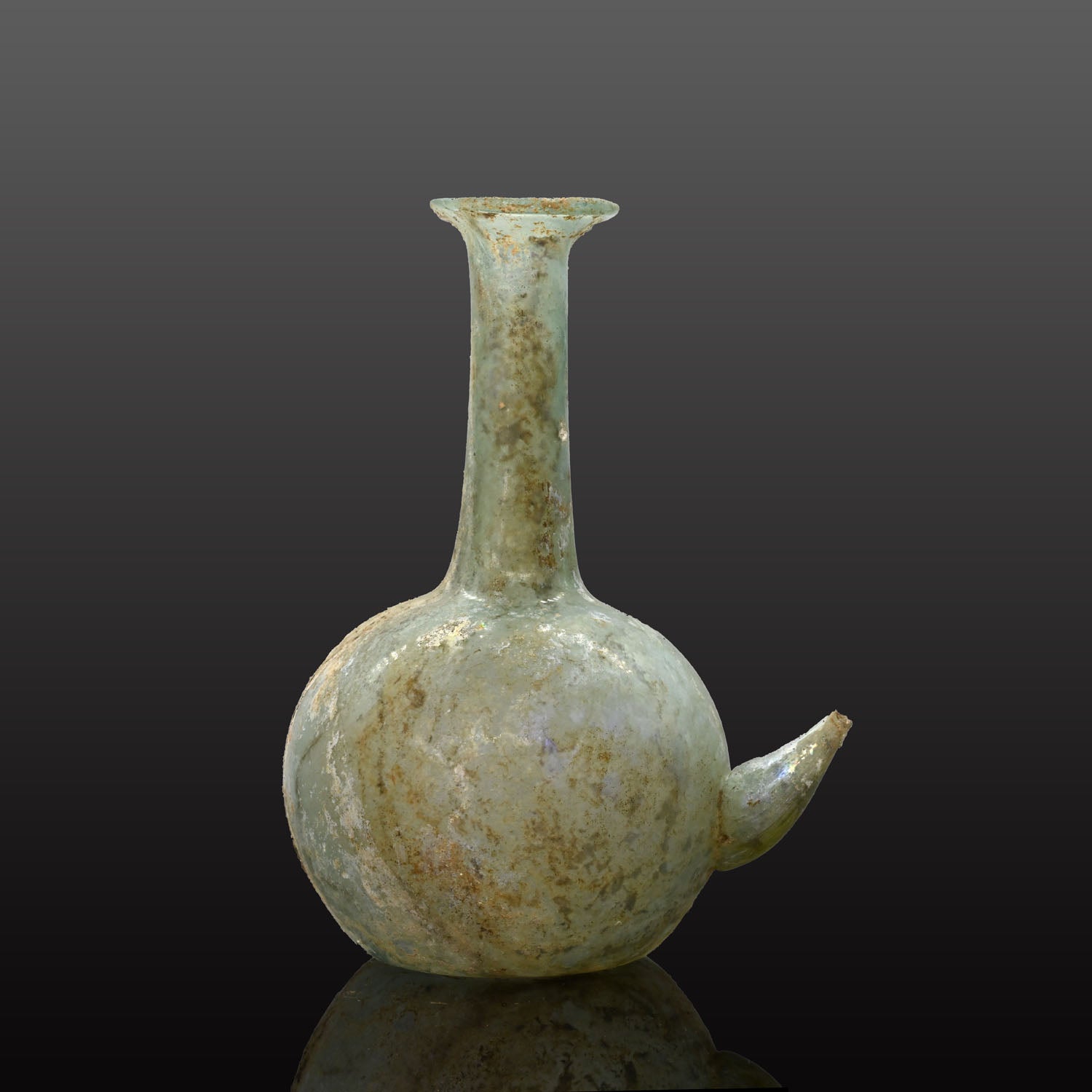

Roman Blue-Green Glass Baby Feeder, Roman Imperial Period, ca. 3rd century CE
This object qualifies for free USA shipping and a flat rate fee of $75 if shipping internationally.
Made from lovely pale green glass featuring a globular body with an upturned horn-shaped spout, long cylindrical neck, and everted rim.
Such glasses, which were common throughout the eastern Mediterranean region, are often called a "baby feeder", although they have also been described as a guttus, an askos, an oil flask, a blow-pipe or, generally, as a pourer flask. Their use remains uncertain, but the fragility of the material makes it unlikely that they were used in baths or at public functions such as sacrifices. Similarly it is hard to imagine that an infant could be fed from such a vessel, unless it was used to administer medicine. Many consider them flasks for pouring oil into the filling holes of terracotta lamps.
Medium: Glass
Dimensions: Height: 5 inches ( 12.7 centimeters)
Condition: The vessel is intact and in excellent condition.
Provenance: Former collection of the ex-World Bank President, James Wolfensohn, NYC, acquired from Perspective Ltd., Jean-Michel Gozlan, King David Street, Jerusalem, Israel, 1990’s.
QUESTIONS? Just click the Contact Us tab on your right.
We ship Tuesday to Friday via ground courier and usually same-day if your order is received before 2pm. Within the continental USA, packing, shipping, and insurance are free. Depending on size and destination, delivery times range from one to five business days.
For overseas shipments, we charge a low flat rate that includes packing, preparation of all customs paperwork, insurance, and carrier fees, in compliance with all U.S. and International customs requirements.
Overseas shipments are sent via FedEx, DHL, or UPS International Priority, so contact us if you have a shipping preference. International customers are responsible for all duties and taxes.
Sands of Time provides a lifetime, unconditional guarantee of authenticity and provenance. Every object you purchase from us is accompanied by a Certificate of Authenticity, stating culture, provenance, and age.
Furthermore, we conduct due diligence to ensure the item, to the best of our knowledge, has not been illegally obtained from an excavation, architectural monument, public institution, or private property. Wherever possible, reference is made to existing collections or publications.Wherever possible, reference is made to existing collections or publications.
Choose options
Recently viewed
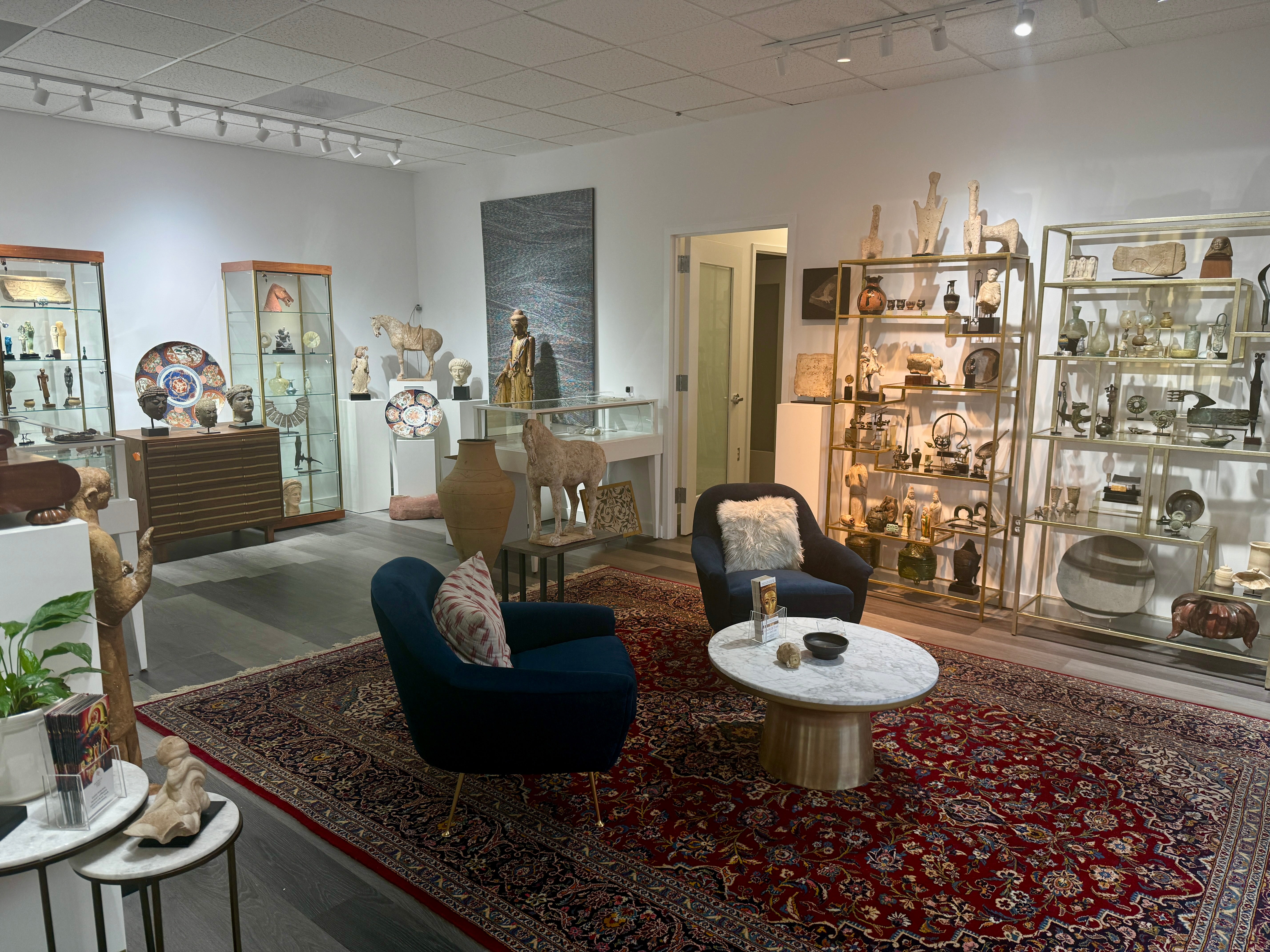
Come Visit Us!
1010 Wisconsin Ave NW, Suite 340
Washington DC. 20007
Tues - Fri, 10:00am - 6:00pm
Sat/Sun/Mon By appointment


