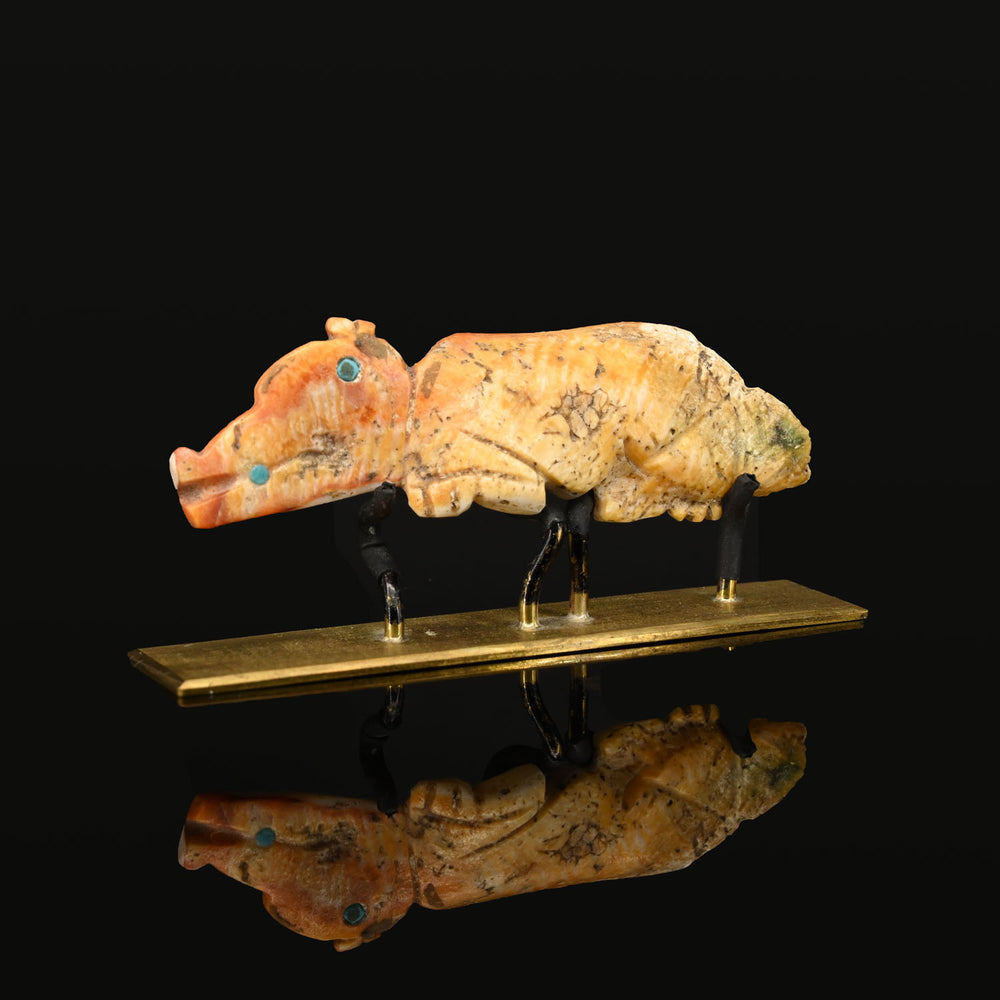

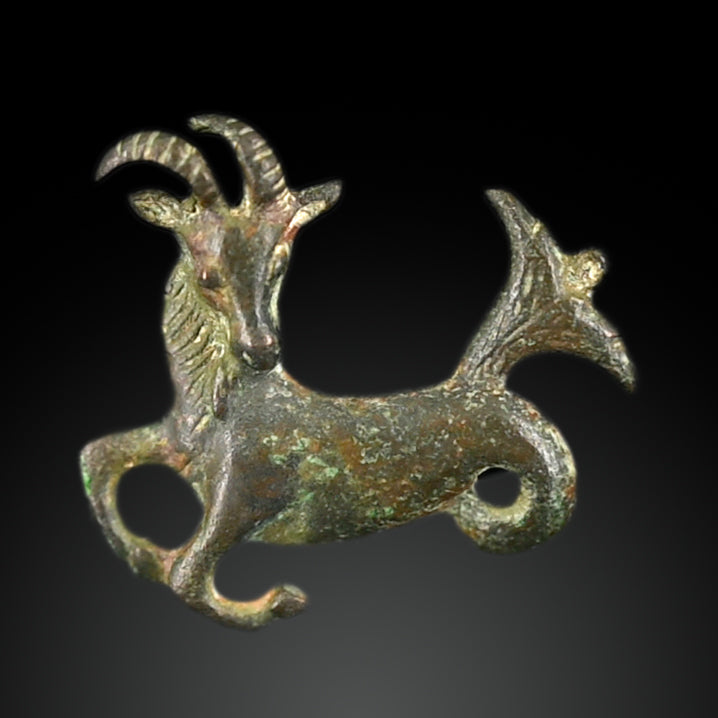


A Colima Spondylus Shell Crocodile Amulet
Early Classic Period, ca. 200 BCE - 200 CE
PA2104
- This object qualifies for free USA shipping and a flat rate fee of $60 if shipping internationally.
Carved within the natural curvature of the shell, the crocodile crouches on bent limbs, its head in profile with an elongated spout, a turquoise inlay is utilized for the eye, and another placed at the edge of the mouth, that contrasts beautifully with the orange-yellow shade of the shell.
Crocodiles were associated with fertility, rebirth, and the renewal of seasonal and calendrical cycles.
Dimensions: Length: 2 7/8 inches (7.3 cm)
Condition: Loss to the back portion of the amulet. Custom mounted.
Provenance: Joel Malter private collection, assembled in the 1980s, thereafter a private Canadian collection, acquired from the trade in 2009.
Sands of Time provides a lifetime, unconditional guarantee of authenticity and provenance. Every object you purchase from us is accompanied by a Certificate of Authenticity, stating culture, provenance, and age.
Furthermore, we conduct due diligence to ensure the item, to the best of our knowledge, has not been illegally obtained from an excavation, architectural monument, public institution, or private property. Wherever possible, reference is made to existing collections or publications.Wherever possible, reference is made to existing collections or publications.
We ship Tuesday to Friday with FedEx and usually same day if your order is received before 2pm. Within the continental USA, packing, shipping and insurance is free. Depending on size and destination, delivery times range from one to five business days.
For overseas shipments we charge a small flat rate which includes packing, preparation of all customs paperwork, insurance and carrier fees in compliance with all USA and International customs requirements. Overseas shipments are sent using either USPS Priority Mail or FedEx but contact us if you have a shipping preference. International customers are responsible for all duties and taxes.