
An Attic Red Figure Owl Skyphos, ca. 475 - 425 BCE
Cet objet bénéficie d'une expédition gratuite et rapide dans le monde entier.
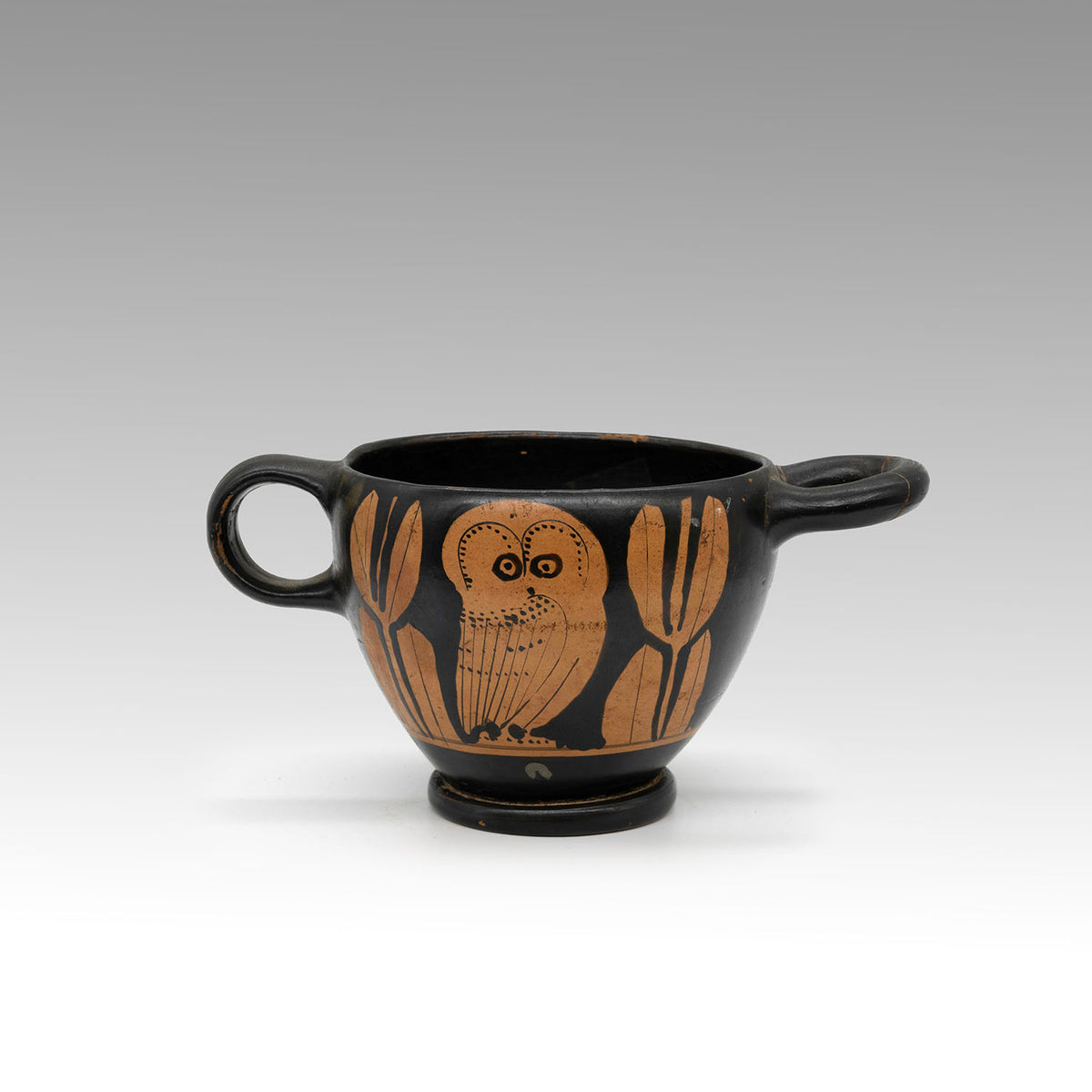
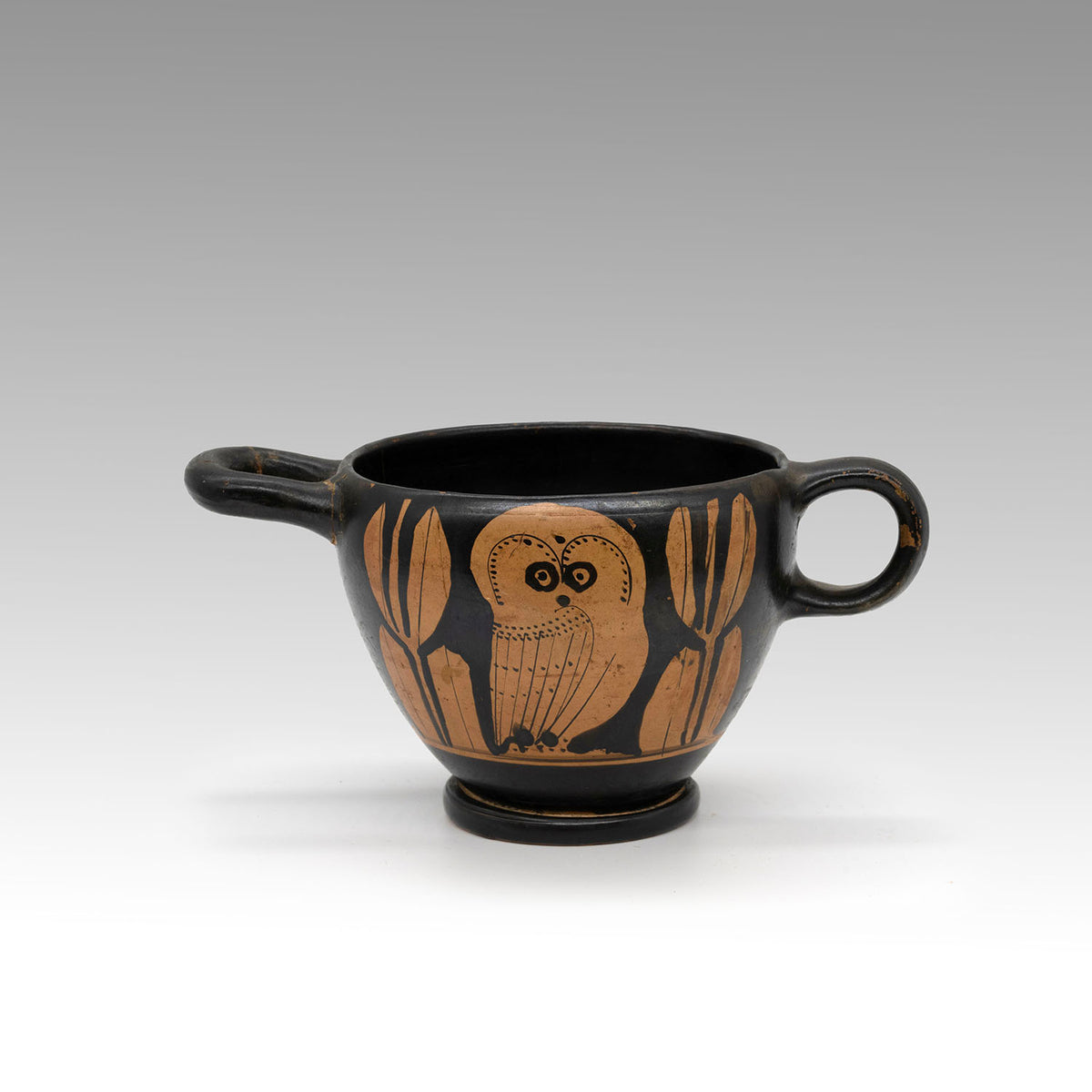
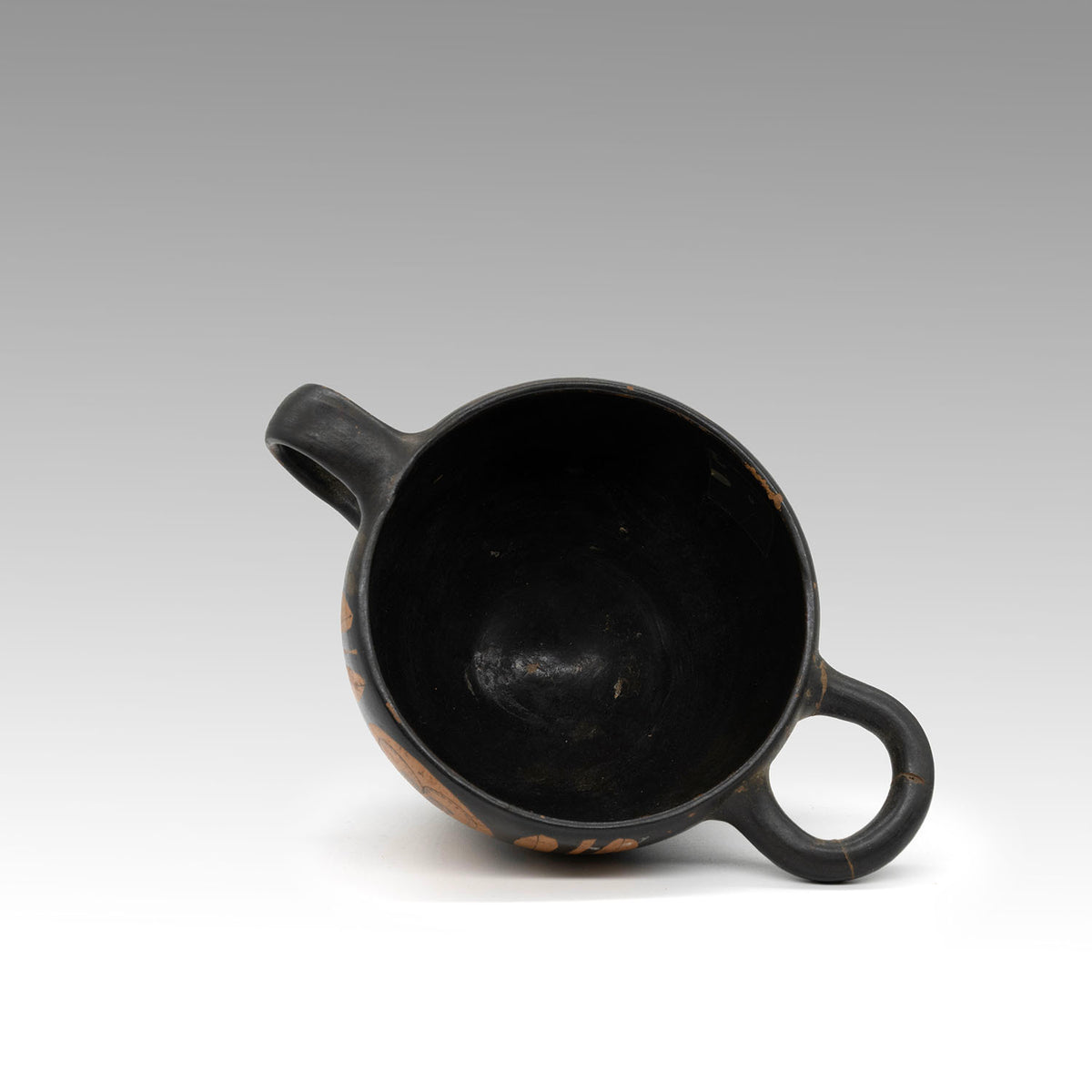
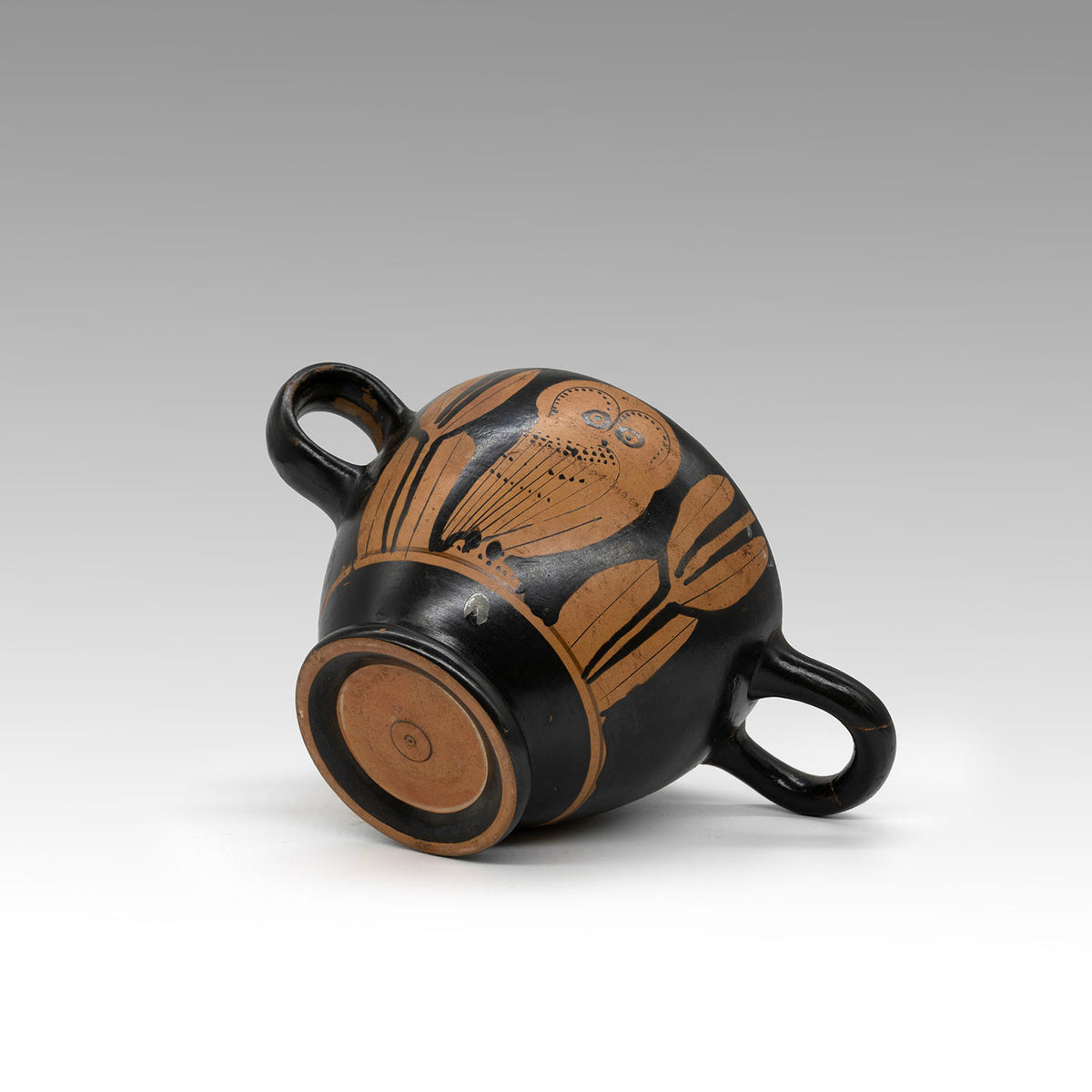
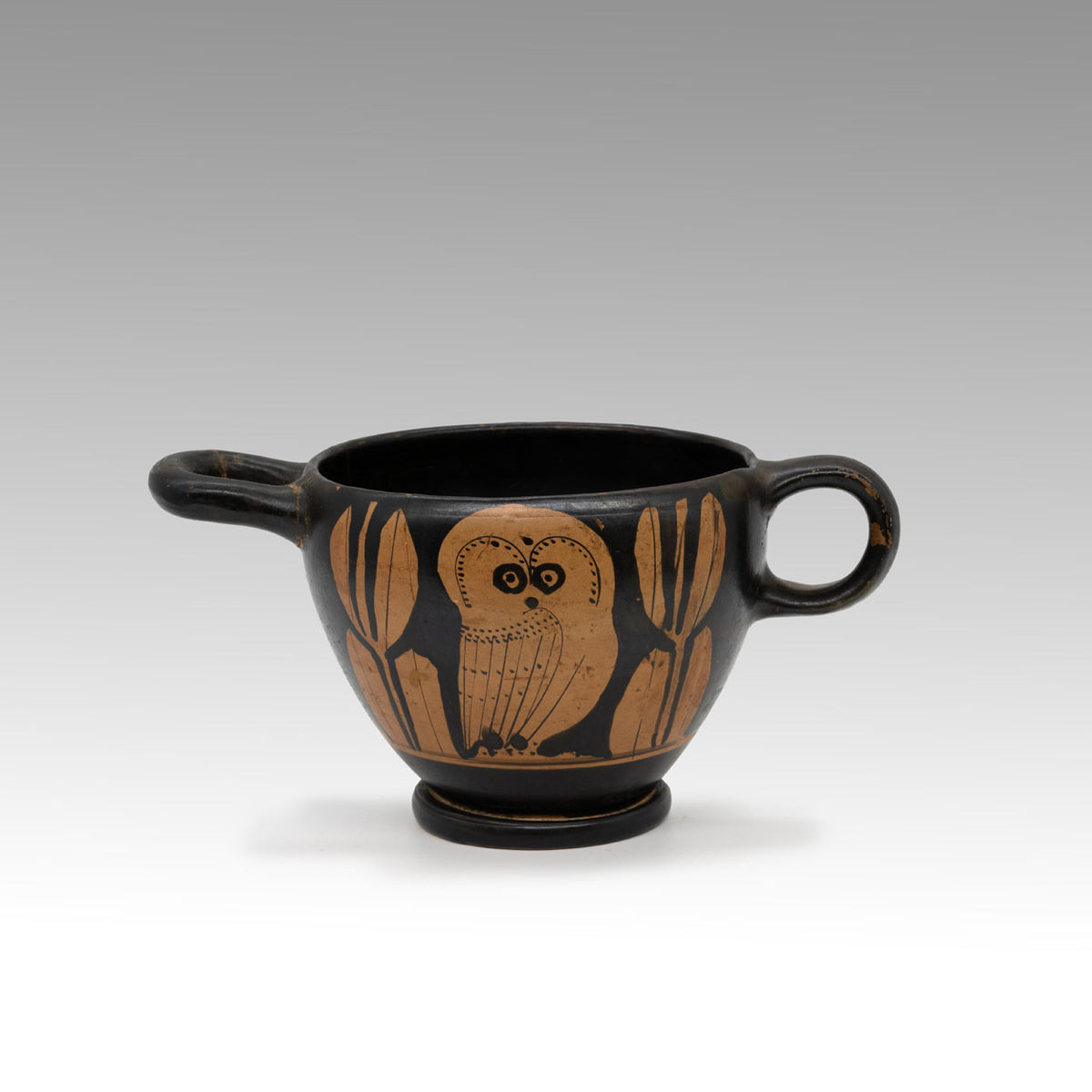
During the fifth century BCE, Athens produced large numbers of red-figure drinking cups decorated on each side with an owl standing between two olive sprays. On this example, the owl’s body faces right, while its head turns fully toward the viewer. The upright olive branches follow the curve of the vessel, filling the spaces on either side of the bird. A narrow reserved line runs beneath the decoration, encircling the cup and providing a groundline for the composition. The owls are similar but show small differences in the painted details. Each has large circular eyes framed by curved, dotted outlines, giving the face its distinctive alert expression. Fine lines and rows of dots define the feathers of the folded wings. The birds and olive sprays are reserved in the natural orange clay against the black glaze, which also covers the interior, handles, and foot.
This cup belongs to the form classified by Beazley as Type B, distinguished by its curved sides and combination of one horizontal and one vertical handle. Often called a "glaux", the Greek word for owl, the form takes its name from an ancient inscription beneath an owl cup in Berlin, thought to have been a potter’s or shopkeeper’s notation. Beazley and Magi suggested that the shape itself resembled an owl, with the vertical handle representing the head and the horizontal handle the tail. The owl and olive branches had particular significance in Athens. The owl was the companion and emblem of Athena, the city’s patron goddess, and became a symbol of Athens itself. Its appearance on Athenian silver coins, which circulated throughout the Greek world and beyond, made the association widely familiar. The expression “owls to Athens” was much like the English “coals to Newcastle,” referring to bringing something to a place already well supplied with it.
The olive tree was also closely associated with Athena. According to tradition, she planted her sacred olive on the Acropolis during her contest with Poseidon for possession of Attica. Herodotus records that, after the Persians burned the Acropolis in 480 BCE, the surviving stump produced a new shoot the following day. The tree thus became a fitting symbol of the city’s survival and renewal. The owl and olive sprays therefore bring together the goddess, her sacred tree, and the identity of her city. Their presence on a drinking vessel reflects the close relationship between religious imagery and everyday life in classical Athens.
Medium: Clay
Dimensions: Height: 3 inches (7.5 cm), Width: 6 inches (15.24 cm)
Condition: The horizontal handle rejoined, otherwise to cup is intact and in very good condition overall. A lovely example.
Provenance: Private collection of William S. Dietrich II (1938-2010), PA acquired in the 1980s.
Nous expédions du mardi au vendredi avec FedEx et généralement le jour même si votre commande est reçue avant 14h. Aux États-Unis continentaux, l'emballage, l'expédition et l'assurance sont gratuits. Selon la taille et la destination, les délais de livraison varient d'un à cinq jours ouvrables.
Pour les expéditions à l'étranger, nous facturons un petit forfait qui comprend l'emballage, la préparation de tous les documents douaniers, l'assurance et les frais de transporteur conformément à toutes les exigences douanières américaines et internationales. Les expéditions à l'étranger sont envoyées par USPS Priority Mail ou FedEx, mais contactez-nous si vous avez une préférence d'expédition. Les clients internationaux sont responsables de tous les droits et taxes.
Sands of Time offre une garantie d'authenticité et de provenance inconditionnelle à vie. Chaque objet que vous achetez chez nous est accompagné d'un certificat d'authenticité, indiquant sa culture, sa provenance et son âge.
De plus, nous effectuons une diligence raisonnable pour nous assurer que l'objet, à notre connaissance, n'a pas été obtenu illégalement lors d'une fouille, d'un monument architectural, d'une institution publique ou d'une propriété privée. Dans la mesure du possible, il est fait référence aux collections ou publications existantes.Dans la mesure du possible, il est fait référence aux collections ou publications existantes.
Choisir les options
Derniers affichages
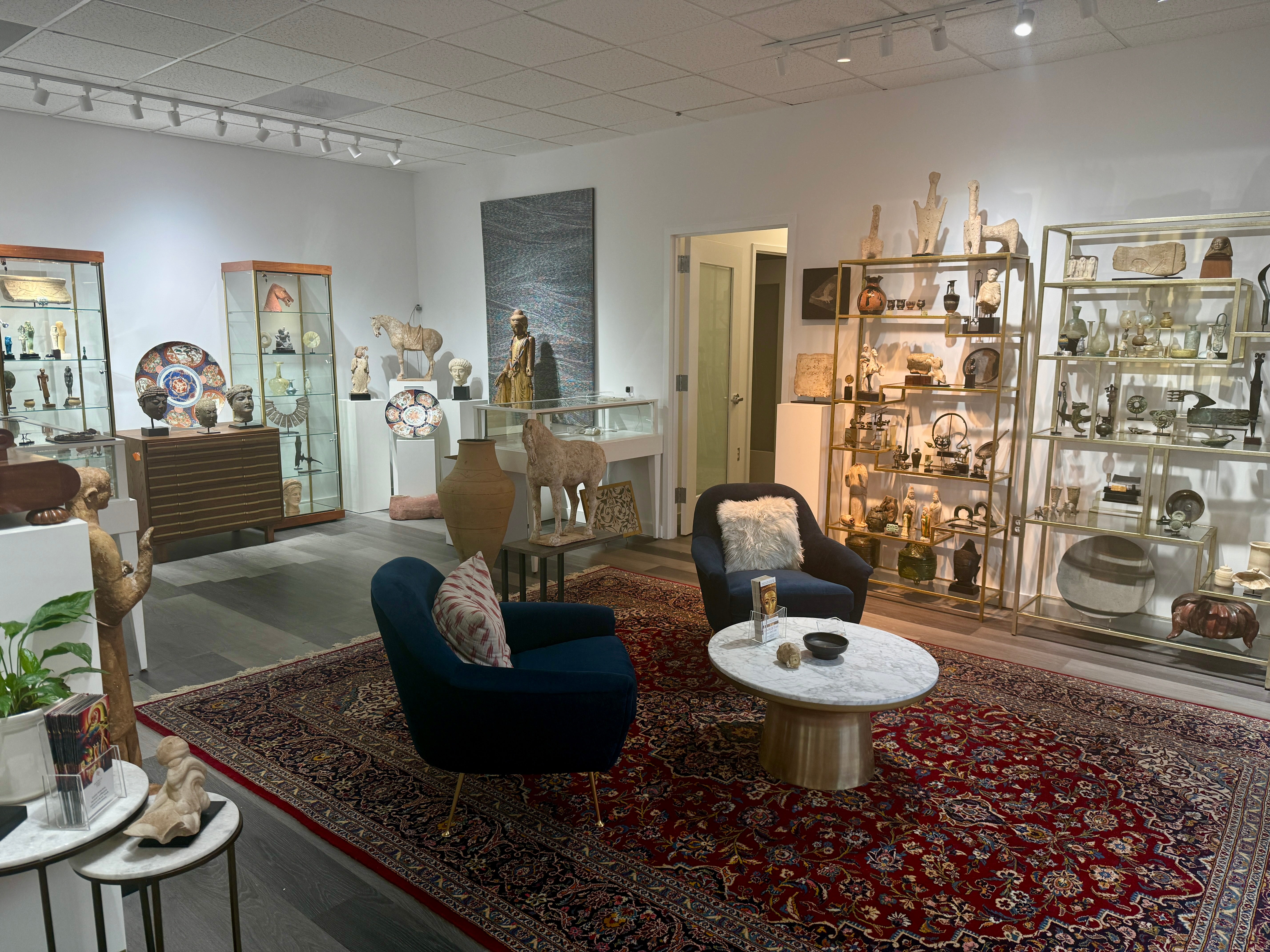
Come Visit Us!
1010 Wisconsin Ave NW, Suite 340
Washington DC. 20007
Tues - Fri, 10:00am - 6:00pm
Sat/Sun/Mon By appointment


