
An Old Babylonian Terracotta Plaque Depicting Nergal, Old Babylonian Period, ca. 2004 - 1595 BCE
Cet article est admissible à la livraison gratuite aux États-Unis et à des frais fixes de 75 $ pour l'expédition internationale.
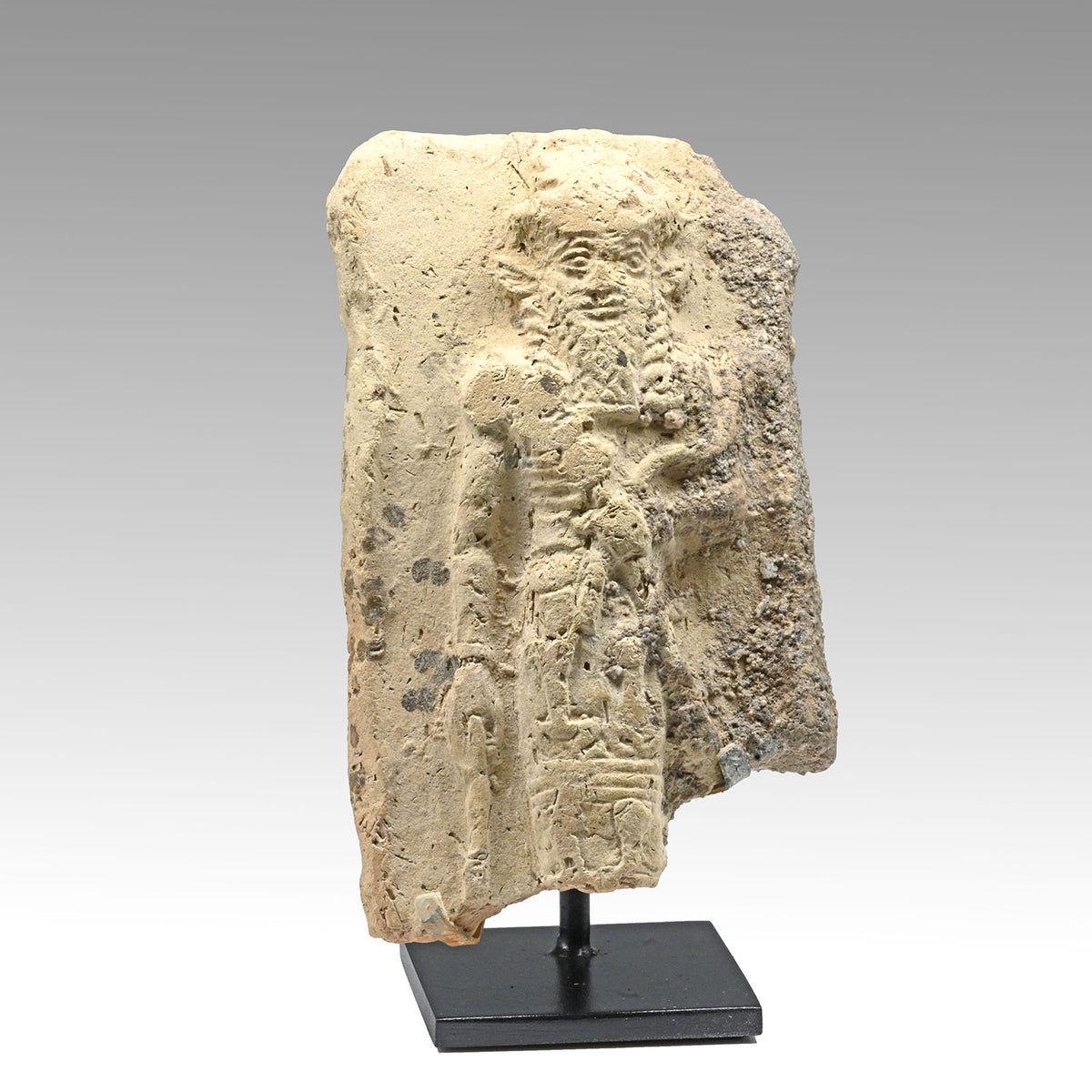
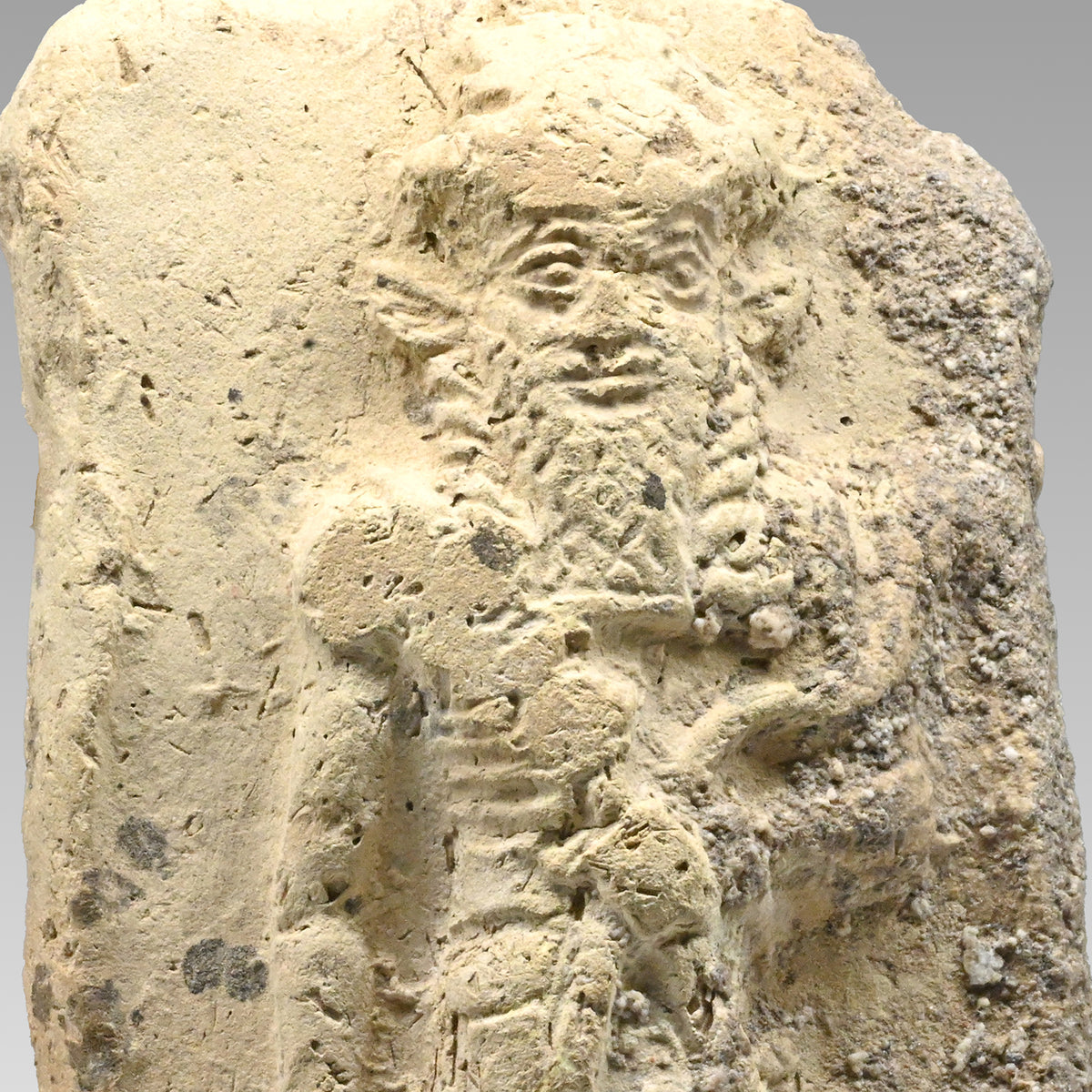
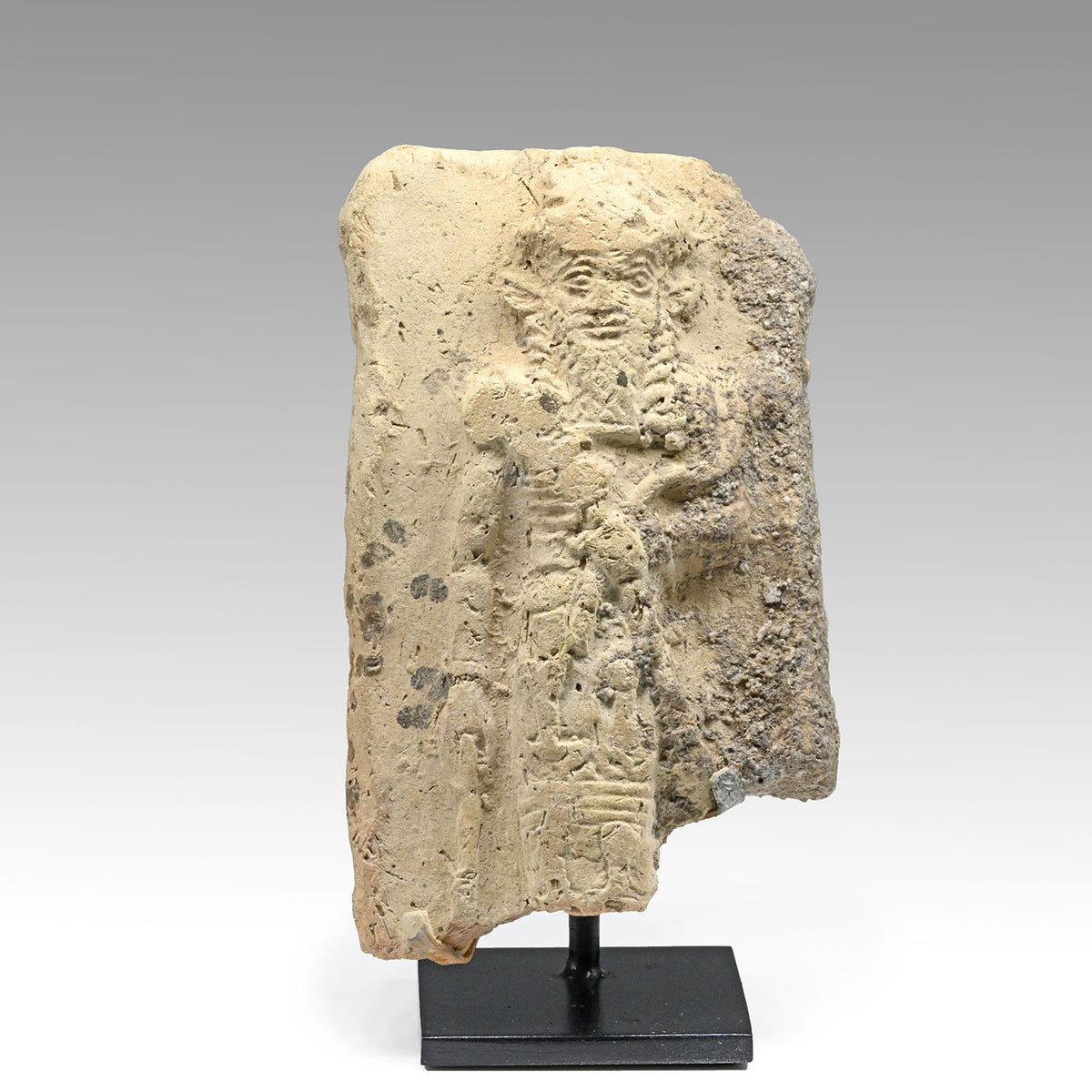
A molded terracotta plaque depicting Nergal, the Mesopotamian god of war, disease, death, and the netherworld. The deity stands facing forward, with large, deeply modeled eyes, a prominent nose, an elaborate curled beard, and textured hair. He wears a long, patterned garment decorated with horizontal bands and incised details, and holds an attribute across his upper body.
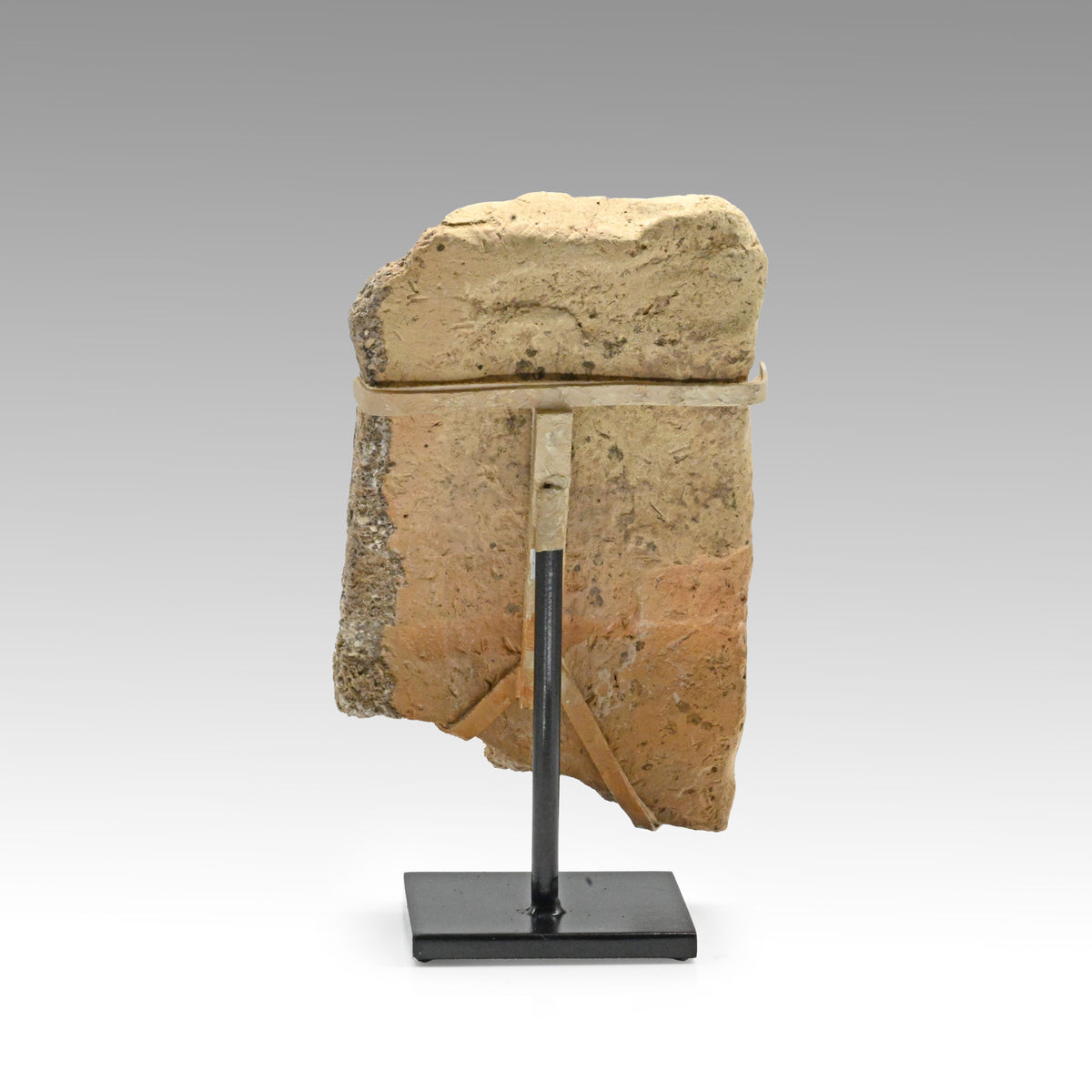
Molded terracotta plaques were produced in large numbers throughout Mesopotamia beginning in the late third millennium BCE, becoming particularly widespread during the Old Babylonian period. Made by pressing damp clay into molds, these small reliefs depicted deities, rulers, mythological subjects, and scenes of everyday life. The reverse of this example preserves impressions of the maker's fingers where the clay was pressed into the mold.
Often interpreted as charms or objects of personal devotion, these plaques have been excavated primarily in domestic settings, streets, and refuse deposits, although their precise function remains uncertain. Clay itself held particular significance in Mesopotamian belief, where the gods were understood to have fashioned humankind from clay. As discussed in The Metropolitan Museum of Art Bulletin (Spring 2024), creating an image in clay may have been understood as a way of bringing that image to life. These small representations of deities may therefore have offered ordinary people a tangible connection to the divine, particularly during a period of considerable political uncertainty.
For a related example, see: Princeton University Art Museum, Relief Plaque Depicting Nergal, Old Babylonian period, accession no. 2002-74.
Literature: Sarah B. Graff, “No King Is Truly Powerful on His Own,” The Metropolitan Museum of Art Bulletin, vol. 81, no. 4, Leadership and Society (Spring 2024), pp. 7–9.
Medium: Terracotta
Dimensions: Height: 4 3/4 inches (12.06 cm)
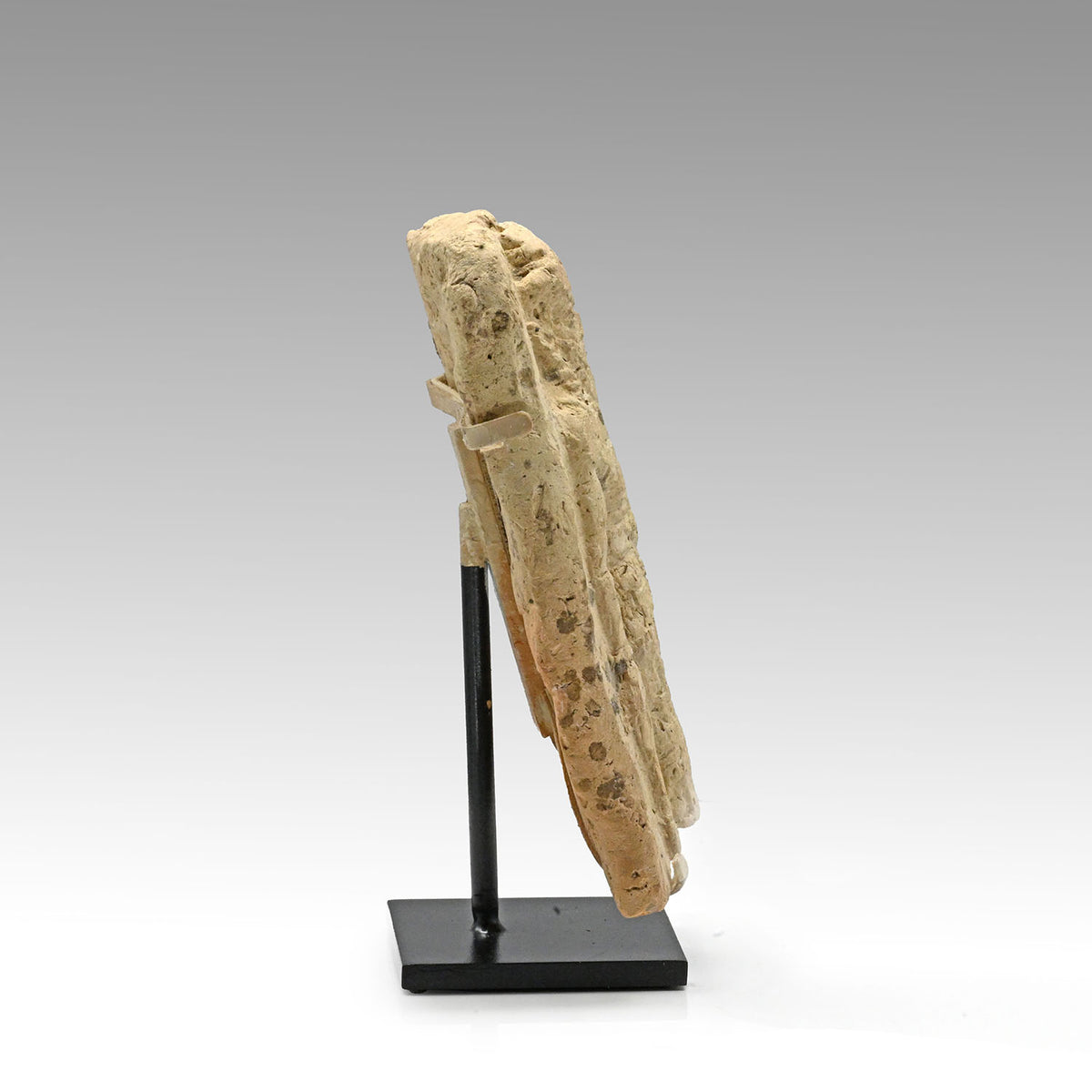
Condition: Fragmentary, with losses to the lower portion and upper left corner. Surface wear, scattered abrasions, and mineral accretions, with some softening of the molded details, particularly along the right side. The principal facial features and much of the garment remain well defined. Presented on a museum quality custom mount.
Provenance: Jack Guevrekian, Manhasset, New York, private collection, acquired in the 1980s, thereafter private New York City collection.
DES QUESTIONS? Cliquez simplement sur l'onglet Nous contacter à votre droite.
Nous expédions du mardi au vendredi par transporteur terrestre et généralement le jour même si votre commande est reçue avant 14h. Aux États-Unis continentaux, l'emballage, l'expédition et l'assurance sont gratuits. Selon la taille et la destination, les délais de livraison varient de un à cinq jours ouvrables.
Pour les envois à l'étranger, nous facturons un faible taux forfaitaire qui comprend l'emballage, la préparation de tous les documents douaniers, l'assurance et les frais de transport, en conformité avec toutes les exigences douanières américaines et internationales.
Les envois à l'étranger sont envoyés via FedEx, DHL ou UPS International Priority, veuillez donc nous contacter si vous avez une préférence en matière d'expédition. Les clients internationaux sont responsables de tous les droits et taxes.
Sands of Time offre une garantie d'authenticité et de provenance inconditionnelle à vie. Chaque objet que vous achetez chez nous est accompagné d'un certificat d'authenticité, indiquant sa culture, sa provenance et son âge.
De plus, nous faisons preuve de diligence raisonnable pour nous assurer que l'objet, à notre connaissance, n'a pas été obtenu illégalement d'une fouille, d'un monument architectural, d'une institution publique ou d'une propriété privée. Dans la mesure du possible, il est fait référence aux collections ou publications existantes.Dans la mesure du possible, il est fait référence aux collections ou publications existantes.
Choisir les options
Derniers affichages
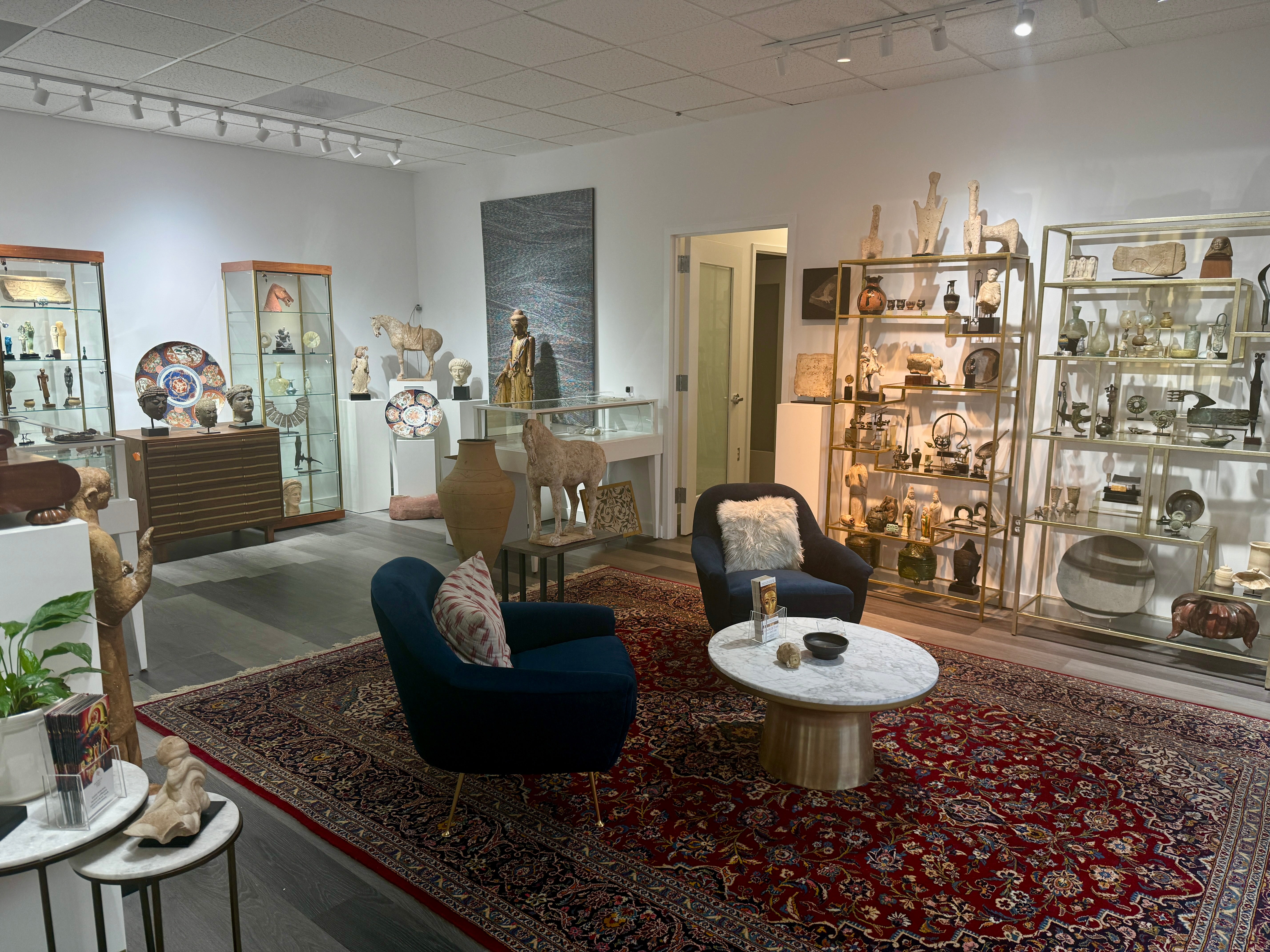
Come Visit Us!
1010 Wisconsin Ave NW, Suite 340
Washington DC. 20007
Tues - Fri, 10:00am - 6:00pm
Sat/Sun/Mon By appointment


