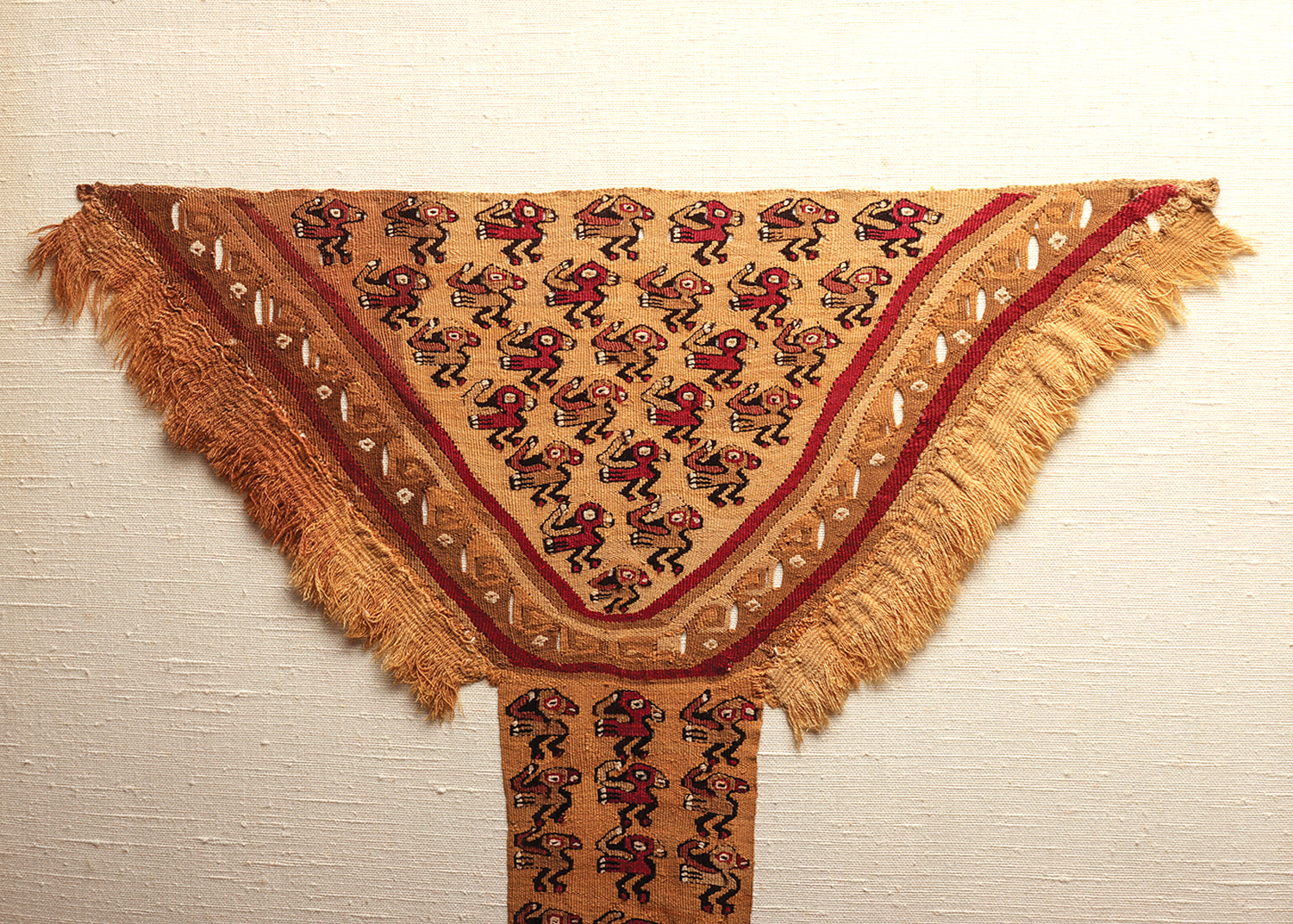
Chancay Loincloth Textile Panel, ca. 1000 - 1425 CE
Cet article est admissible à la livraison gratuite aux États-Unis et à des frais fixes de 75 $ pour l'expédition internationale.
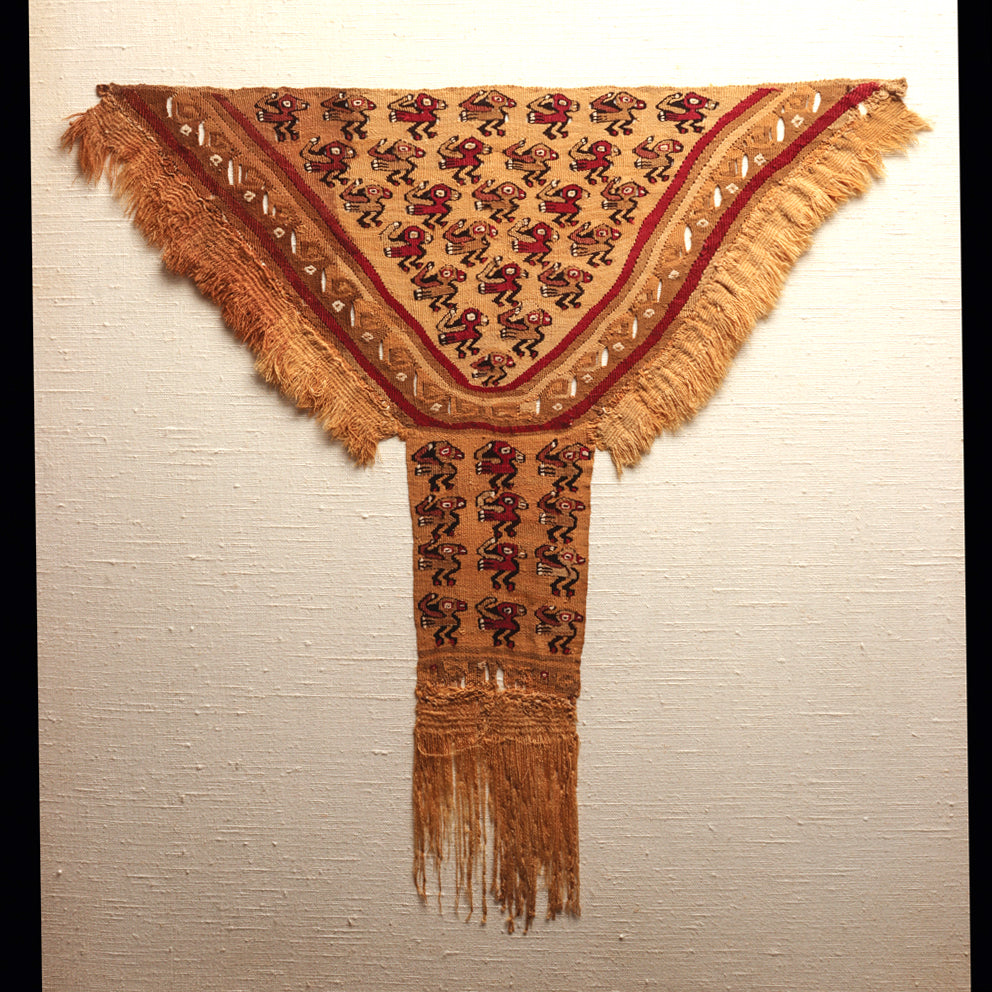
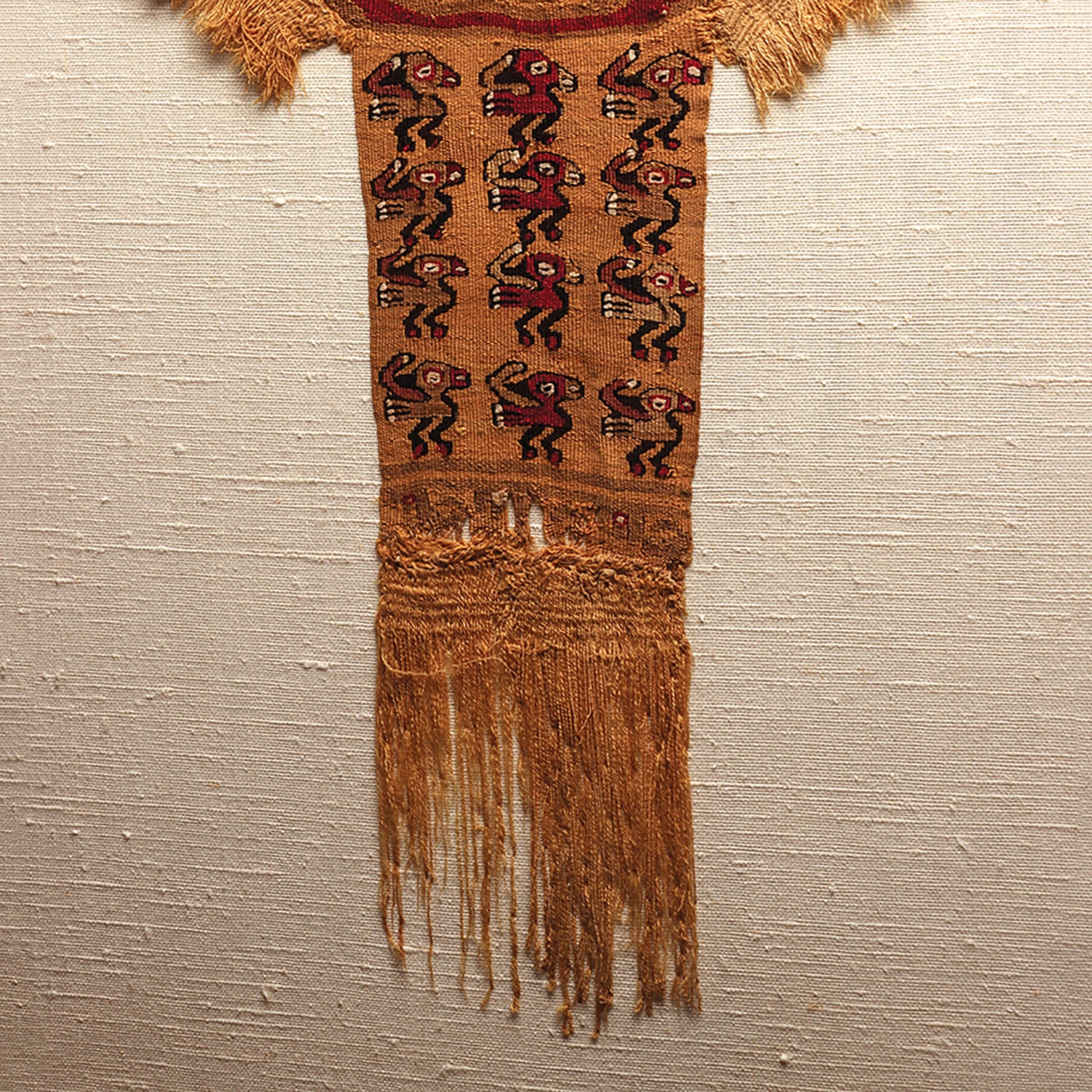
A finely woven, multicolor ceremonial loincloth panel composed of a triangular upper flap and a rectangular lower tab, each densely patterned with registers of stylized birds. The triangular section is framed by a lively slit‑weave wave border and finished with a soft, gold‑toned string fringe, and the rectangular tab below repeats the avian motif in three vertical rows and carries an extended fringe that emphasizes movement. The palette balances warm creams and browns with brighter color accents, and the surface retains crisp definition to the feathers, crests, and beaks.
Background: The Chancay culture flourished on Peru’s central coast between the 11th and mid‑15th centuries and is celebrated for its inventive textile arts. Workshops there favored cotton for strength and camelid fibers for color saturation and softness, employing tapestry, slit weave, gauze, and painted techniques to create garments for life and for funerary display. Loincloths with triangular and rectangular panels were part of elite male dress; their long fringes animated the body in procession and dance, while repeating rows of birds, likely coastal waterfowl and raptors, linked wearers to the sea, the sky, and ideas of vitality and renewal. The undulating wave border seen here is a classic coastal flourish and a visual foil to the orderly bird registers.
Medium: Textile
Dimensions: Textile: Height: 20 1/2 inches (52.07 cm), Width: 20 inches (50.8 cm) Frame: Height: 27.33 inches (69.43 cm), Width: 24.5 ins (62.23 cm)
Condition: Overall excellent condition, with intact fringes and very well-preserved design clarity. Likely cotton warps with camelid-fiber wefts, a hallmark of Chancay coastal production. The panel is sewn to a cloth backing on a wooden stretcher and presented under a plexiglass frame. A lovely example.
Provenance: From the distinguished collection of Justin Kerr and Dicey Taylor, New York City. Kerr, celebrated for pioneering rollout photography and for creating the comprehensive Maya Vase Database, assembled many of the finest examples of Classic Maya painted ceramics during the 1970s and early 1980s. Taylor, an art historian and curator, worked closely with Kerr in cataloguing and researching the collection, and the couple became well known for their scholarship and connoisseurship in Maya art.
DES QUESTIONS? Cliquez simplement sur l'onglet Nous contacter à votre droite.
Nous expédions du mardi au vendredi par transporteur terrestre et généralement le jour même si votre commande est reçue avant 14h. Aux États-Unis continentaux, l'emballage, l'expédition et l'assurance sont gratuits. Selon la taille et la destination, les délais de livraison varient de un à cinq jours ouvrables.
Pour les envois à l'étranger, nous facturons un faible taux forfaitaire qui comprend l'emballage, la préparation de tous les documents douaniers, l'assurance et les frais de transport, en conformité avec toutes les exigences douanières américaines et internationales.
Les envois à l'étranger sont envoyés via FedEx, DHL ou UPS International Priority, veuillez donc nous contacter si vous avez une préférence en matière d'expédition. Les clients internationaux sont responsables de tous les droits et taxes.
Sands of Time offre une garantie d'authenticité et de provenance inconditionnelle à vie. Chaque objet que vous achetez chez nous est accompagné d'un certificat d'authenticité, indiquant sa culture, sa provenance et son âge.
De plus, nous faisons preuve de diligence raisonnable pour nous assurer que l'objet, à notre connaissance, n'a pas été obtenu illégalement d'une fouille, d'un monument architectural, d'une institution publique ou d'une propriété privée. Dans la mesure du possible, il est fait référence aux collections ou publications existantes.Dans la mesure du possible, il est fait référence aux collections ou publications existantes.
Choisir les options
Derniers affichages
Come Visit Us!
1010 Wisconsin Ave NW, Suite 340
Washington DC. 20007
Tues - Fri, 10:00am - 6:00pm
Sat/Sun/Mon By appointment


