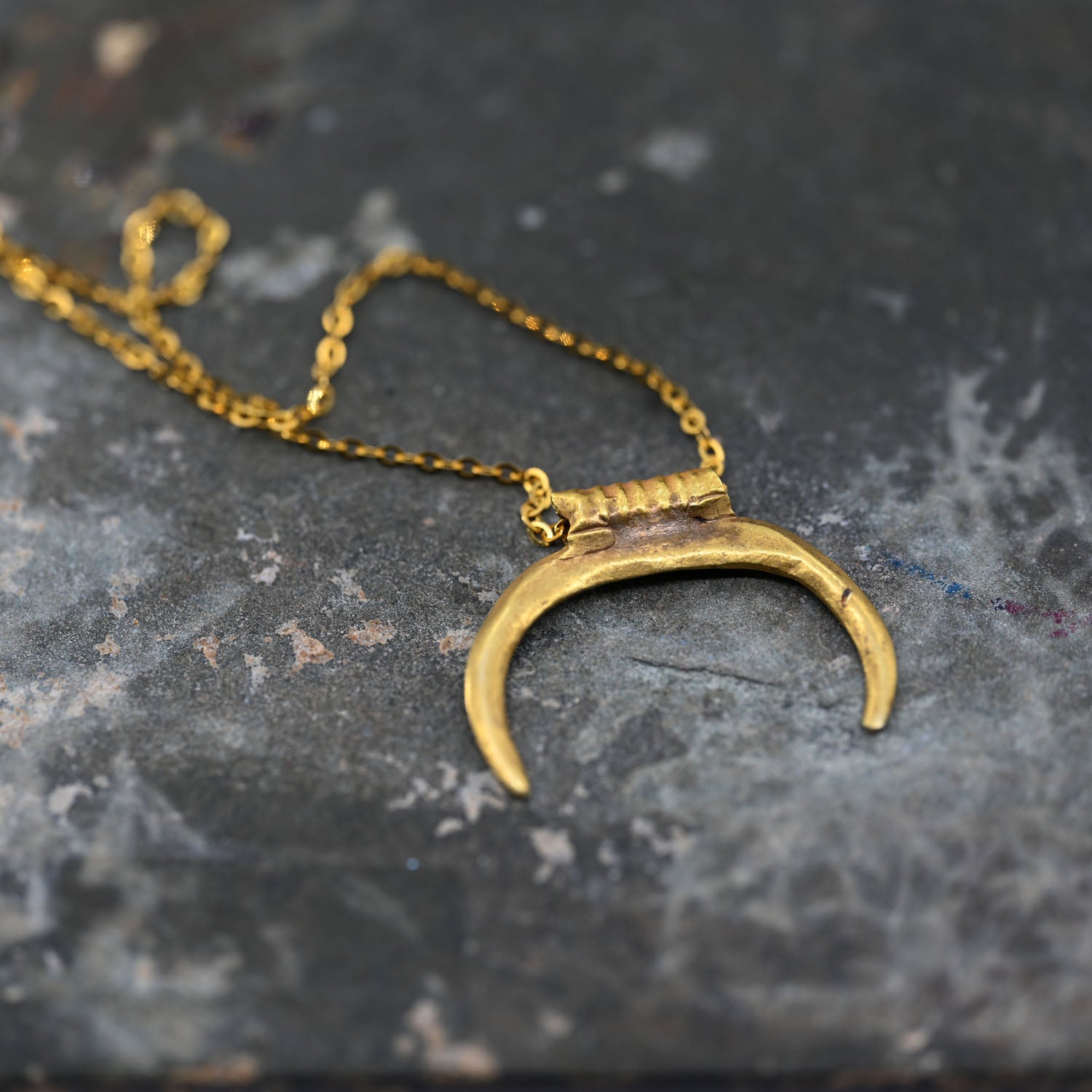
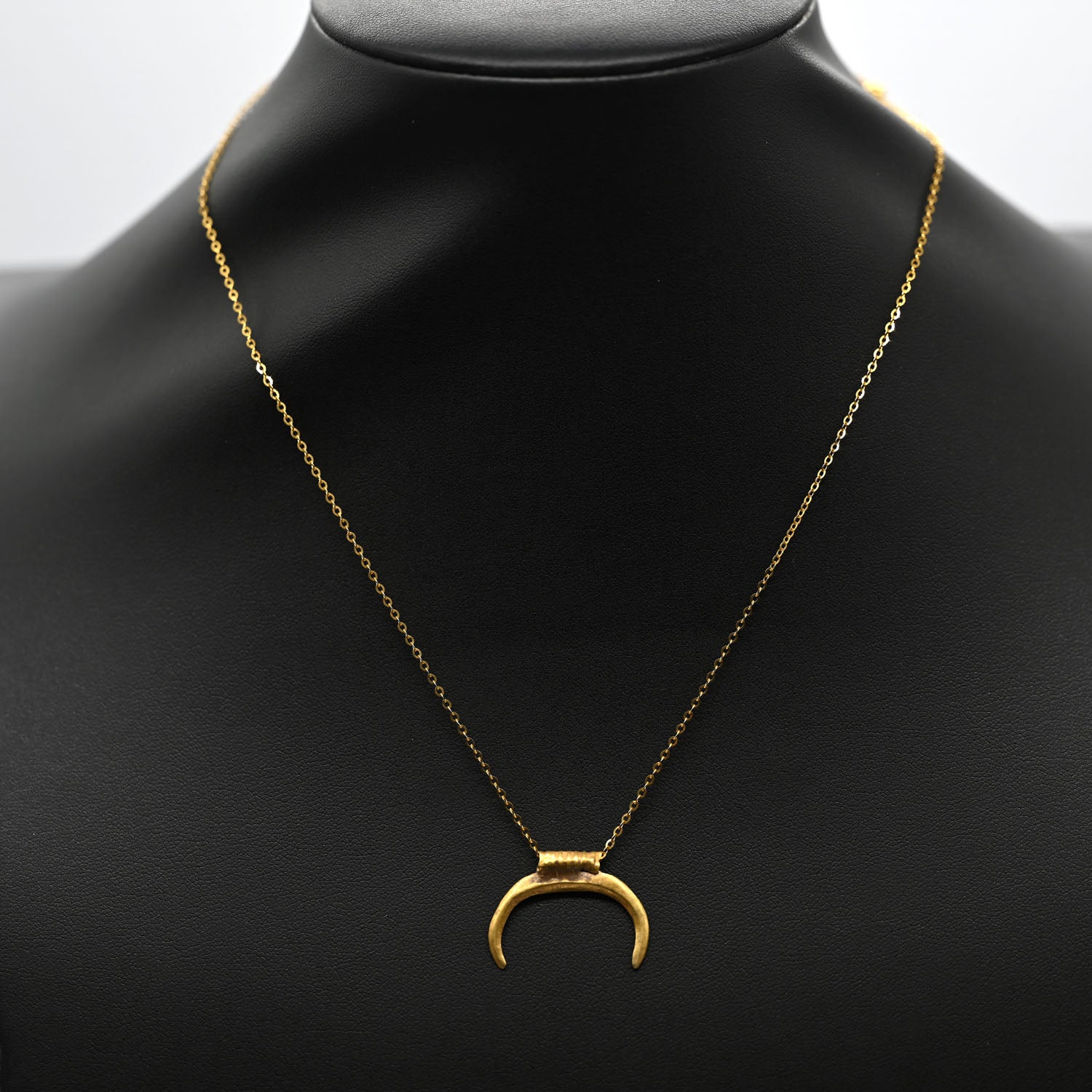
A Roman Gold Luna Pendant, Roman Imperial Period, 3rd - 4th century CE
Cet article est admissible à la livraison gratuite aux États-Unis et à des frais fixes de 75 $ pour l'expédition internationale.
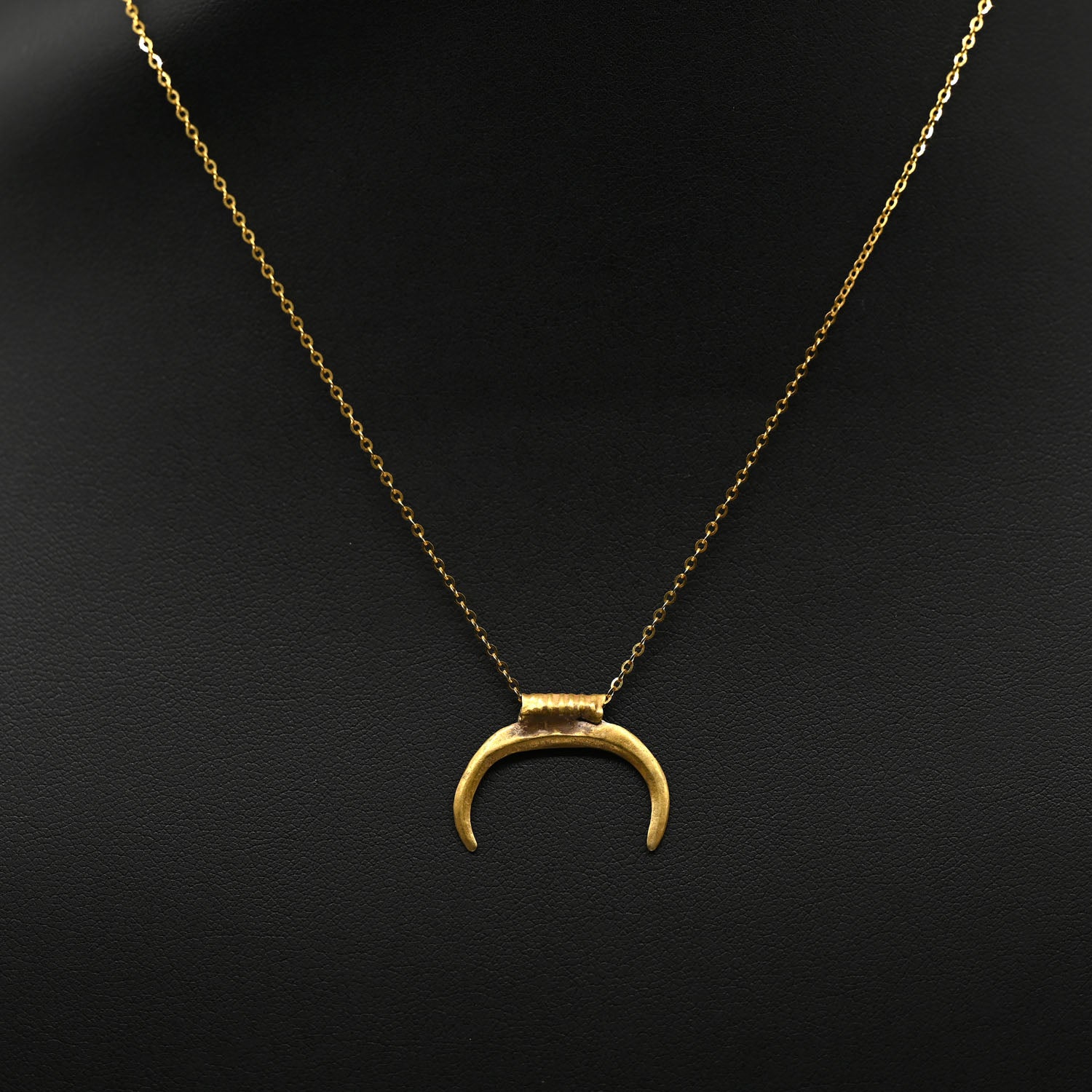
This finely crafted gold pendant is fashioned as a lunula, or crescent moon, one of the most enduring protective amulets worn by women and girls throughout the Roman Empire. The crescent represented the waxing and waning moon and was closely associated with feminine identity, fertility, renewal, and the divine protection of the moon goddess, often identified with Diana or Luna.
Lunulae were typically presented to girls in childhood and worn throughout their youth as apotropaic ornaments believed to protect the wearer from malevolent forces, illness, and the "evil eye." Their function closely paralleled that of the bulla worn by Roman boys. Although many examples survive in bronze and silver, gold lunulae were luxury objects reserved for families of considerable means and reflect both personal devotion and social status.
The present example is notable for its elegant proportions and restrained form. The broad crescent terminals taper gracefully toward rounded tips, while the suspension loop is decorated with delicate ribbing, a characteristic decorative treatment found on high-quality Roman goldwork of the Late Imperial period. Its clean silhouette and refined workmanship emphasize the timeless simplicity that has made ancient Roman jewelry particularly appealing to modern collectors.
Beyond its symbolic role, the crescent moon embodied the cyclical nature of life, regeneration, and feminine power, making the lunula one of the most recognizable and meaningful amuletic forms in the Roman world. Professionally mounted on an adjustable modern 18K gold chain, the pendant is ready to wear and remains completely reversible should you wish to display it independently.
Medium: Gold
Dimensions: Pendant height: 3/4 inch (1.9 cm), length: 1 inch (2.5 cm). Strung on a modern 18K yellow gold chain, adjustable up to 18 inches.
Condition: Minor surface imperfections and expected wear consistent with age, otherwise intact and in very good condition overall.
Provenance: Collection of Henry Anavian, Sumer Gallery, NYC., 1980’s. To family by inheritance.
DES QUESTIONS? Cliquez simplement sur l'onglet Nous contacter à votre droite.
Nous expédions du mardi au vendredi par transporteur terrestre et généralement le jour même si votre commande est reçue avant 14h. Aux États-Unis continentaux, l'emballage, l'expédition et l'assurance sont gratuits. Selon la taille et la destination, les délais de livraison varient de un à cinq jours ouvrables.
Pour les envois à l'étranger, nous facturons un faible taux forfaitaire qui comprend l'emballage, la préparation de tous les documents douaniers, l'assurance et les frais de transport, en conformité avec toutes les exigences douanières américaines et internationales.
Les envois à l'étranger sont envoyés via FedEx, DHL ou UPS International Priority, veuillez donc nous contacter si vous avez une préférence en matière d'expédition. Les clients internationaux sont responsables de tous les droits et taxes.
Sands of Time offre une garantie d'authenticité et de provenance inconditionnelle à vie. Chaque objet que vous achetez chez nous est accompagné d'un certificat d'authenticité, indiquant sa culture, sa provenance et son âge.
De plus, nous faisons preuve de diligence raisonnable pour nous assurer que l'objet, à notre connaissance, n'a pas été obtenu illégalement d'une fouille, d'un monument architectural, d'une institution publique ou d'une propriété privée. Dans la mesure du possible, il est fait référence aux collections ou publications existantes.Dans la mesure du possible, il est fait référence aux collections ou publications existantes.
Choisir les options


