Roman Carved Wood Chariot Fitting Depicting Dionysus, Roman Imperial Period, ca. 1st - 2nd century CE
Cet article est admissible à la livraison gratuite aux États-Unis et à des frais fixes de 75 $ pour l'expédition internationale.
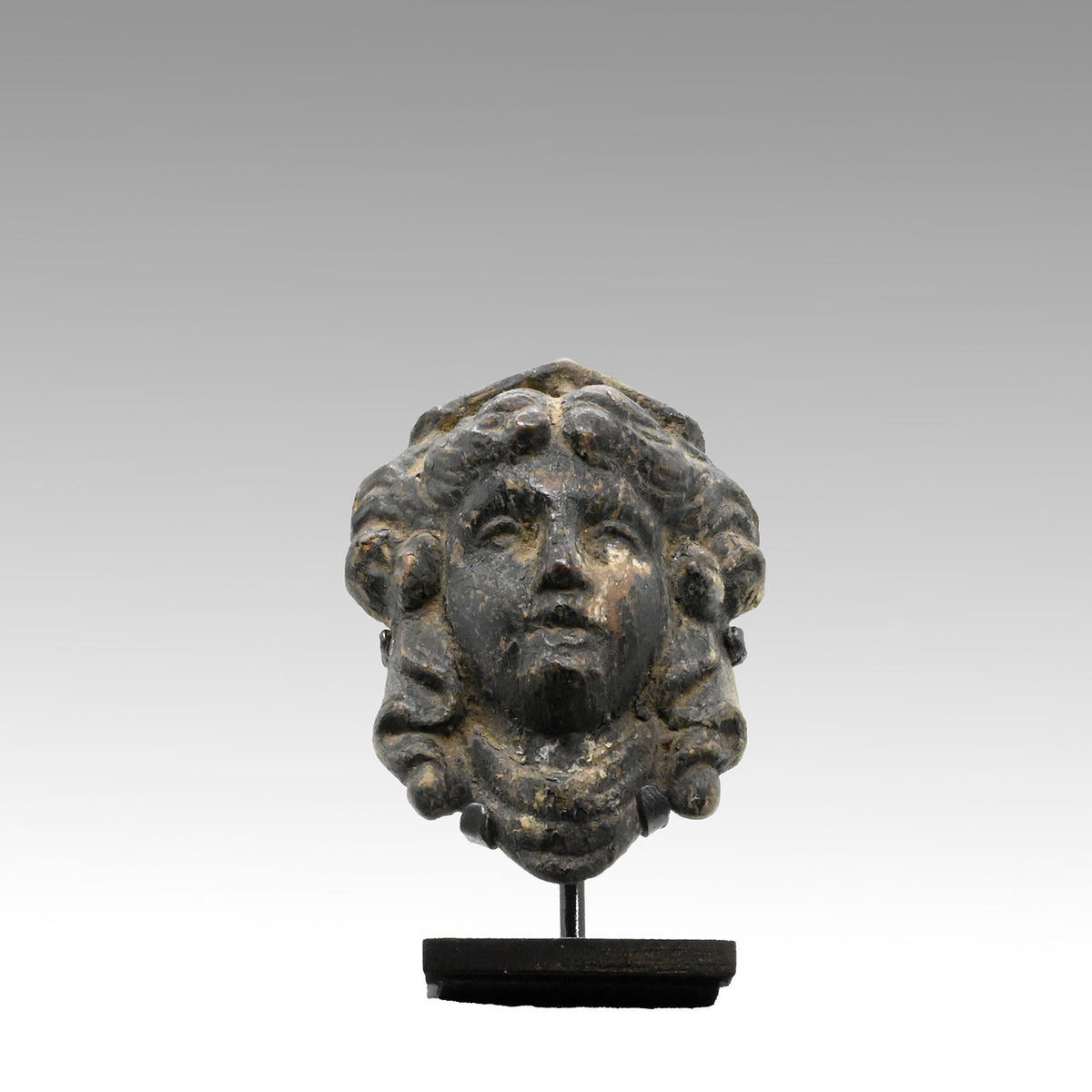
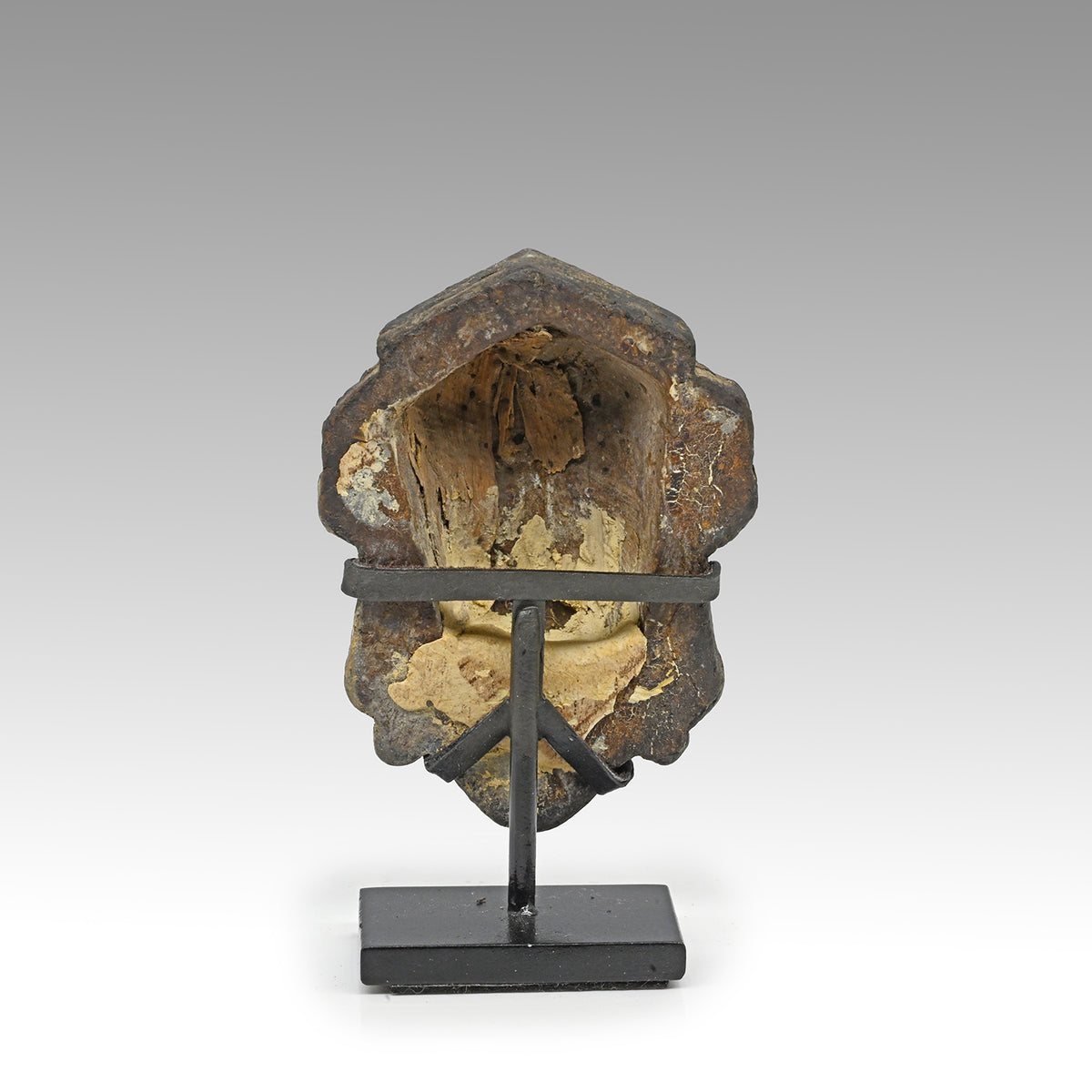
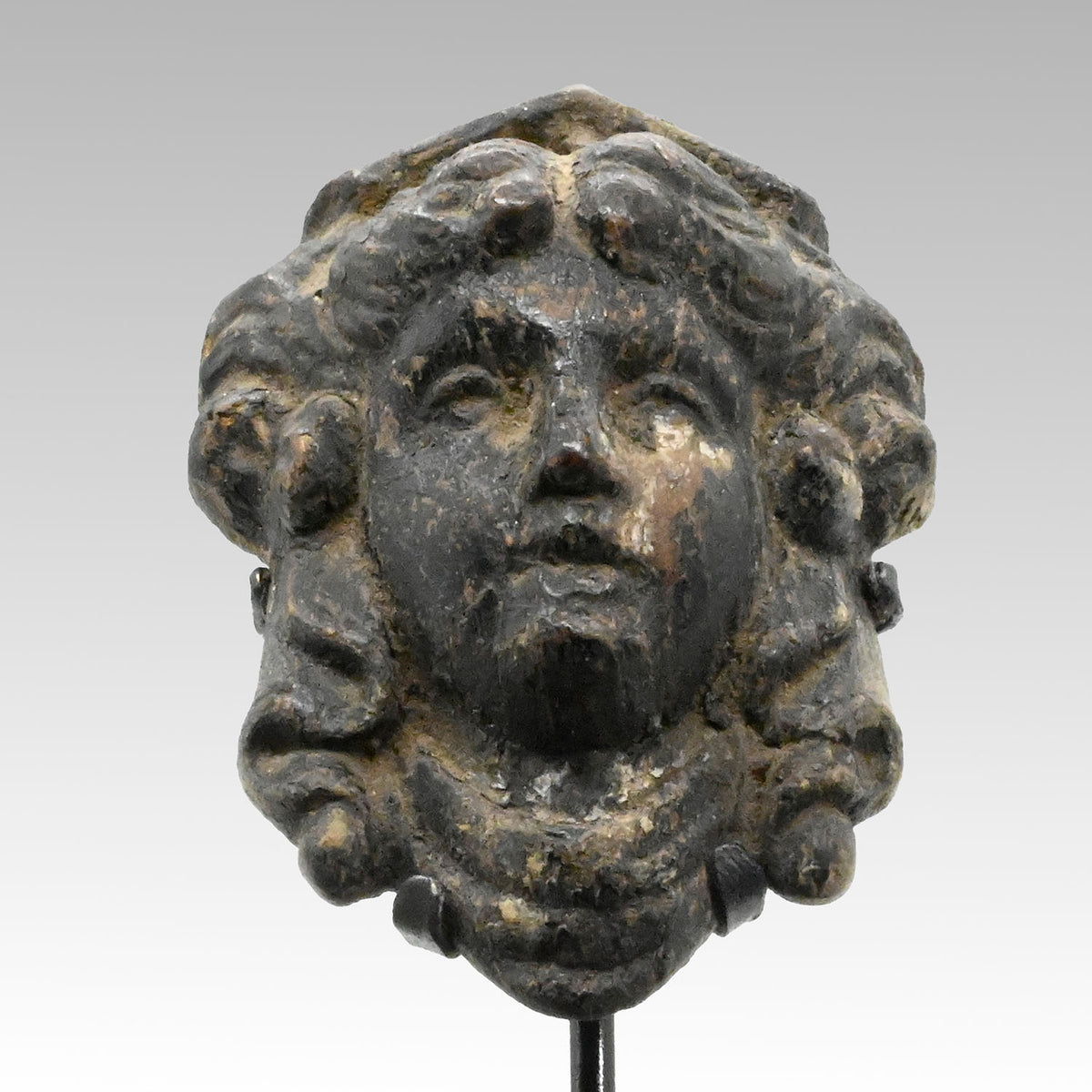
An rare Roman carved wooden chariot fitting depicting the youthful god Dionysus (Bacchus), the god of wine, fertility, and revelry. The deity is portrayed with a full, rounded face, softly modeled features, slightly parted lips, and abundant curling hair arranged in thick locks across the forehead and cascading along either side of the face. Small horn-like projections emerge from the surrounding curls, recalling the god's association with the bull, a symbol of his divine power and regenerative nature. The deeply carved hair and expressive facial features give the small head a striking sculptural presence.
Originally serving as a decorative wooden chariot fitting, the head was carved with a deeply recessed reverse, apparently designed to fit over the end of a wooden structural element. Its compact scale, finely modeled features, and elaborate curling hair reflect the care devoted to ornamental details in Roman craftsmanship. Dionysiac imagery was widely employed in Roman decorative arts, where the god was associated with vitality, abundance, and divine protection. The survival of such a rare carved wooden fitting from antiquity makes this a particularly interesting example of Roman decorative art.
Medium: Wood
Dimensions: Height: 2 5/8 inches (6.6 cm)
Condition: Well preserved, with age-related surface wear, minor abrasions, and localized losses. The facial features and deeply carved curls remain well defined. Traces of a pale preparatory ground, possibly gesso, survive in areas of the face and hair, with possible remnants of original gilding. The recessed reverse exhibits some deterioration of the wood, with areas of exposed grain and residual surface deposits. Mounted for display.
Provenance: From the Iris Cornelia Love Collection (1933-2020), New York, primarily formed in the 1950s-1970s. Iris Cornelia Love was an American archaeologist, art historian, and collector, best known for her research on ancient Greek sculpture and her role in the rediscovery of the Temple of Aphrodite at Knidos. Educated at Smith College, the Institute of Fine Arts at New York University, and the University of Oxford, she conducted extensive fieldwork in Greece and Turkey and published influential studies on classical and Hellenistic art. A dynamic and often controversial figure, Love left a lasting legacy through her scholarship, discoveries, and distinguished collection of ancient art.
DES QUESTIONS? Cliquez simplement sur l'onglet Nous contacter à votre droite.
Nous expédions du mardi au vendredi par transporteur terrestre et généralement le jour même si votre commande est reçue avant 14h. Aux États-Unis continentaux, l'emballage, l'expédition et l'assurance sont gratuits. Selon la taille et la destination, les délais de livraison varient de un à cinq jours ouvrables.
Pour les envois à l'étranger, nous facturons un faible taux forfaitaire qui comprend l'emballage, la préparation de tous les documents douaniers, l'assurance et les frais de transport, en conformité avec toutes les exigences douanières américaines et internationales.
Les envois à l'étranger sont envoyés via FedEx, DHL ou UPS International Priority, veuillez donc nous contacter si vous avez une préférence en matière d'expédition. Les clients internationaux sont responsables de tous les droits et taxes.
Sands of Time offre une garantie d'authenticité et de provenance inconditionnelle à vie. Chaque objet que vous achetez chez nous est accompagné d'un certificat d'authenticité, indiquant sa culture, sa provenance et son âge.
De plus, nous faisons preuve de diligence raisonnable pour nous assurer que l'objet, à notre connaissance, n'a pas été obtenu illégalement d'une fouille, d'un monument architectural, d'une institution publique ou d'une propriété privée. Dans la mesure du possible, il est fait référence aux collections ou publications existantes.Dans la mesure du possible, il est fait référence aux collections ou publications existantes.
Choisir les options
Derniers affichages
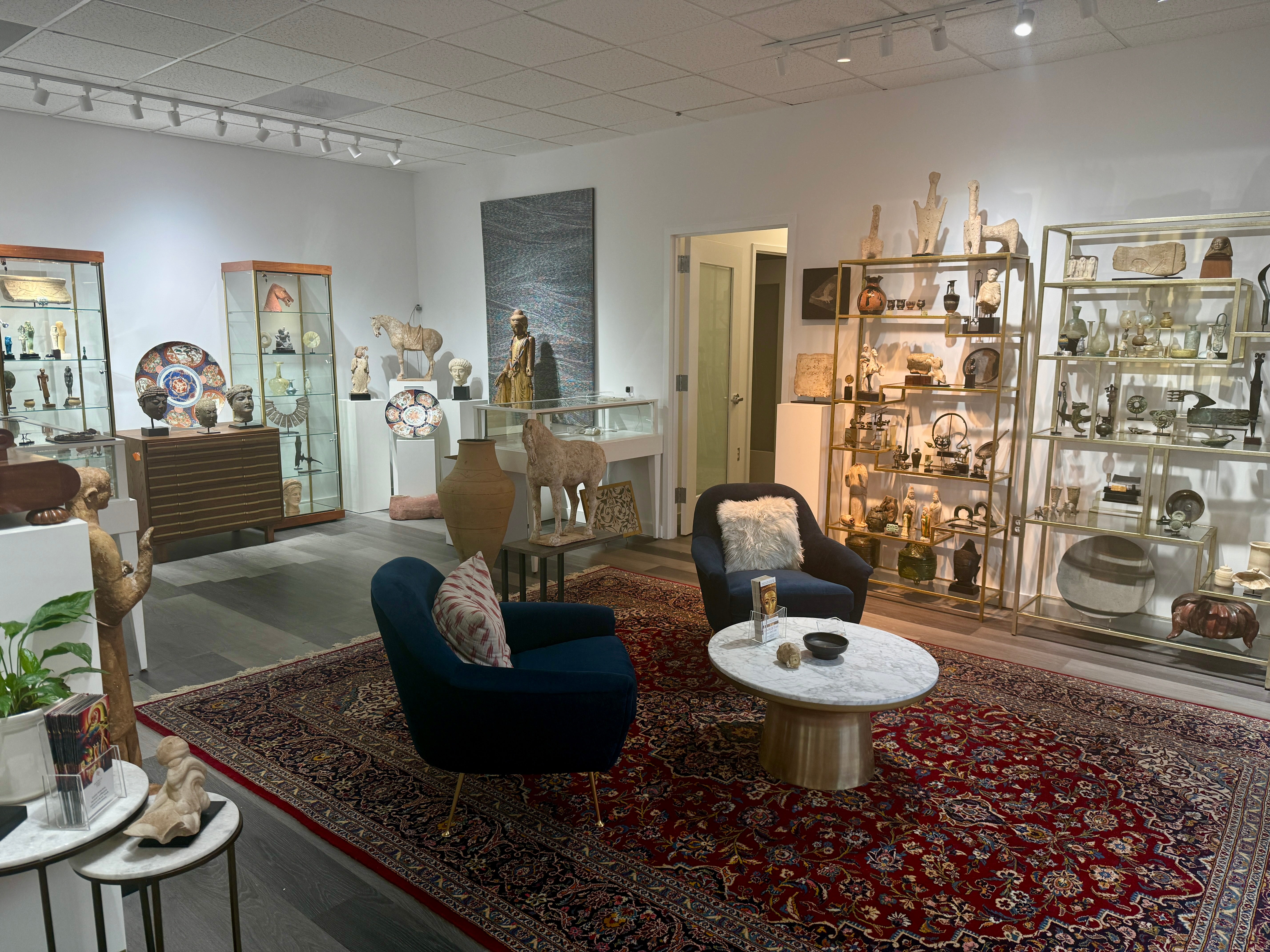
Come Visit Us!
1010 Wisconsin Ave NW, Suite 340
Washington DC. 20007
Tues - Fri, 10:00am - 6:00pm
Sat/Sun/Mon By appointment


