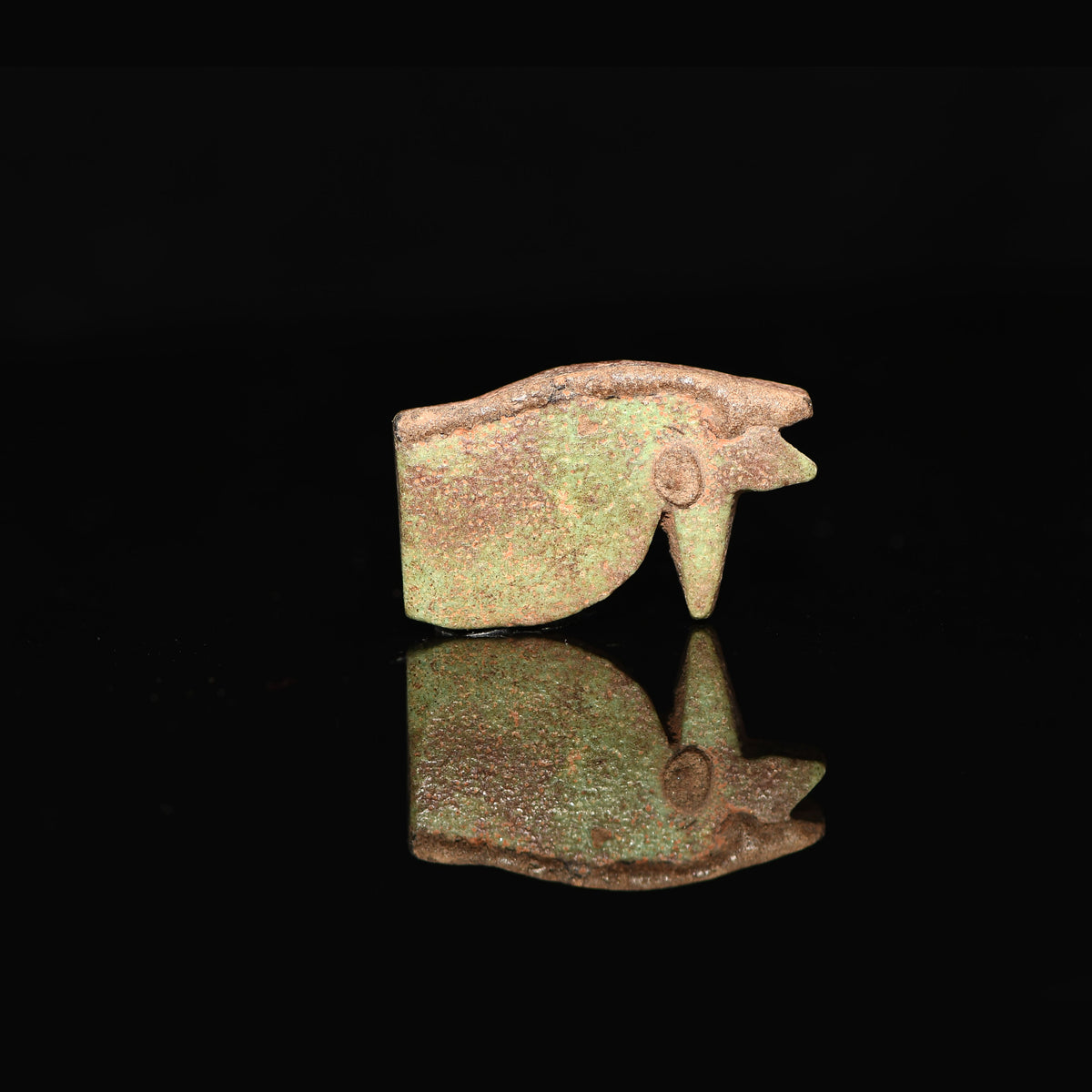
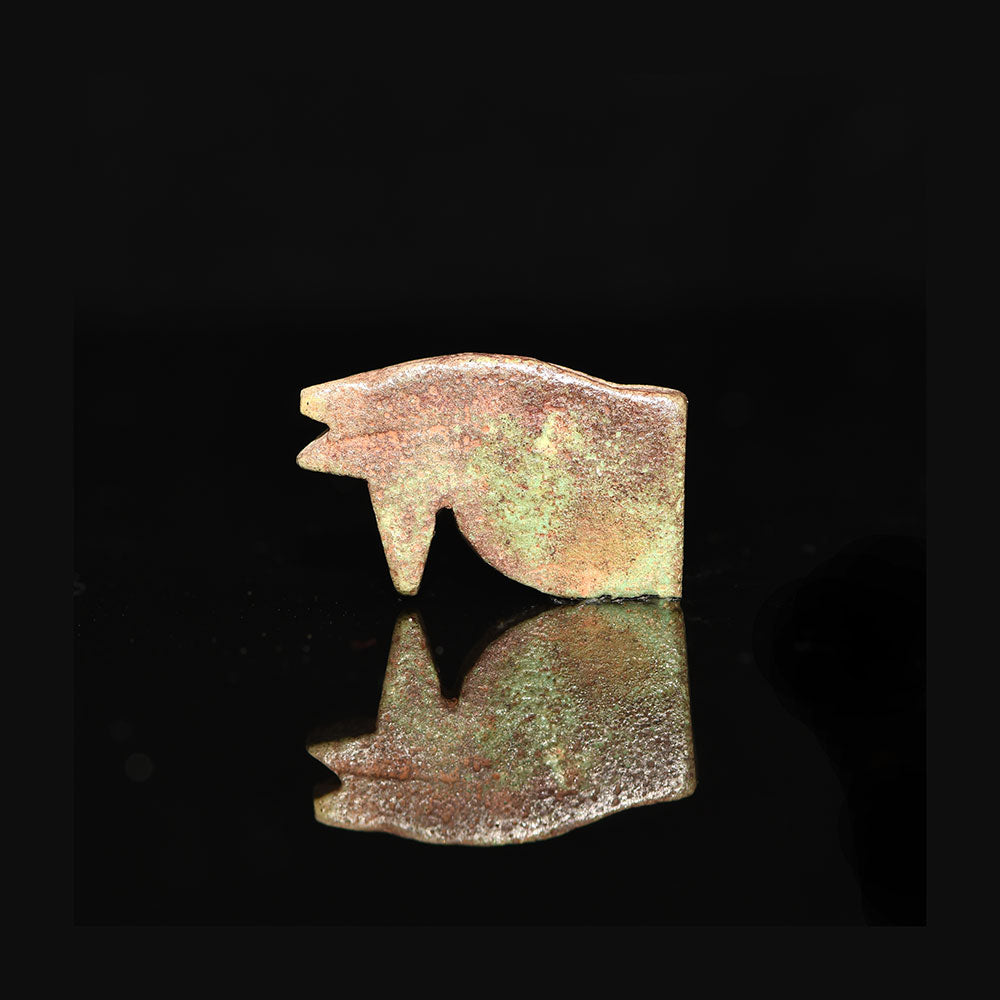
An Egyptian Faience Wedjat Eye Amulet, Late Period, ca. 664 - 332 BCE
This object qualifies for free USA shipping and a flat rate fee of $75 if shipping internationally.
Of bright green faience, this well modeled wedjat eye features a pronounced brow and pupil highlighted in brown pigment, with the characteristic markings extending beneath the eye.
The wedjat, or Eye of Horus, was one of ancient Egypt's most enduring protective symbols, associated with healing, restoration, and regeneration. According to Egyptian mythology, the eye of Horus was injured during his struggle with Seth and subsequently restored by the god Thoth. Symbolizing the restoration of wholeness, wedjat amulets were worn by the living and placed with the deceased to provide protection and ensure well-being in the afterlife. Examples such as this, were particularly popular during the Late Period.
Medium: Faience
Dimensions: Length: 2.5 cm (1 inch)
Condition: Intact and in good condition overall.
Provenance: Private NY collection, acquired Christie's in the early 1990s.
QUESTIONS? Just click the Contact Us tab on your right.
We ship Tuesday to Friday via ground courier and usually same-day if your order is received before 2pm. Within the continental USA, packing, shipping, and insurance are free. Depending on size and destination, delivery times range from one to five business days.
For overseas shipments, we charge a low flat rate that includes packing, preparation of all customs paperwork, insurance, and carrier fees, in compliance with all U.S. and International customs requirements.
Overseas shipments are sent via FedEx, DHL, or UPS International Priority, so contact us if you have a shipping preference. International customers are responsible for all duties and taxes.
Sands of Time provides a lifetime, unconditional guarantee of authenticity and provenance. Every object you purchase from us is accompanied by a Certificate of Authenticity, stating culture, provenance, and age.
Furthermore, we conduct due diligence to ensure the item, to the best of our knowledge, has not been illegally obtained from an excavation, architectural monument, public institution, or private property. Wherever possible, reference is made to existing collections or publications.Wherever possible, reference is made to existing collections or publications.
Choose options
Recently viewed
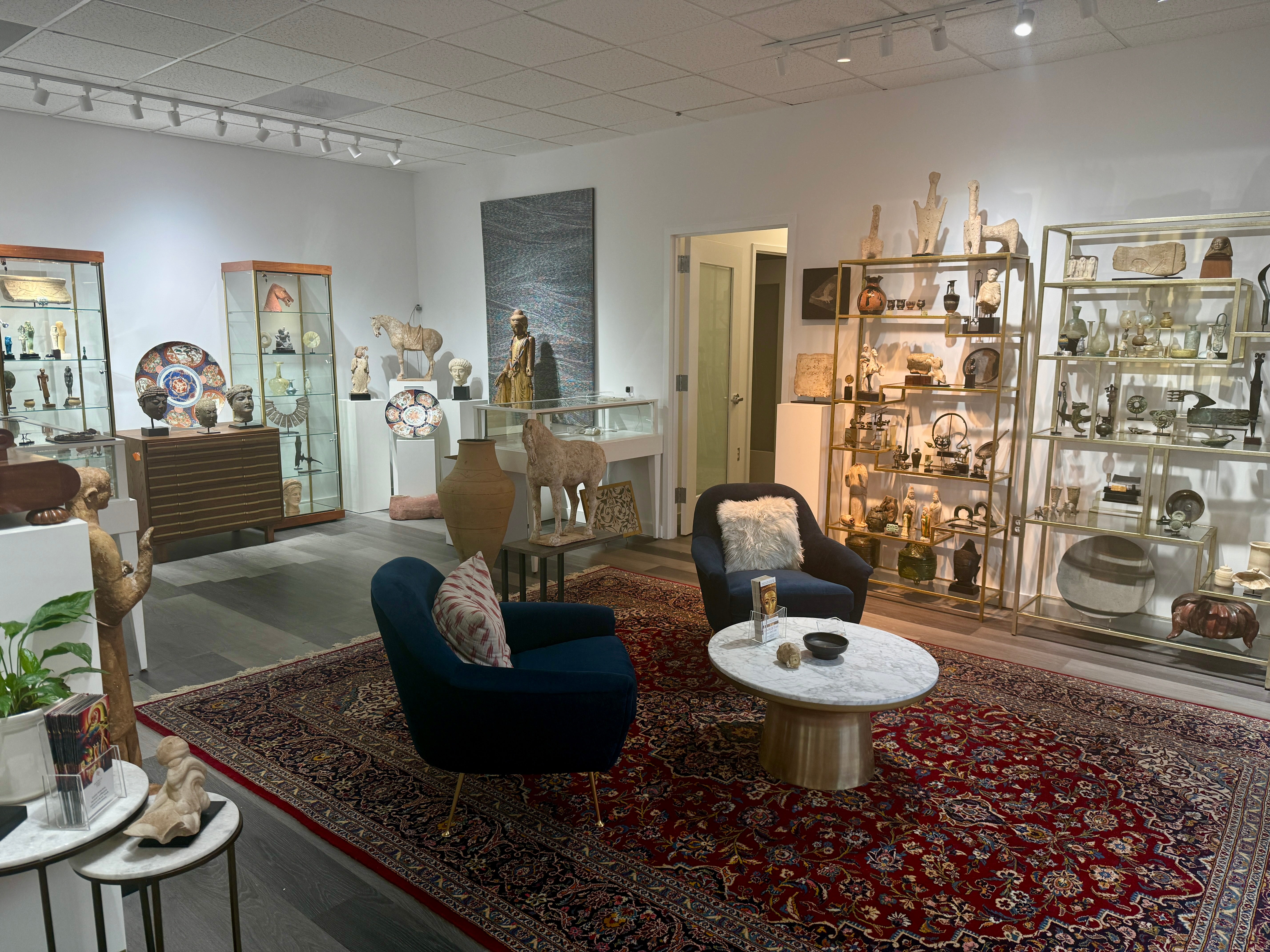
Come Visit Us!
1010 Wisconsin Ave NW, Suite 340
Washington DC. 20007
Tues - Fri, 10:00am - 6:00pm
Sat/Sun/Mon By appointment


