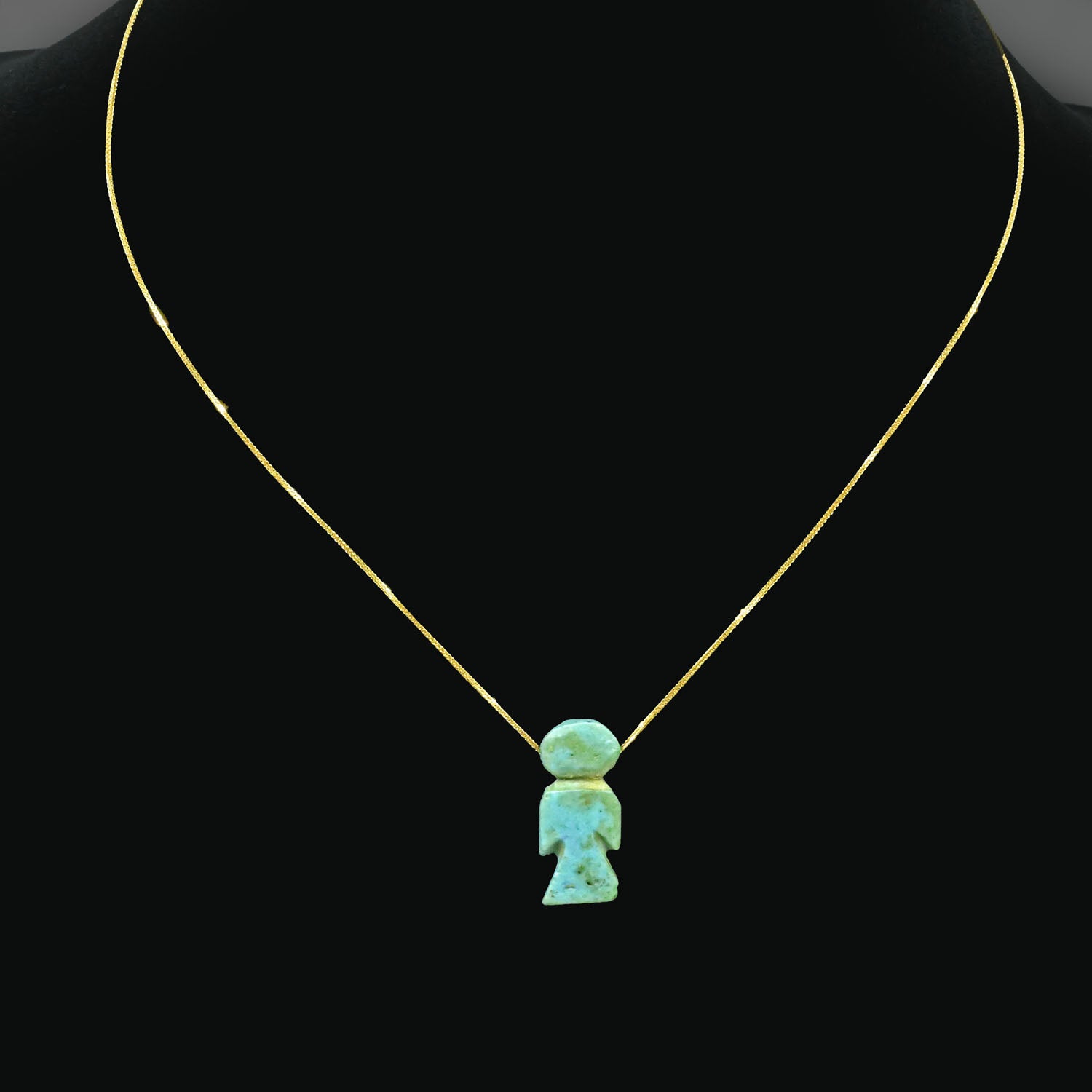
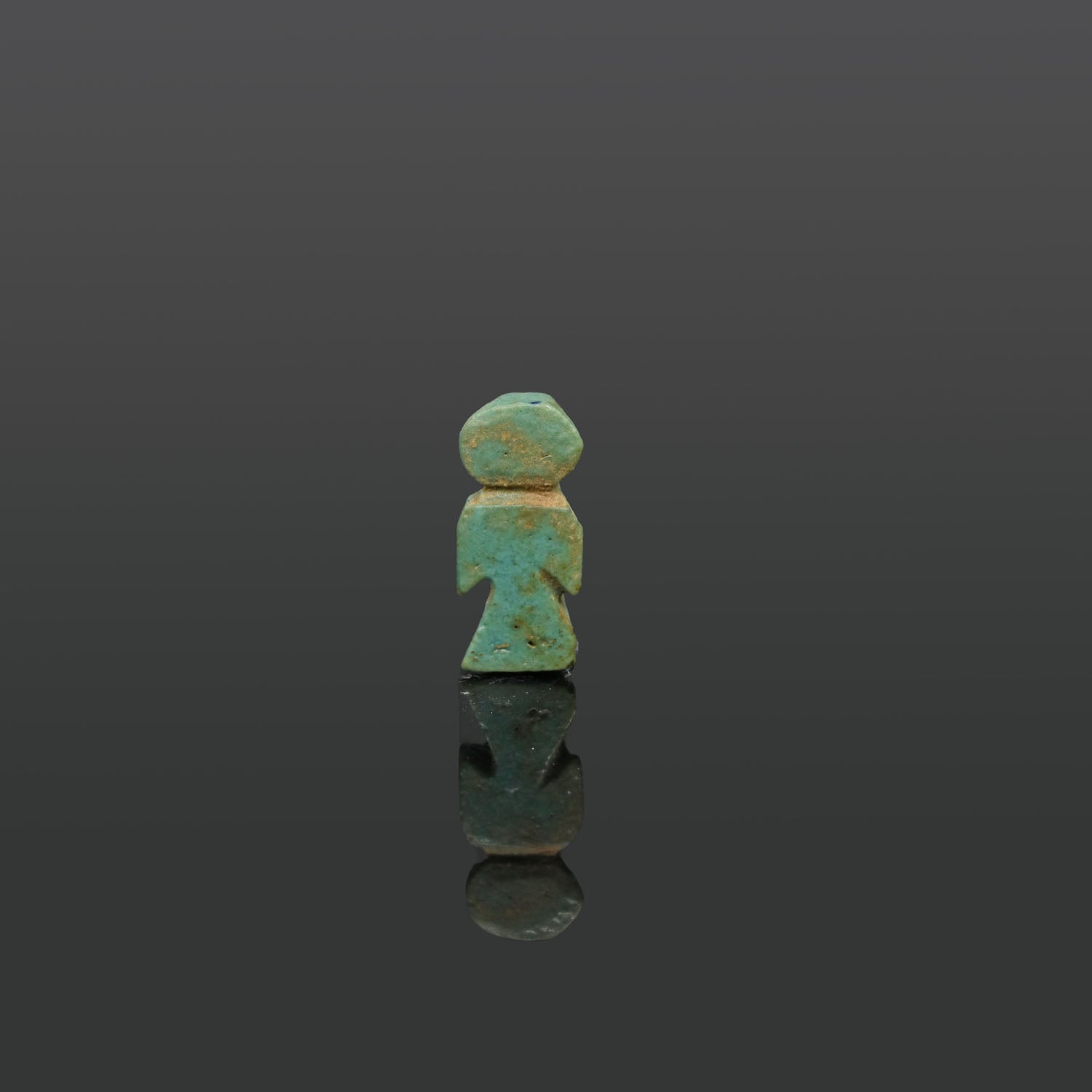
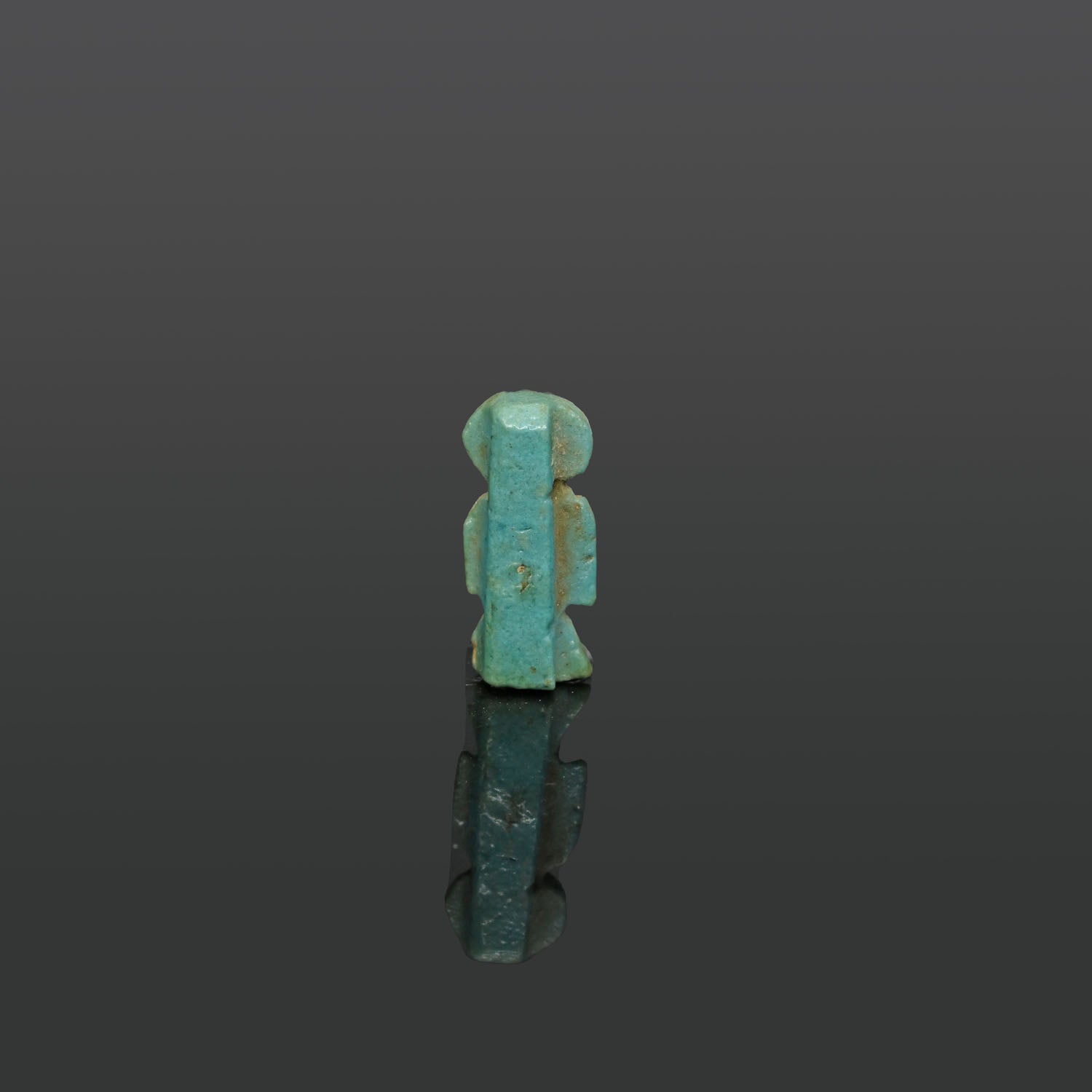
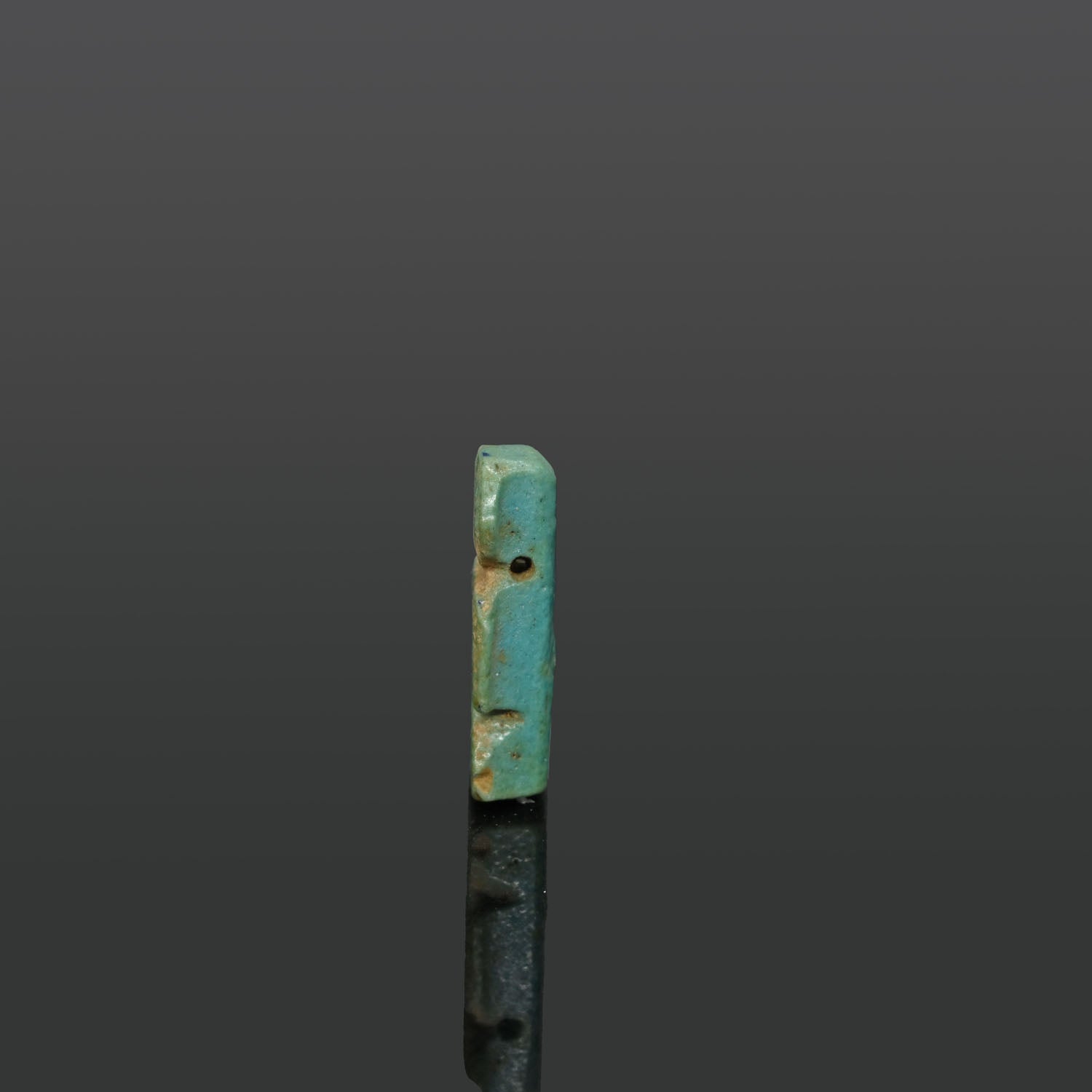
An Egyptian Faience Isis Knot Amulet set as a pendant, Late Period, ca. 664 - 332 BCE
This object qualifies for free USA shipping and a flat rate fee of $75 if shipping internationally.
The Tyt-knot, also known as the girdle of Isis, has been described as "an open loop of material from whose bound lower end hangs a long sash flanked by two folded loops". Its name may derive from Egyptian tayt, meaning "shroud" or "curtain". Even in written sources the meaning and symbolism of this object seems to be similar to those of the ankh, and the sign is often translated as "life" or "welfare." Knots were widely used as amulets because the Egyptians believed they bound and released magic. This example, of blue-green faience, depicts the outline of the knot only.
By the New Kingdom, the symbol was clearly associated with Isis, perhaps due to its frequent association with the djed pillar. The two symbols were therefore used to allude to Osiris and Isis and to the binary nature of life itself. The association of the sign with Isis leads to it being given the names, "the knot of Isis" (as it resembles the knot which secures the garments of the gods in many representations), "the girdle of Isis" and "the blood of Isis."
Condition: Intact and in very good condition overall. The amulet has been strung as a pendant on an 18K yellow gold chain of 18 inches.
Dimensions: Height: 1 inch (2.5 cm)
Provenance: Private Maryland collection of a diplomat, acquired while serving in Egypt between 1949 and 1956, and then by descent.
QUESTIONS? Just click the Contact Us tab on your right.
We ship Tuesday to Friday via ground courier and usually same-day if your order is received before 2pm. Within the continental USA, packing, shipping, and insurance are free. Depending on size and destination, delivery times range from one to five business days.
For overseas shipments, we charge a low flat rate that includes packing, preparation of all customs paperwork, insurance, and carrier fees, in compliance with all U.S. and International customs requirements.
Overseas shipments are sent via FedEx, DHL, or UPS International Priority, so contact us if you have a shipping preference. International customers are responsible for all duties and taxes.
Sands of Time provides a lifetime, unconditional guarantee of authenticity and provenance. Every object you purchase from us is accompanied by a Certificate of Authenticity, stating culture, provenance, and age.
Furthermore, we conduct due diligence to ensure the item, to the best of our knowledge, has not been illegally obtained from an excavation, architectural monument, public institution, or private property. Wherever possible, reference is made to existing collections or publications.Wherever possible, reference is made to existing collections or publications.
Choose options


