
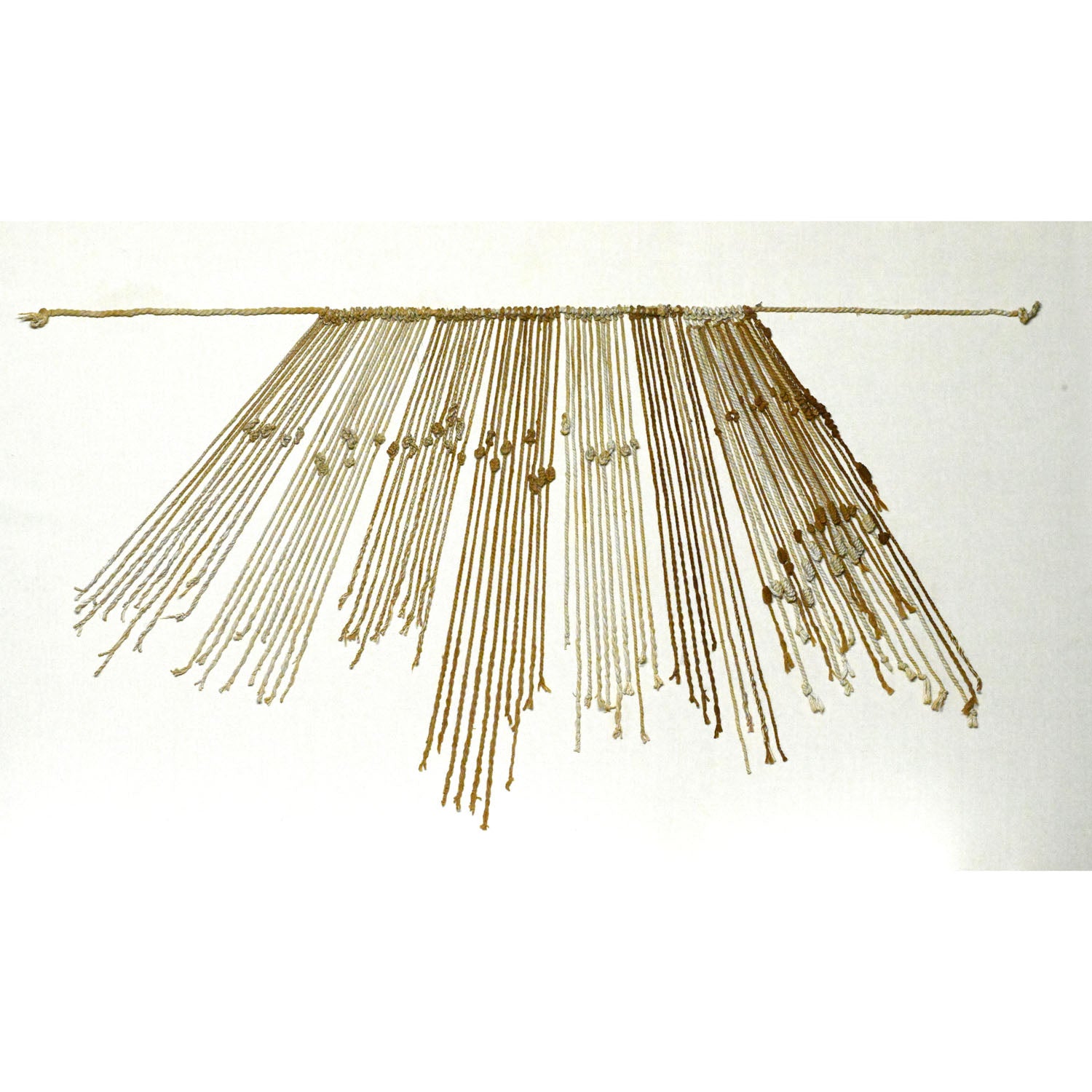
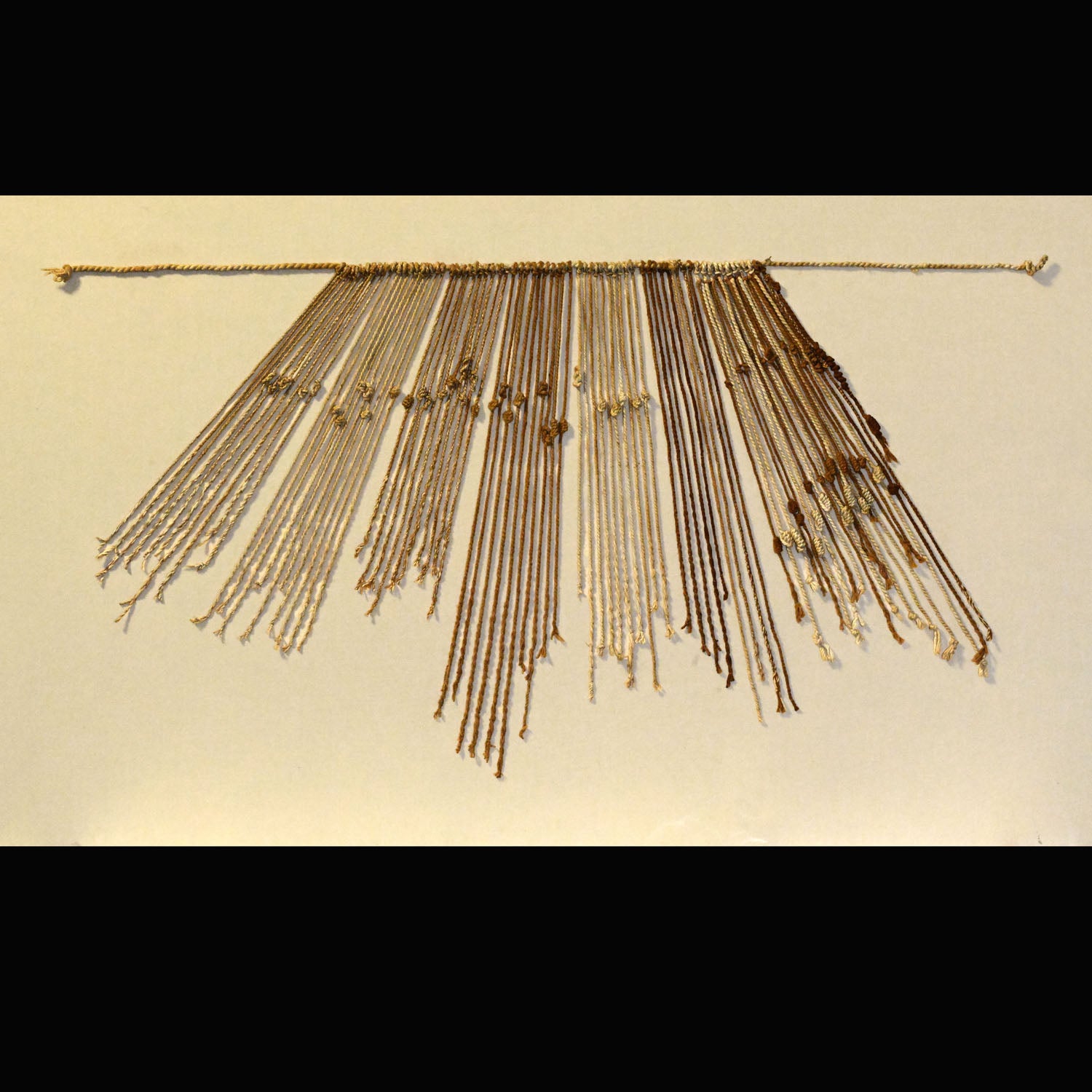
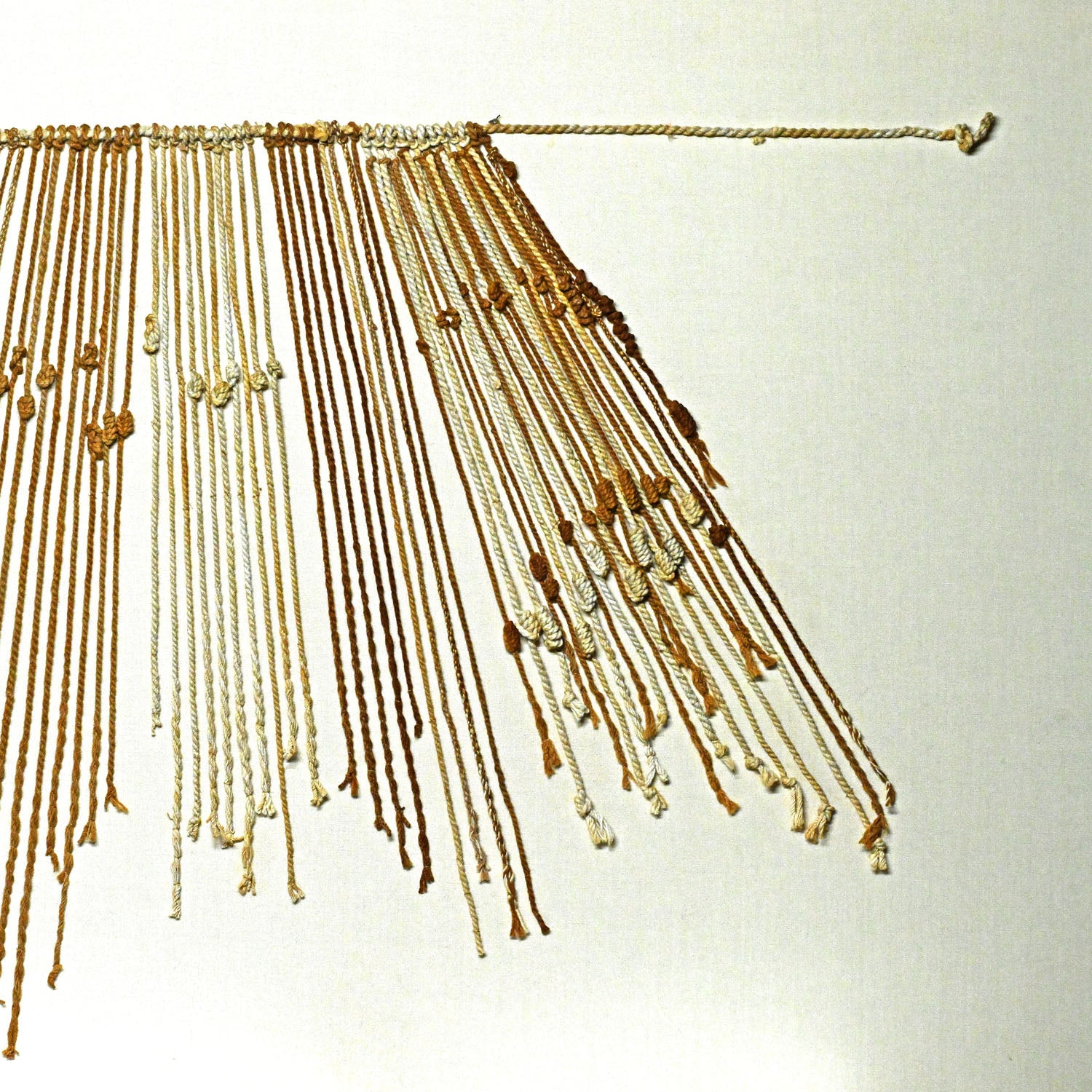
An Inca Fiber Khipu (Quipu), Inca Empire, ca. 1325 - 1550 CE
This object qualifies for free and fast worldwide shipping.
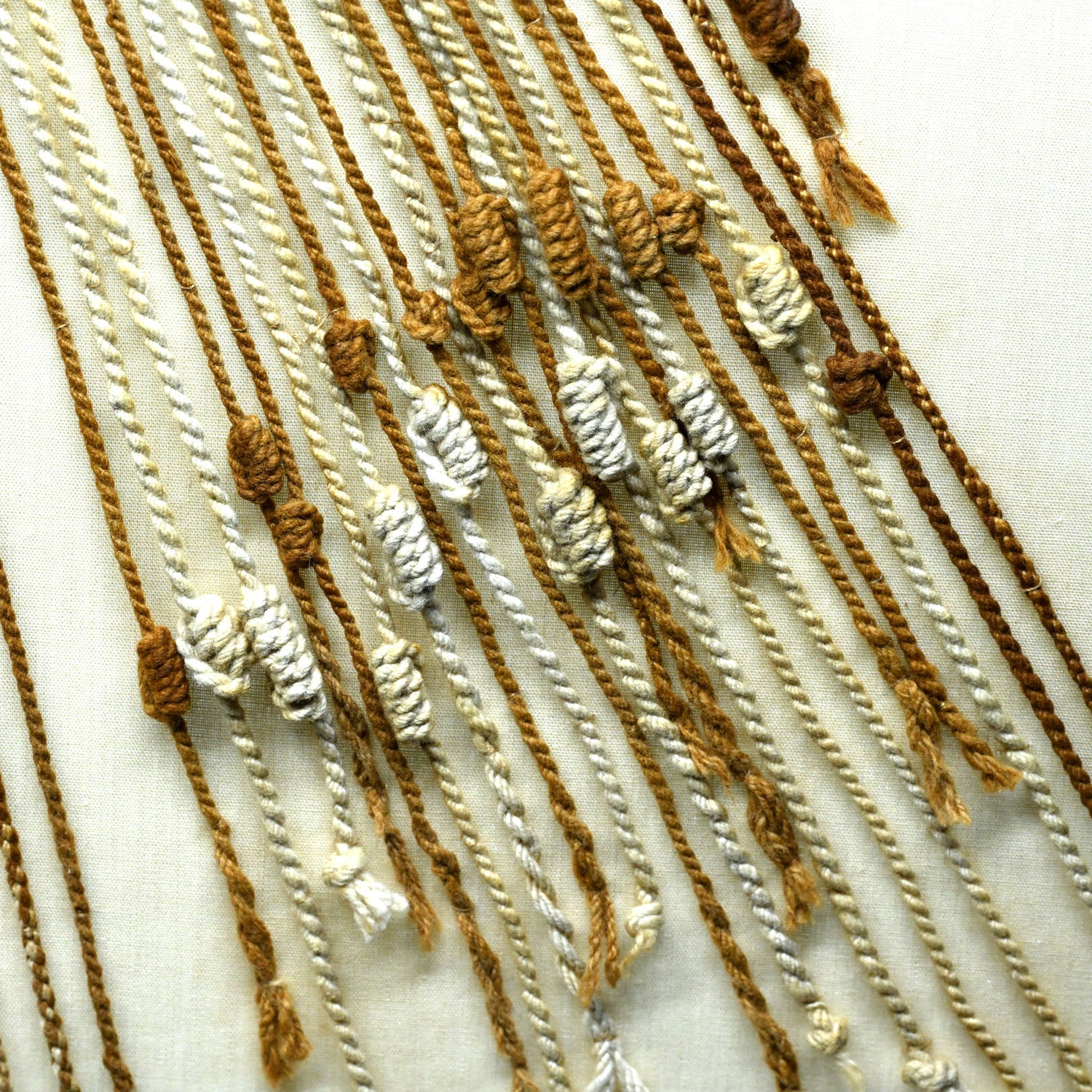
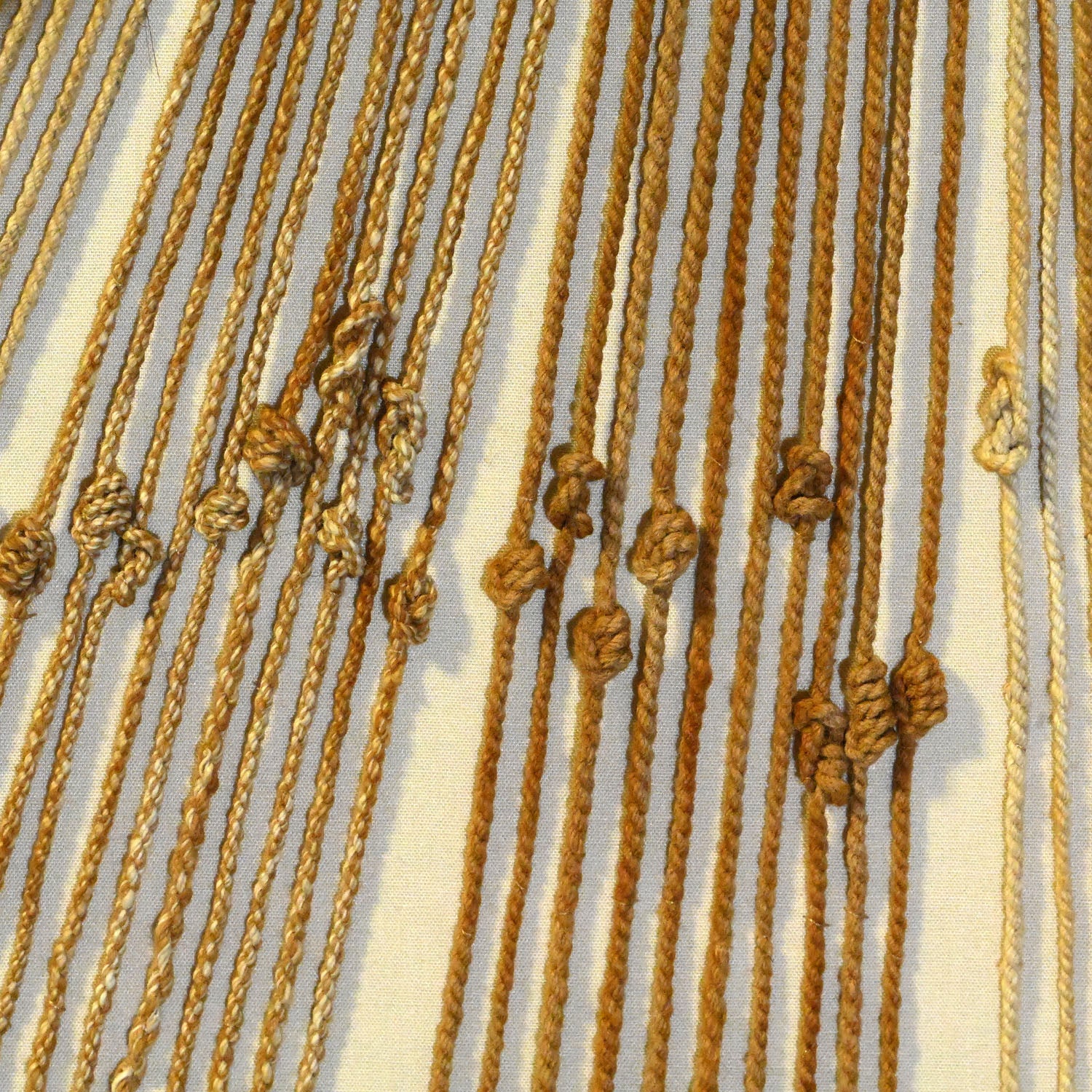
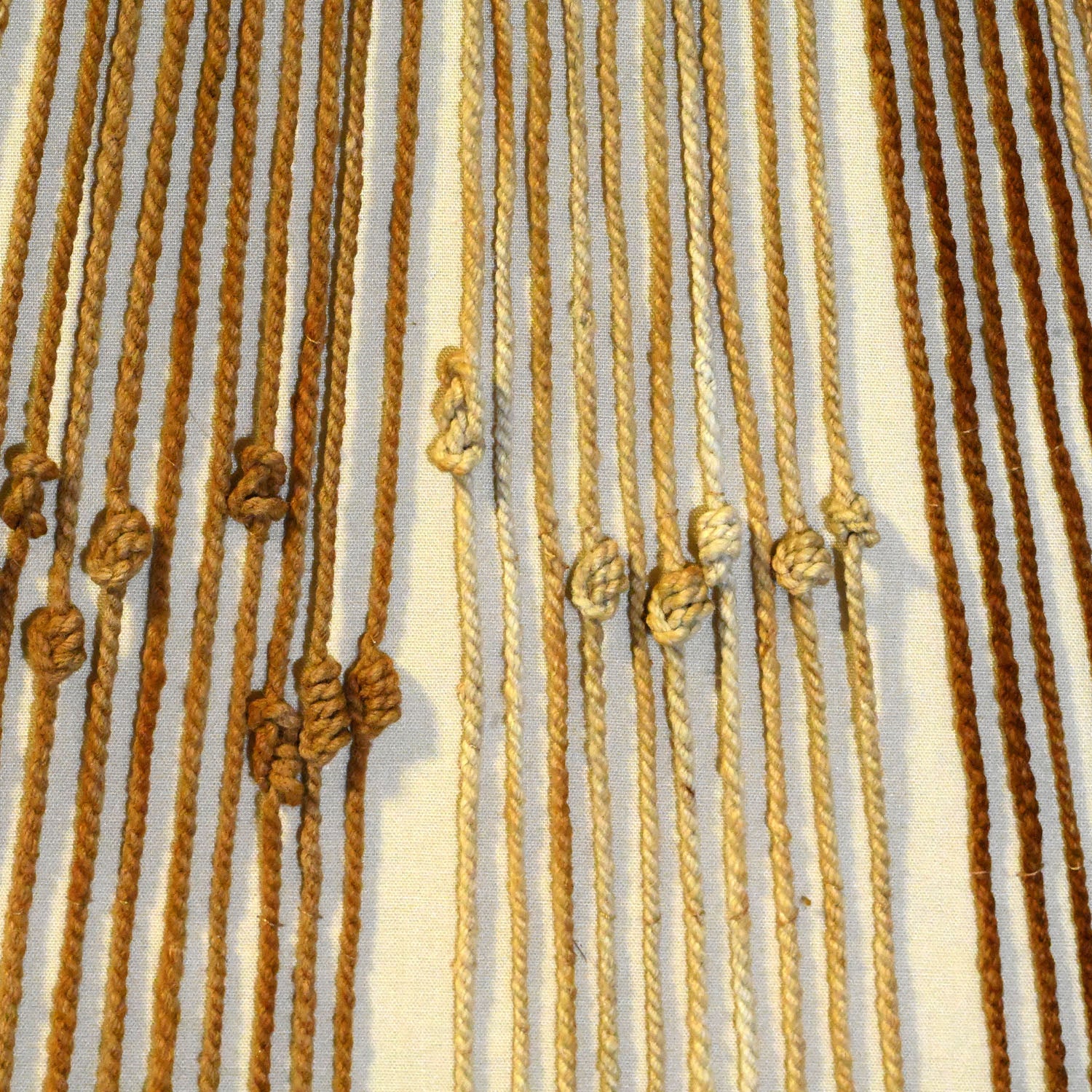
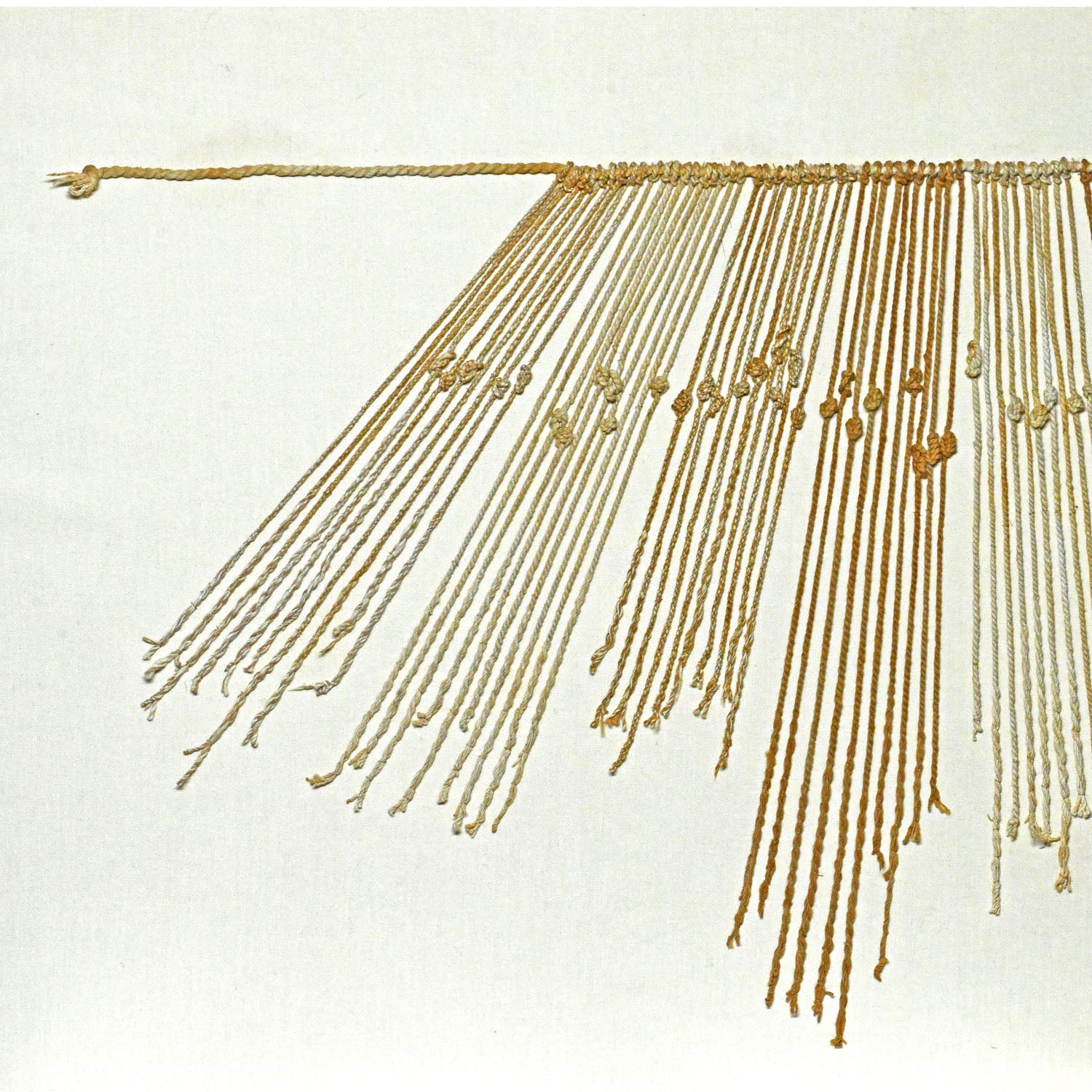
This khipu consists of seven groups of finely woven pendant cords suspended from a thicker primary cord, each tied with a series of carefully structured knots. The cords are executed in alternating shades of tan and brown, with variations in fiber twist, thickness, and knot placement that form the basis of the khipu’s encoded information.
Khipus (also spelled Quipu; Quechua for “knot”), often referred to as “talking knots,” were sophisticated recording devices used throughout the Inca Empire, the largest state in pre-Columbian South America. Constructed primarily from spun and plied camelid fibers, khipus functioned as a system for recording numerical data and, in some cases, more complex administrative or narrative information.
Spanish chroniclers of the sixteenth century documented their continued use following the conquest, noting that trained specialists, known as khipukamayuq, were responsible for creating and interpreting them. While many surviving khipus are understood to encode numerical information related to accounting, census data, tribute, and labor obligations, others are believed to have conveyed historical, biographical, or administrative messages. The meaning was communicated through a combination of knot type, knot placement, cord color, fiber structure, and the hierarchical arrangement of cords.
Although khipu traditions predate the Inca, the majority of known examples date to the Late Horizon period (ca. 1400–1532 CE), when the Inca state extended from present-day Ecuador through Peru and into central Chile. Of the hundreds of thousands once in use, only approximately 600–800 examples are known to survive today in museums, universities, and private collections worldwide. Despite significant advances in research, no complete system for reading all khipus has yet been fully deciphered.
This example is a well-preserved and visually balanced specimen, representative of the administrative sophistication and textile mastery of the Inca state.
Medium: Woven camelid fiber cords.
Dimensions: 32 x 18 1/2 inches (81.2 x 47 cm)
Condition: Overall excellent condition. Professionally mounted on a tan cloth backing over a wooden stretcher. An attractive and stable example.
Provenance: Private American collection, previously with Splendors of the World.
We ship Tuesday to Friday with FedEx and usually same day if your order is received before 2pm. Within the continental USA, packing, shipping and insurance is free. Depending on size and destination, delivery times range from one to five business days.
For overseas shipments we charge a small flat rate which includes packing, preparation of all customs paperwork, insurance and carrier fees in compliance with all USA and International customs requirements. Overseas shipments are sent using either USPS Priority Mail or FedEx but contact us if you have a shipping preference. International customers are responsible for all duties and taxes.
Sands of Time provides a lifetime, unconditional guarantee of authenticity and provenance. Every object you purchase from us is accompanied by a Certificate of Authenticity, stating culture, provenance, and age.
Furthermore, we conduct due diligence to ensure the item, to the best of our knowledge, has not been illegally obtained from an excavation, architectural monument, public institution, or private property. Wherever possible, reference is made to existing collections or publications.Wherever possible, reference is made to existing collections or publications.
Choose options
Recently viewed

Come Visit Us!
1010 Wisconsin Ave NW, Suite 340
Washington DC. 20007
Tues - Fri, 10:00am - 6:00pm
Sat/Sun/Mon By appointment


