
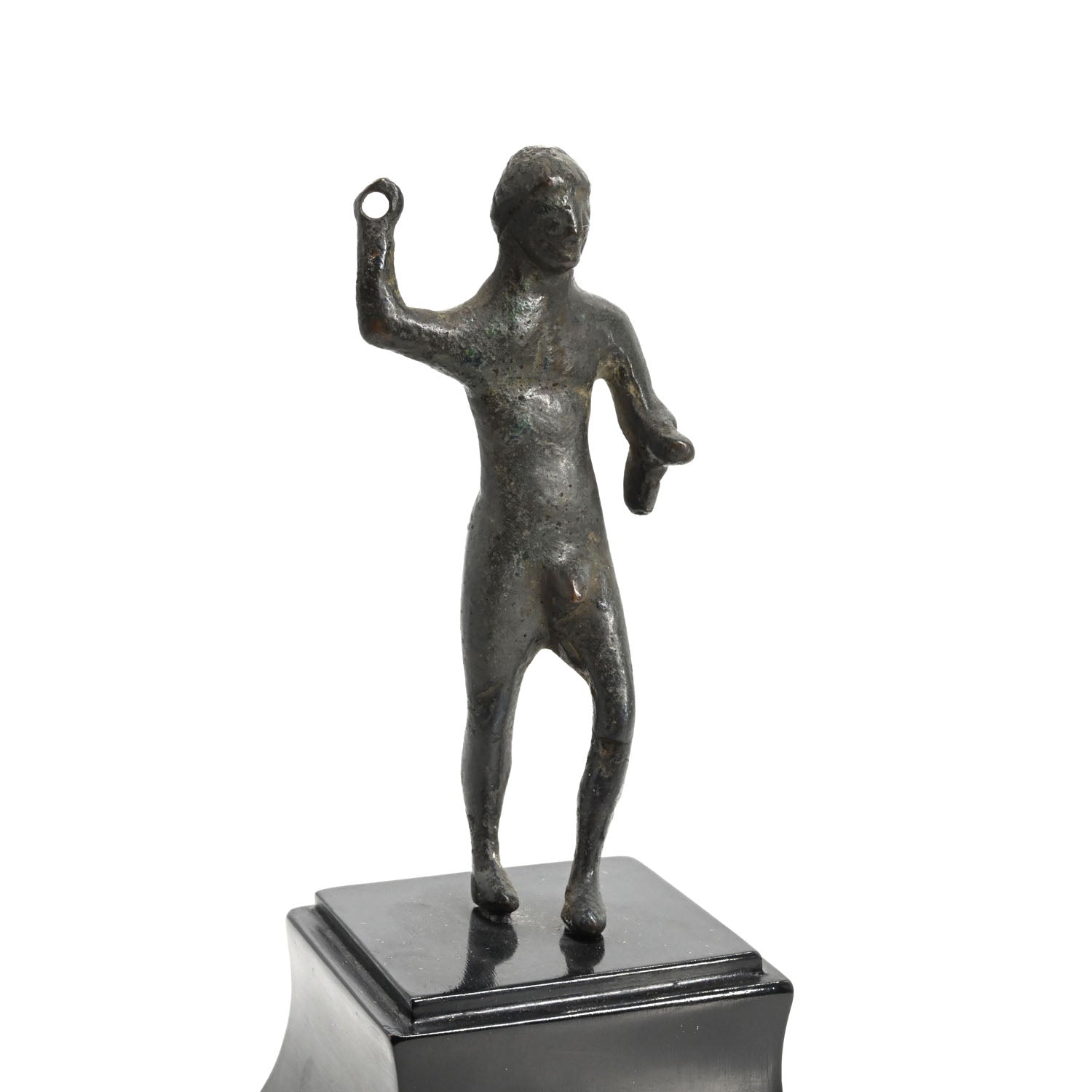
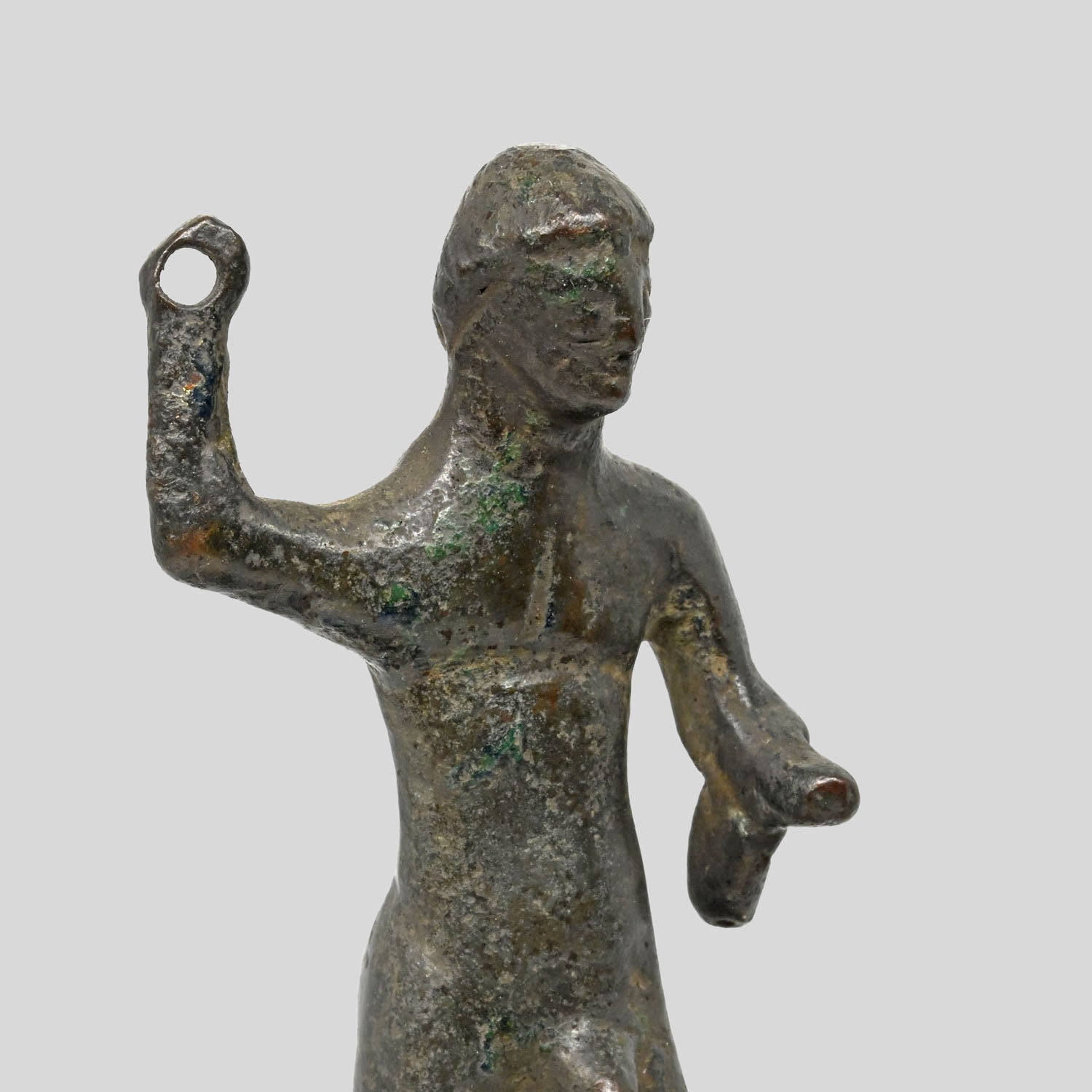
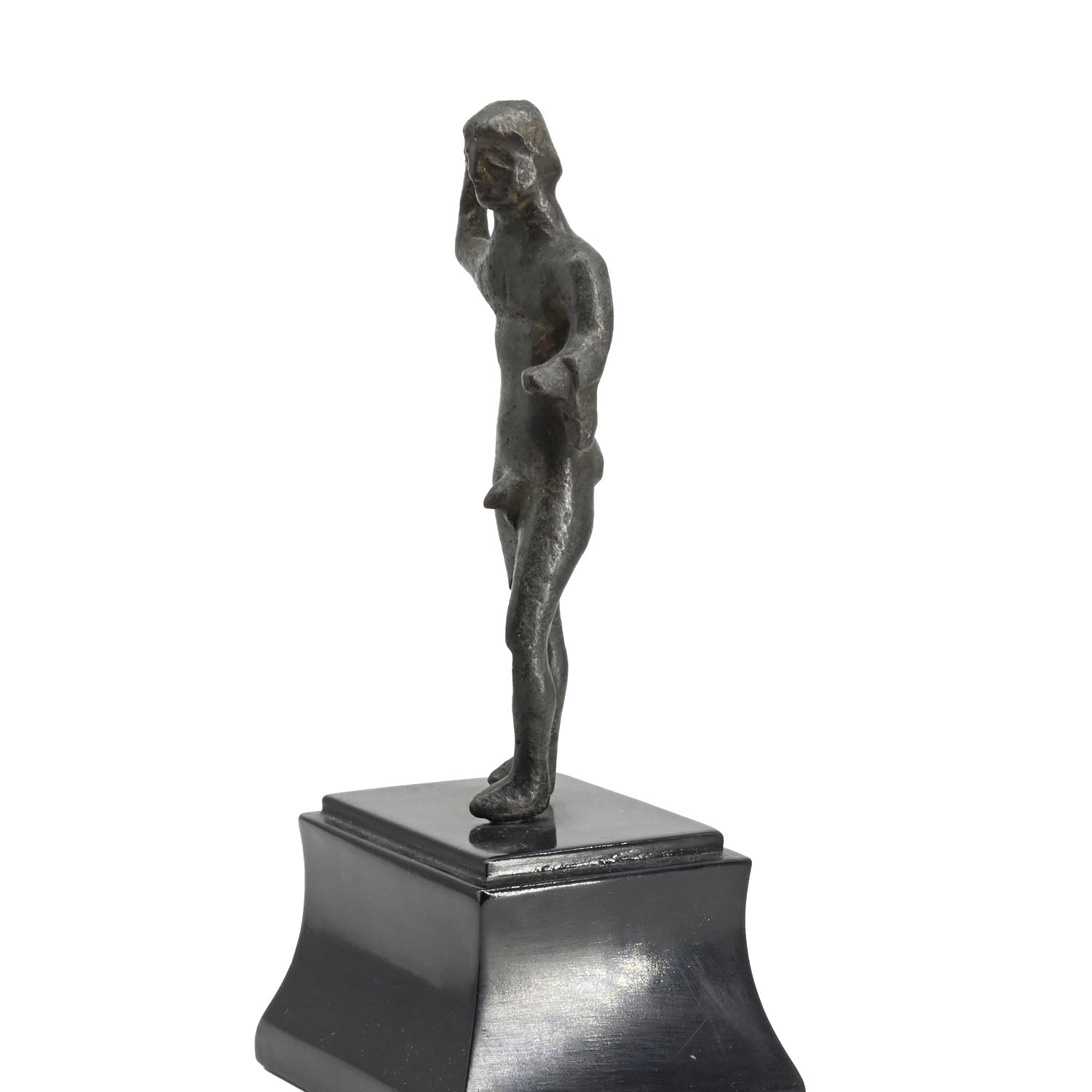
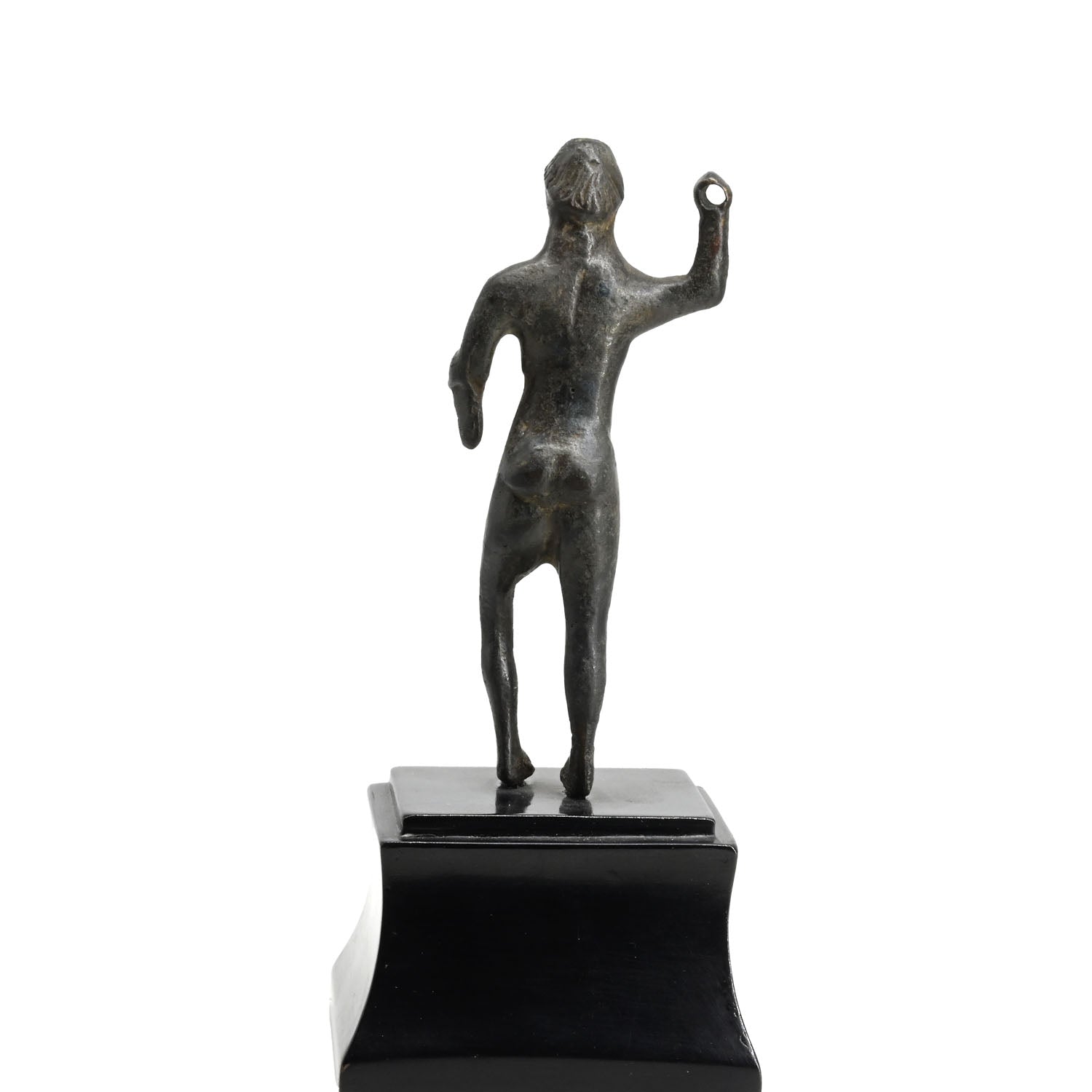
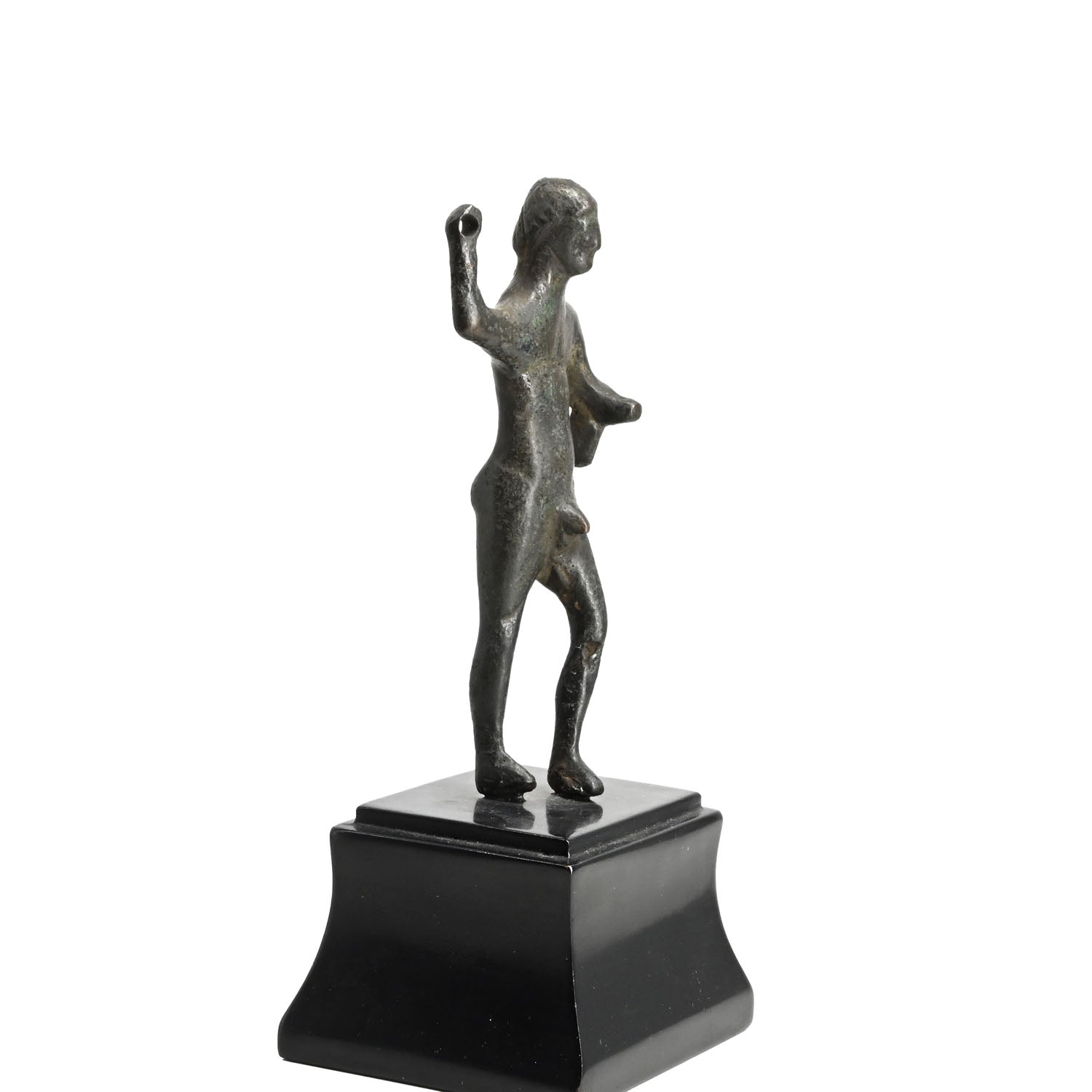
An Etruscan Bronze Figure of Hercules, Roman Imperial Period, ca. 3rd to 2nd century BCE
This object qualifies for free USA shipping and a flat rate fee of $75 if shipping internationally.
This small-scale bronze figurine is part of a longstanding Italic tradition of cult and votive figures, where Greek mythological themes were adopted and adapted by Etruscan workshops. Hercules (known as Hercle in Etruscan culture) was a popular figure in Etruscan iconography. He is often depicted in compact bronzes designed for household shrines, votive offerings, or funerary contexts. In this particular example, characterized by somewhat simplified modeling, Hercules is shown nude with a lion's skin draped over his left arm. His right arm is raised, originally meant to hold a separately cast club, which is now missing.
The portrayal of the lion skin over the arm reflects local interpretations of Hellenistic prototypes rather than direct influences from high-class Greek sculpture. Small bronzes of this type were created using the lost-wax technique and often consisted of separately cast components.
Medium: Bronze
Dimensions: Height: 4" x 2.5" (10.16 cm x 6.35 cm)
Condition: Left hand missing, and the original cast club missing, otherwise intact and in very good condition overall with smooth dark patina.
Provenance: Thilo and lzora Steinschulte private collection, VA, acquired in 1972 from Susette Khayat, Ancient Arts Gallery, 5th Ave, New York City, and then by descent. Accompanied by a copy of the original collector's paperwork.
QUESTIONS? Just click the Contact Us tab on your right.
We ship Tuesday to Friday with FedEx and usually same day if your order is received before 2pm. Within the continental USA, packing, shipping and insurance is free. Depending on size and destination, delivery times range from one to five business days.
For overseas shipments we charge a small flat rate which includes packing, preparation of all customs paperwork, insurance and carrier fees in compliance with all USA and International customs requirements.
Overseas shipments are sent via FedEx, DHL, or UPS International Priority, so contact us if you have a shipping preference. International customers are responsible for all duties and taxes.
Sands of Time provides a lifetime, unconditional guarantee of authenticity and provenance. Every object you purchase from us is accompanied by a Certificate of Authenticity, stating culture, provenance, and age.
Furthermore, we conduct due diligence to ensure the item, to the best of our knowledge, has not been illegally obtained from an excavation, architectural monument, public institution, or private property. Wherever possible, reference is made to existing collections or publications.Wherever possible, reference is made to existing collections or publications.
Choose options
Recently viewed

COME VISIT US!
1002 Wisconsin Ave NW
Washington DC. 20007
Tues - Fri, 10:00am - 6:00pm
Sat/Sun/Mon By appointment
A trusted source for collectors, curators, and connoisseurs for over 30 years.


